How to protect yourself from Black fungus infection? Read on

NMC has directed students to 'exercise due diligence' while deciding on their MBBS degree
The second coronavirus wave is slowly subsiding in India. But another challenge has emerged.
Black fungus!
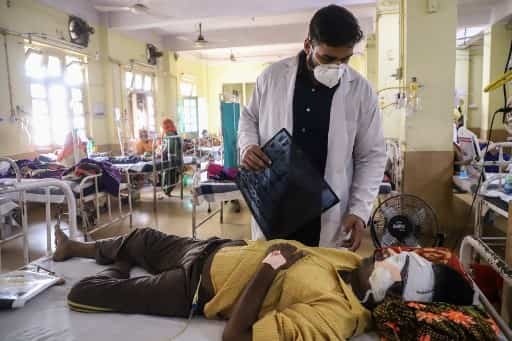
India has now been forced to declare this infection an epidemic. The situation is serious. The infection is scientifically known as Mucormycosis. It's a complication associated with the virus.

A few cases were reported in New Delhi last month with no loss of lives. Since then the infection has killed atleast 219 people. The case count has reached 7,250. With infections reported in at least 13 states & union territories. Maharashtra, Gujarat, Madhya Pradesh, Haryana, Delhi, UP, Bihar, Chhattisgarh, Karnataka and Telangana are the worst-hit.
Considering the scale of infections the central government has directed all states to declare black fungus as an epidemic. The Health Ministry has asked them to list it under The Epidemic Diseases Act 1897.
This means that every single confirmed or suspected case will directly have to be reported to Union Health Ministry. All hospitals, state and private, will have to follow guidelines for screening, diagnosis and management of cases.
)
Trump wants to rename ‘Artificial Intelligence’, gives 3 options: Which one would you pick?
)
S Jaishankar, former Army chief among high-profile names issued Delhi SIR notices
)
Chancellor Friedrich Merz vows to stay on as exit polls signal major poll setback
)
Microsoft executive called AI training the ‘largest theft of labour in human history’
&im=FitAndFill=(700,400))
New OTT releases this week (September 21-27, 2026): Shaque: Trust No One, Hunkkaar, Don’t Be Shy- 5 new titles coming to Netflix, Prime Video and more
)
US ships in Indian Ocean ‘will be attacked’ if war resumes, warns Iran
)
Ed Sheeran addresses Macklemore's removal, Gaza conflict during Philadelphia concert: 'I cannot hide how I feel'
)
CDU suffers historic defeat in eastern Germany as AfD surges, Merz vows to stay on
)
Operation Sindoor’s hidden naval dimension | MoD reveals Indian Navy Special Forces joined May 7 strikes
)
AUS vs ZIM, 3rd ODI: Ellis stars as Australia edge Zimbabwe by one wicket in last-over thriller
)
Mark Carney mimics Trump in hilarious moment over C$70 billion clean-energy investment; room erupts in laughter
)
Trump announces ‘AI Force’ as debate grows over AI risks and regulation
)
China now makes advanced memory chips without the machines it was banned from buying
)
BTS' fans question iHeartRadio’s treatment of group after brief festival set
)
Saudi vs Houthis: Houthis claim missiles & drones used in attack on key Saudi sites
&im=FitAndFill=(700,400))
Kareena Kapoor birthday special: Inside her net worth, best movies, luxurious lifestyle and love story with Saif Ali Khan
)
'Were you here to sell chickpeas?': Wasim Akram criticises Babar Azam's captaincy
)
Saudi Arabia exits China-led mBridge digital currency platform amid Saudi-Houthi conflict
)
Trump says he'll build an 'AI Force' and appoint a czar, for 'high IQ' people only
)
Arvind Kejriwal, family members, Delhi CM Rekha Gupta get SIR notices
)
‘0% chance’: Nvidia CEO Jensen Huang dismisses AI extinction fears by 2030
)
TIFF 2026: Theja Rio’s Angh wins Platform Prize, puts Nagaland story on global stage
)
North Korea's nuclear tests triggered 1,399 earthquakes: Earth is still shaking | Gravitas
)
Samsung raises Galaxy S26 prices by Rs 20,000: Here’s what each model now costs
)
Trump-Xi summit: US Treasury Secretary holds meeting with Chinese Vice Premier
)
Harry Brook targets long reign at top of T20I rankings after Sri Lanka sweep
)
AI kill switch explained: Why shutting down a dangerous AI may not be as simple as pressing a button
&im=FitAndFill=(700,400))
What TSMC's 2nm technology means for Apple
)
AI actress Tilly Norwood glitches mid-interview, switches from English to Chinese | Watch
)
Several petrol pumps, other businesses to refuse UPI payments above Rs 2,000 from Oct 16: Is it legal?
&im=FitAndFill=(700,400))
Top 10 countries in mathematics: See the world’s best performers in 2026
)
West Indies Squad for India Series: Hetmyer included for T20Is, Holder rested
)
ICE shooting in Texas leaves man seriously injured; officials demand independent investigation and transparency
)
SNL UK takes aim at Ed Sheeran with AI Princess Diana sketch
)
Apple reportedly building AI server with M8 Ultra chips, may use Nvidia technology
)
Iran sets 7 conditions to end war with US: What are Tehran’s demands?
)
Trump in ‘deciding mode’ on Iran, says ‘very big things’ going to happen soon
)
'Lot of things to learn from experienced players': Jayasuriya backs Rohit, Virat for 2027 ODI World Cup
)
Bessent meets China’s He Lifeng to prepare for Trump-Xi summit
Are they prepared? Not really. Several hospitals across India have reported shortage of Amphotericin-B. The medicine is key to curing this infection.
The centre says this shortage will be resolved soon. So far, 6 pharma companies were producing this drug. Now the Centre has given permission to five more manufacturers. It has also placed orders to import 6 lakh vials from abroad. The rising cases and shortages have caused alarm. But it's important to understand that the fungus doesn't infect everyone. So far it is only being reported in some Covid-19 survivors.
Doctors blame the panic use of steroids which made it easier for this fungal infection to spread.
How does it spread?
Mucormycosis is caused by a group of molds called Mucormycetes. These molds exist freely throughout the environment. People get infected when they come in contact or breathe in these fungal molds.
Who is the most vulnerable?
According to the Indian Council of Medical Research, four kinds of people are vulnerable
- Those who used steroids during their Covid treatment and ended up with lower immunity.
- Those who had prolonged stays at hospital ICUs and are yet to recover.
- Those with diabetes or a history of Kidney & Heart failure.
- Those who are on medication for major health problems that reduce their ability to fight pathogens.
What are the symptoms?..
Pain under the eyes, one-sided facial swelling, nasal or sinus congestion, black lesions on nasal bridge, stuffy or bleeding nose, toothache or loosening of teeth, and partial loss of vision.
How do you protect yourself from such an infection?
Experts advise the following steps...
- Wear a mask at all times.
- Wear shoes, long trousers and preferably gloves if you step out into a park or for gardening.
- Maintain personal hygiene including a thorough scrub bath.
As infections rise, India must focus on precaution, judicious use of steroids. And immediate treatment where the fungus is detected.