Decoded: Will global manufacturing gradually shift from China to India?

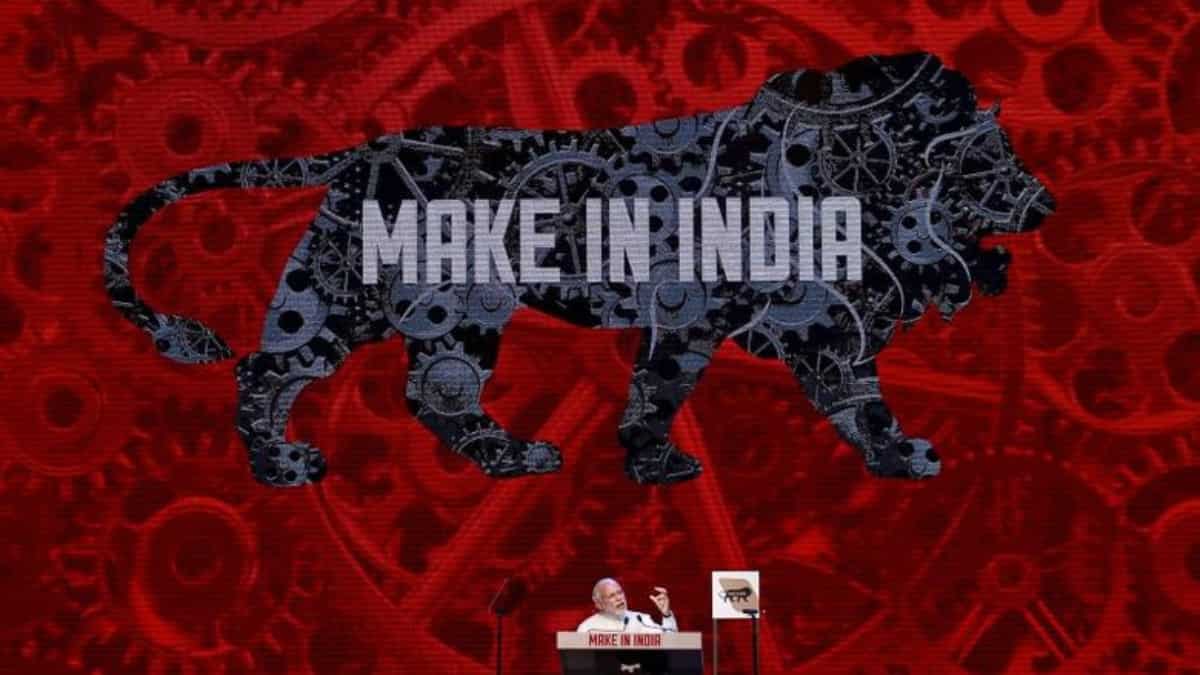
Make in India
When India's Prime Minister Narendra Modi addressed the World Economic Forum last year, he delivered the iconic punch line “Make in India, Make for the World”, which according to reports indicatedIndia’s ambition to become and promote itself as a global manufacturing and export hub.
A recent Economic Times report said that India is actively pursuing the 'plus-one' strategy. Only India’s labour force and domestic market are comparable to those of China. India is seen as a natural partner for Western nations, with the Indian government working towards making it easier for businesses to set up their manufacturing units in India.
In an exclusive interview with Mark Mobius, the founder of the Mobius Capital Partners, in November 2022, The Print reported that there is a growing trend of manufacturing shifting from China to India, despite New Delhi’s growing trade deficit with Beijing.

The report went on to say that China’s strict Covid-19 lockdowns and the continuing ‘technological war’ with the US has motivated manufacturers, especially those in the technological hardware industry, to shift their manufacturing units to India.
What does manufacturing in India offer to the world?
India’s manufacturing potential, according to a Times of India report, stems from benefits like a sizable-trainable workforce, digital infrastructure facilitating efficient operations, investments in logistics infrastructure, proximity to different countries for supply chain diversification, a strategic location for accessing emerging markets, and cost advantages in low-cost and economical manufacturing, supported by a strong legal system and patent protection.
&imwidth=180&imheight=135&format=webp&quality=medium)
‘This is just the start’: Maaya Rajeshwaran on historic ITF title, confidence boost and future goals
&imwidth=180&imheight=135&format=webp&quality=medium)
BCCI rejects venue shift reports, India vs Sri Lanka 1st ODI to remain in Delhi
&imwidth=180&imheight=135&format=webp&quality=medium)
UK PM Andy Birnham renews claims of Russian meddling in Brexit vote
&imwidth=180&imheight=135&format=webp&quality=medium)
'Ouch!!! That must hurt': Kangana Ranaut hails Kamal Haasan's sharp reply to Elon Musk over Starlink row
&imwidth=180&imheight=135&format=webp&quality=medium)
'Turn approver, resign, we'll forgive you': Rahul Gandhi claims receiving messages from CEC Gyanesh Kumar
&imwidth=180&imheight=135&format=webp&quality=medium)
New Cold War: Why is China buying more gold? Explained
&imwidth=180&imheight=135&format=webp&quality=medium)
Korean peninsula tensions escalate as North Korea launches multiple ballistic missiles, PACOM says 'no threat to US personnel'
&imwidth=180&imheight=135&format=webp&quality=medium)
'Absolutely disgusting': Australia slams US plan to livestream Nidal Hasan's execution; Mike Johnson raises concerns, warns of terrorist propaganda
&imwidth=180&imheight=135&format=webp&quality=medium)
Trump weighs firing Kimberly Guilfoyle as US ambassador to Greece amid misconduct allegations: Report
&im=FitAndFill=(700,400)&imwidth=180&imheight=135&format=webp&quality=medium)
Navratri 2026: 9 days, 9 forms of Goddess Durga and 9 colours- Check the complete list
&imwidth=180&imheight=135&format=webp&quality=medium)
UK school ditches technology, shifts from screen to pen and paper for learning
&im=FitAndFill=(700,400)&imwidth=180&imheight=135&format=webp&quality=medium)
How does a robot decide what to do next?
&imwidth=180&imheight=135&format=webp&quality=medium)
'Almost certainly': UK Prime Minister Andy Burnham says Iran's IRGC behind RAF Fairford threat
&imwidth=180&imheight=135&format=webp&quality=medium)
India's Ajit Doval, Iran's Mohsen Rezaei hold talks amid escalating West Asia tensions, discuss 'issues of mutual interest'
&imwidth=180&imheight=135&format=webp&quality=medium)
Congress demands action against chief election commissioner
&imwidth=180&imheight=135&format=webp&quality=medium)
Is the AI chip boom already over? Global semiconductor stocks slide as investors question unbridled spending
&imwidth=180&imheight=135&format=webp&quality=medium)
'I will not be silenced': Ilhan Omar alleges political intimidation after federal officers search her Washington home
&imwidth=180&imheight=135&format=webp&quality=medium)
'I am thoroughly unamused': Judge slams Trump administration after 400 trees cut at Washington golf course
&im=FitAndFill=(700,400)&imwidth=180&imheight=135&format=webp&quality=medium)
IMF World Economic Outlook: 10 economies to watch for growth in FY27 and FY28 - Where does India stand?
&imwidth=180&imheight=135&format=webp&quality=medium)
Opposition’s 10 demands in Supreme Court petition range from stay on SIR to audit of voter rolls
&imwidth=180&imheight=135&format=webp&quality=medium)
Rahul Gandhi's plea against Election Commission delayed as Supreme Court registry flags 14 ‘defects’
&imwidth=180&imheight=135&format=webp&quality=medium)
Girl 'dead' for 8 hours wakes up at her own funeral, dad insists she wasn't breathing
&imwidth=180&imheight=135&format=webp&quality=medium)
China’s gold rush puts billion in focus
&imwidth=180&imheight=135&format=webp&quality=medium)
Pakistan's government blames PTI for rise of terrorism in Khyber Pakhtunkhwa
&imwidth=180&imheight=135&format=webp&quality=medium)
Anupam Kher joins Ranbir Kapoor's Ramayana as Jatayu, new poster unveiled
&im=FitAndFill=(700,400)&imwidth=180&imheight=135&format=webp&quality=medium)
New OTT releases this week (October 12-18, 2026): Sacrifice, Koffee with Karan S9, Roadies Rebirth- 6 titles coming on Netflix, JioHotstar and more
&imwidth=180&imheight=135&format=webp&quality=medium)
1,500 drones illuminate Mumbai sky as Cordelia Cruises unveils second ship, Cordelia Sky
&imwidth=180&imheight=135&format=webp&quality=medium)
Robot gropes girl, makes thrusting movements in bizarre crime in Germany
&imwidth=180&imheight=135&format=webp&quality=medium)
Trump says he 'may' meet North Korean leader Kim Jong Un during upcoming Asia trip
&imwidth=180&imheight=135&format=webp&quality=medium)
Houthis warns US of 'painful response' if Washington joins Saudi war in Yemen as airlines suspend flights to Saudi Arabia
&imwidth=180&imheight=135&format=webp&quality=medium)
L Murugan resigns as Union Minister, expresses wish to return to grassroots
&imwidth=180&imheight=135&format=webp&quality=medium)
Anti-SIR protest in Mumbai: Protestors wear black masks & ribbons in Mumbai
&imwidth=180&imheight=135&format=webp&quality=medium)
Elon Musk pumps $276 million into Republican campaigns ahead of US midterm elections
&imwidth=180&imheight=135&format=webp&quality=medium)
I.N.D.I.A. Bloc lists 10 requests to Supreme Court
&imwidth=180&imheight=135&format=webp&quality=medium)
Sidhu Moose Wala’s younger brother wins hearts by recreating late singer’s signature move at Toronto Hologram Show
According to a CNBC report, US aircraft manufacturer, Boeing is looking to begin production in India. Boeing’s $34 billion deal with Air India for the supply of aircraft will be seen as a test for both businesses and the south Asian economic powerhouse, which is making every effort to draw foreign firms in an effort to establish itself as a major manufacturing base as Western businesses strive to reduce their reliance on China, the de facto global factory.
“As a company with over seven decades of presence in India, Boeing continues to support the development of indigenous aerospace and defense capabilities in the country,” CNBC quoted Dave Schulte, the commercial airplanes managing regional director of marketing for Boeing’s Asia Pacific and India region, as saying.
On the other hand, as per a Forbes report, Apple has been striving to diversify production away from China while it looks for a backup amidst the US-China trade war. Apple started manufacturing older models of phones in 2017. Now, their flagship iPhone 14 models are also manufactured in India.
Forbes quoted Upasana Joshi, the principal analyst for mobile devices research at International Data Corporation (IDC) as saying, "More than 70 per cent iPhones in India were locally manufactured in 2022, up from less than 40 per cent in 2020. While it will be immensely challenging for Apple to move its entire value chain from China to India, we can say that gradually India is getting ready to enter the critical parts of value chain related to the electronics manufacturing."
What are the challenges of manufacturing in India?
As identified by another Forbes report, the main issues when manufacturing in India are high tariffs, outdated labour regulations, fragile policy frameworks, regulatory uncertainty, and unfavorable growth conditions in a foreign country. The acquisition of land with clear titles, the high amount of import duties, and a price-sensitive market are other such challenges identified.
A recent Times of India report stated that unskilled labour and inadequate infrastructure are the key factors that businesses consider before setting up its manufacturing hubs. According to businesses, labour shortage is raising its ugly head in India’s manufacturing centres. This is because, in contrast to China, many workers are hesitant to move a great distance in search of employment. Additionally, obtaining land and necessary permits in India can take a significant amount of time. Issuing visas for foreign engineers, managers, and technicians can also take time.
Even if businesses are able to successfully set up their manufacturing units in India, cracking the Indian market becomes another challenge. For instance, Ford and Hyundai Motors, both businesses established operations in India at the same time. While Ford sold vehicles made for the western market, Hyundai concentrated on introducing vehicles that catered to the wants and demands of local customers. Today, Hyundai is the second-largest automaker in India in terms of market share, but Ford left the country on a bitter note decades later.
WATCH WION LIVE HERE