

&imwidth=800&imheight=600&format=webp&quality=medium "Bihar Election 2025: Veteran vs debutant in Alinagar — singer Maithili Thakur to test RJD’s decades-old stronghold. Who will come on top?")
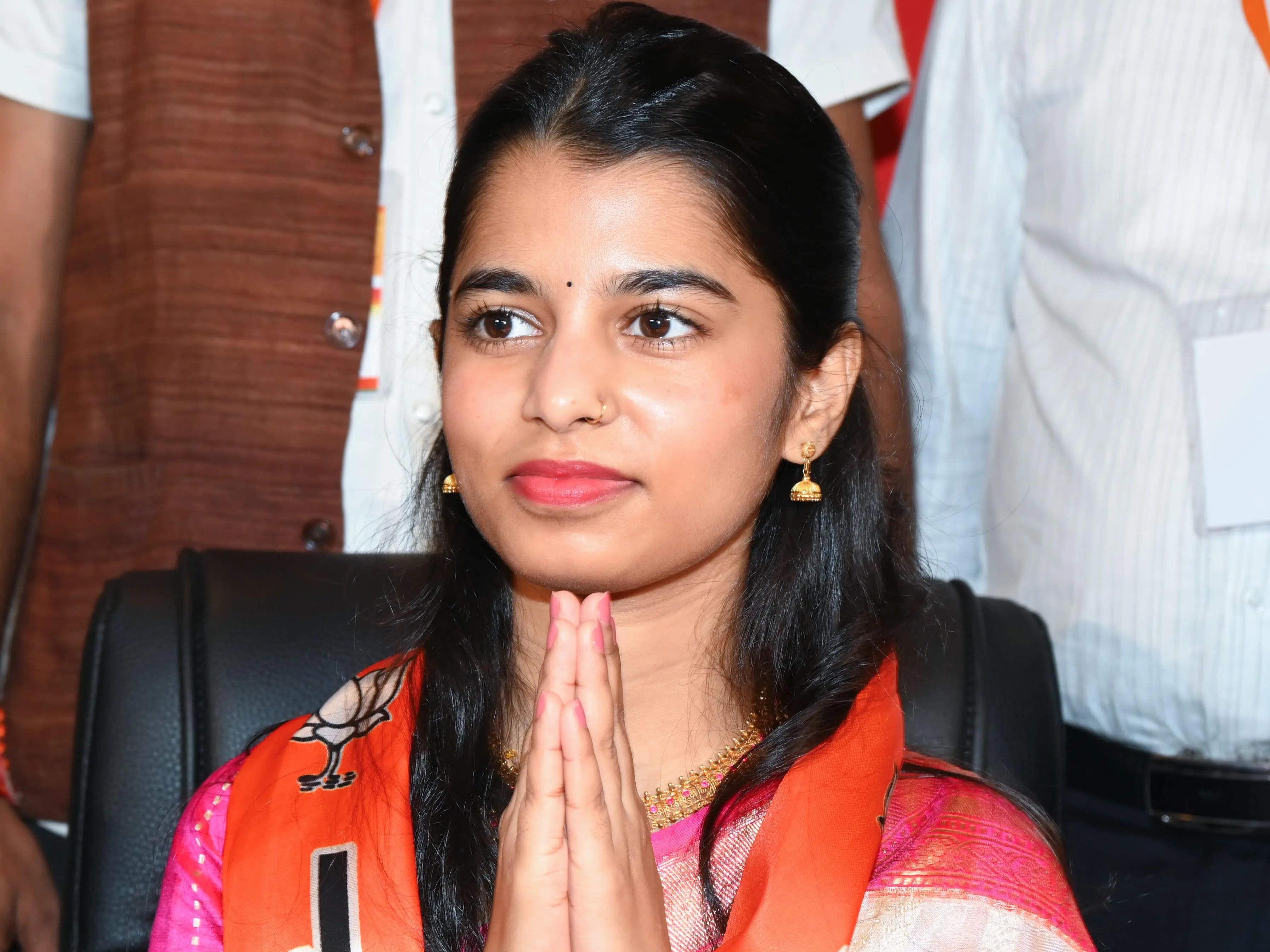
In Bihar’s Darbhanga district, the Alinagar assembly seat has suddenly turned into the epicentre of a fascinating political experiment — one that mixes art, identity, and youth aspiration. At its heart is 25-year-old folk singer Maithili Thakur, who has traded her tanpura for a ticket, becoming the BJP’s youngest face in the 2025 assembly polls.
The cultural face of Mithila turns political
For years, Maithili Thakur has been more than just a singer — she’s been the cultural voice of Mithila, using her platform to preserve Maithili language, music, and devotional traditions. Her renditions of Maithili Lokgeet and bhajans have connected urban youth to their roots and made her a household name far beyond Bihar. Her entry into politics, therefore, isn’t just a career shift — it’s a statement. When she joined the BJP in October, it wasn’t merely about contesting an election; it was about bringing cultural pride into mainstream political conversation. By proposing to rename Alinagar as “Sitanagar” — invoking Goddess Sita, Mithila’s most revered symbol — Maithili has deliberately tied her campaign to the emotional identity of her region. Supporters call it a revival of pride. Critics see it as symbolic populism. Either way, the conversation has changed — Alinagar is no longer a quiet constituency.
Why Alinagar matters
Alinagar, carved out in 2010, sits deep within Darbhanga’s political heartland, a region that has historically leaned towards the Rashtriya Janata Dal (RJD). Veteran Abdul Bari Siddiqui made this belt an RJD bastion, winning seven times before stepping back after 2015. The 2020 assembly polls, however, saw a power shift. The Vikassheel Insaan Party’s Mishri Lal Yadav narrowly beat RJD’s Binod Mishra by just over 3,000 votes — an indication that the RJD’s grip was loosening. Now, with Siddiqui out of the picture and the BJP sensing opportunity, Alinagar has become a testing ground for whether charisma, youth, and cultural pride can trump traditional caste arithmetic.
Trending Stories
&imwidth=180&imheight=135&format=webp&quality=medium)
1,500 drones illuminate Mumbai sky as Cordelia Cruises unveils second ship, Cordelia Sky
&imwidth=180&imheight=135&format=webp&quality=medium)
'Say no to Muse': Meta has no control over its own moderation AI while it forces a security nightmare on everyone
&imwidth=180&imheight=135&format=webp&quality=medium)
Delhi protest: CJI Surya Kant declines to meet India Bloc leaders
&imwidth=180&imheight=135&format=webp&quality=medium)
Top AI models flunked a test of inventing new AI research, so much for self-improving AI
&imwidth=180&imheight=135&format=webp&quality=medium)
'Ouch!!! That must hurt': Kangana Ranaut hails Kamal Haasan's sharp reply to Elon Musk over Starlink row
&imwidth=180&imheight=135&format=webp&quality=medium)
Delhi wakes up to heavy rain, thunderstorms; yellow alert in place; temperature drops
&imwidth=180&imheight=135&format=webp&quality=medium)
Prince Harry and Meghan Markle to spend Christmas away from royal family
&imwidth=180&imheight=135&format=webp&quality=medium)
Anthropic's AI invented a murder witness and sent the fake tip to Philadelphia police
&imwidth=180&imheight=135&format=webp&quality=medium)
UK school ditches technology, shifts from screen to pen and paper for learning
&imwidth=180&imheight=135&format=webp&quality=medium)
Meta's Muse AI could be a security nightmare for India's billion-plus users
&im=FitAndFill=(700,400)&imwidth=180&imheight=135&format=webp&quality=medium)
Is sending robots to Mars easier than sending humans?
&im=FitAndFill=(700,400)&imwidth=180&imheight=135&format=webp&quality=medium)
New OTT releases this week (October 12-18, 2026): Sacrifice, Koffee with Karan S9, Roadies Rebirth- 6 titles coming on Netflix, JioHotstar and more
&imwidth=180&imheight=135&format=webp&quality=medium)
Sidhu Moose Wala’s younger brother wins hearts by recreating late singer’s signature move at Toronto Hologram Show
&imwidth=180&imheight=135&format=webp&quality=medium)
Maharashtra appoints FDA commissioner Tukaram Mundhe as secretary of committee for MPSC overhaul amid stir
&im=FitAndFill=(700,400)&imwidth=180&imheight=135&format=webp&quality=medium)
Navratri 2026: 9 days, 9 forms of Goddess Durga and 9 colours- Check the complete list
&imwidth=180&imheight=135&format=webp&quality=medium)
McSweeney reveals how studying Virat Kohli’s YouTube clips helped Australia A conquer India
&imwidth=180&imheight=135&format=webp&quality=medium)
Portugal Federation confirms Cristiano Ronaldo’s return to national team despite suspension
&imwidth=180&imheight=135&format=webp&quality=medium)
iPhone Duo price index: Tracking Apple’s latest pricing trends
&imwidth=180&imheight=135&format=webp&quality=medium)
Wasim Jaffer blames Ajit Agarkar-led selection panel for Virat Kohli’s Test retirement
&imwidth=180&imheight=135&format=webp&quality=medium)
China imposes first-ever sanctions on ministers from Taiwan allies: What this means
&imwidth=180&imheight=135&format=webp&quality=medium)
Nana Patekar's cause of death confirmed; here's what his postmortem report says
&imwidth=180&imheight=135&format=webp&quality=medium)
Houthis claim Riyadh airport attacks, Aramco strikes; issue fresh warning to airlines, travellers and workers
&imwidth=180&imheight=135&format=webp&quality=medium)
Delhi protests: 'Court should not be dragged into political activity', says CJI Surya Kant
&imwidth=180&imheight=135&format=webp&quality=medium)
One Indian killed in Riyadh airport attack; 11 others injured : MEA
&imwidth=180&imheight=135&format=webp&quality=medium)
Telangana man allegedly recruited into Russian military dies near Ukraine border
&imwidth=180&imheight=135&format=webp&quality=medium)
'Turn approver, resign, we'll forgive you': Rahul Gandhi claims receiving messages from CEC Gyanesh Kumar
&imwidth=180&imheight=135&format=webp&quality=medium)
IND vs WI, 3rd T20I: Abhishek Sharma smashes 18-ball fifty, sets record for fastest to 2,000 T20I runs
&imwidth=180&imheight=135&format=webp&quality=medium)
Other Mommy leads North American box Office as Verity, Resident Evil round out top four
&imwidth=180&imheight=135&format=webp&quality=medium)
Microsoft's Nadella says treat every AI model as already hacked, and build an 'emergency brake'
&imwidth=180&imheight=135&format=webp&quality=medium)
Iran: US accepted some conditions, Clarity needed on others
&imwidth=180&imheight=135&format=webp&quality=medium)
A watchdog rated 'ChatGPT for Teens' an unacceptable risk and says keep under-18s off it
&imwidth=180&imheight=135&format=webp&quality=medium)
CJI Surya Kant declines INDIA bloc leaders’ request for meeting ahead of march to SC, asks them to file petition
&imwidth=180&imheight=135&format=webp&quality=medium)
'Just coincidence': Police mistakes protester as AISA chief Neha Bora, arrests her from site
A three-way tug of war
Maithili Thakur faces a tough triangular contest — against Binod Mishra (RJD), who represents the party’s loyal base, and Biplaw Kumar Chowdhary (Jan Suraj Party), who’s trying to attract the anti-establishment vote. For Maithili, the challenge is converting her popularity into actual votes. Folk fame doesn’t automatically translate into political capital, especially in a region where ground mobilization, caste equations, and booth management decide outcomes. Yet, her presence has unsettled both the RJD and smaller regional parties. The BJP’s campaign is framing her as a “self-made daughter of Mithila,” someone who represents aspiration rather than inheritance — a pointed contrast to Bihar’s dynastic political culture.
The BJP’s big strategic bet
By fielding Maithili, the BJP is making a broader pitch — one rooted in youth representation, gender empowerment, and regional emotion. The party hopes to expand its footprint in north Bihar, a region where it has historically played second fiddle to RJD’s social base. Union Home Minister Amit Shah’s rally in Alinagar underlined that strategy. “Shouldn’t youngsters with no political background get a chance?” he asked, linking Maithili’s nomination to a larger BJP narrative — breaking political monopolies and creating a new generation of leaders. The subtext is clear: Maithili is not just a candidate; she’s a symbol of how the BJP wants to recast Bihar politics in a new, youth-driven frame.
Mithila’s identity has always had deep emotional resonance — its art, language, and Goddess Sita form the cultural backbone of north Bihar. By invoking Sita and calling for the renaming of Alinagar, Maithili has turned that identity into a campaign tool. For many, her proposal to rename Alinagar as Sitanagar goes beyond politics — it is about reclaiming cultural dignity. For others, it’s a soft Hindutva strategy aimed at mobilizing the religious and cultural sentiment that BJP often uses effectively. Either way, the debate has worked in her favour by keeping her campaign at the center of statewide attention.
As the election nears, Alinagar has become more than a constituency — it’s a laboratory for Bihar’s evolving politics. Will Maithili Thakur’s blend of culture and youth appeal overpower decades of entrenched political structures? If she wins, it would mark a generational and ideological shift — from legacy-driven politics to aspirational representation. If she loses, it will still cement her as a political voice capable of mobilizing the youth and cultural middle class of Mithila.
For now, one thing is certain — Alinagar’s fight is not just about votes. It’s about what kind of politics Bihar wants next: traditional, transactional, or transformational.

