Air India plane crash: The final report everyone is waiting for

&imwidth=600&imheight=450&format=webp&quality=medium "Air India plane crash: The final report everyone is waiting for")
Air India Flight AI171 Photograph: (Others)
Now, as investigators move toward releasing the final report, that silence is about to be broken. It will reveal how a modern aircraft, guided by layers of technology and human expertise, could still fall into failure—and what must change to ensure it never happens again.
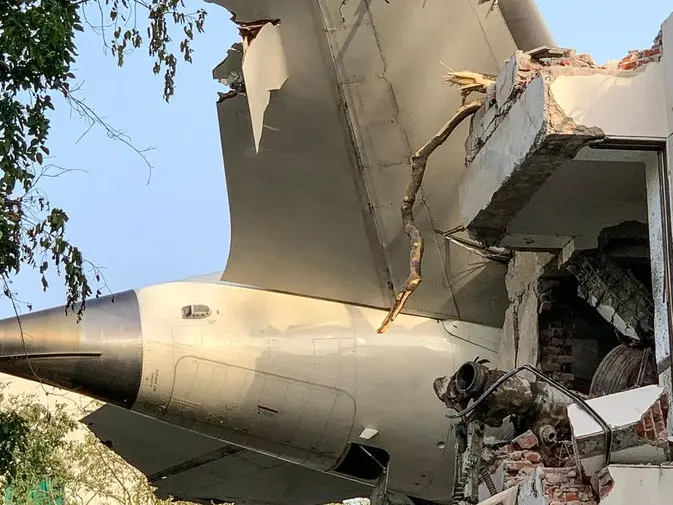
MUMBAI: In aviation, silence is rare. Every flight leaves behind a trail of data, decisions, and signals. Yet after the Air India Flight AI171 crash in June last year in Ahmedabad, what lingered wasn’t just wreckage—it was uncertainty.
For months, fragments of information have surfaced. A preliminary report offered early clues. Experts speculated. But the full story—the one grounded in evidence, not assumption—has remained out of reach.
Now, as investigators move toward releasing the final report, that silence is about to be broken. And when it is, it won’t just answer what went wrong. It will reveal how a modern aircraft, guided by layers of technology and human expertise, could still fall into failure—and what must change to ensure it never happens again.
When the Air India Flight AI171 crash shocked the country, the immediate questions were simple: What went wrong? Could it have been prevented? Nearly a year later, investigators are preparing to answer those questions in full. The final report—expected around June 2026—won’t just document a tragedy. It will decode it.
A Reconstruction Down to the Second
Modern aircraft are flying data centres, and investigators use that to their advantage. By analysing the flight data recorder (FDR) and cockpit voice recorder (CVR), the report will rebuild the flight moment by moment.
Trending Stories
&im=FitAndFill=(700,400))
)
)
)
)
&im=FitAndFill=(700,400))
)
)
)
)
)
)
)
)
)
)
)
&im=FitAndFill=(700,400))
)
)
)
)
)
&im=FitAndFill=(700,400))
)
)
)
)
)
&im=FitAndFill=(700,400))
)
)
)
From the instant the aircraft began its takeoff roll to the final seconds, every control input, every system response, and every cockpit conversation will be mapped.
This timeline often becomes the backbone of the investigation—a precise narrative that shows not just what happened, but when and how quickly things unravelled.
The Machine: Did Something Fail?
No crash investigation is complete without a deep dive into the aircraft itself. Engine performance, flight control systems, onboard computers, and maintenance records will all come under scrutiny.
Investigators will look for:
Hidden mechanical faults
Software anomalies
Maintenance oversights
If a single component triggered a cascade of failures, the report will identify it. If not, it will explain how multiple small issues may have combined into something catastrophic.
The Human Element
Aviation accidents are rarely just about machines. The final report will examine the actions and decisions of the flight crew—without turning it into a blame game.
Instead, it will focus on human factors:
Were the pilots receiving confusing or conflicting signals?
Did time pressure limit their options?
Were procedures adequate for the situation they faced?
By analysing cockpit communication and training records, investigators aim to understand how humans interact with the aircraft under stress.
The Environment Around the Flight
Beyond the cockpit, the report will consider external influences:
Weather conditions at the time of takeoff
Runway and airport environment
Instructions from air traffic control
Even seemingly minor factors—like wind patterns or visibility—can play a decisive role when combined with other issues.
The Core Answer: Probable Cause
At the heart of the report lies its most anticipated section: the probable cause.
Guided by standards from the International Civil Aviation Organisation, investigators won’t point fingers. Instead, they will outline a chain of events—primary causes and contributing factors—that together explain the crash.
In modern aviation, disasters are almost never the result of a single failure. They are systems breaking down in sequence.
Turning Tragedy Into Change
If the report answers why the crash happened, its recommendations will answer what happens next.
These safety recommendations often have global impact:
Changes in pilot training programs
Updates to aircraft systems or software
New regulatory guidelines for airlines and manufacturers
Past investigations have led to sweeping reforms across the aviation industry. This one could be no different.
The Evidence Behind the Conclusions
To support its findings, the report will include extensive technical material:
Data visualizations from flight recorders
Wreckage analysis and impact studies
Simulations recreating the event
These details ensure the conclusions are not just persuasive—but scientifically grounded.
What the Report Will Not Do
Despite its depth, the report has clear limits:
It will not assign legal blame or liability
t will not determine compensation
It will avoid sensationalism, focusing strictly on safety
Its purpose is not judgment—but prevention.
Why This Report Matters
For families, it represents closure. For the aviation industry, it is a blueprint for safer skies. For the public, it is a rare look into how complex systems fail—and how they can be improved.
