

&imwidth=800&imheight=600&format=webp&quality=medium "60 Hours of terror: 17 years later, revisiting Mumbai’s 26/11 terror attack sites")
It's been 17 years since Mumbai’s busiest locations were under attack of Pakistan-based terrorists for over four days. 166 people were killed and more than 300 were injured. The 26/11 attack of 2008 is among the most horrific terror attack of the world. While Indian forces in a massive operation was able to secure Mumbai after nearly 60 hours, the scars of the attack continue to haunt survivors and families.
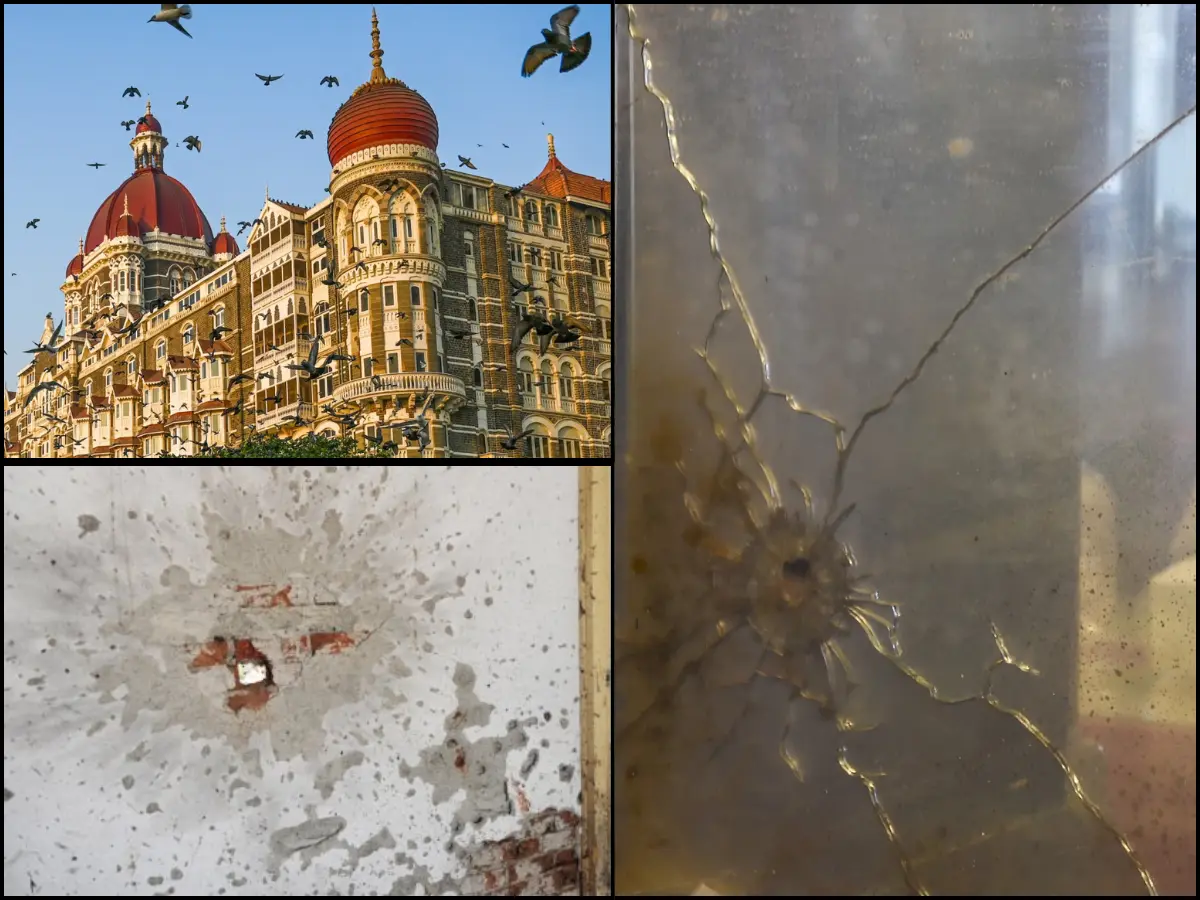
Pakistan-backed Lashkar-e-Taiba (LeT) terrorists entered India's financial capital via sea route and chose the attack sites to produce maximum impact. The bullet marks at Leopold Cafe and Nariman House tell the stories of horror till date. Here's a breakdown of how and where the attack happened on that night:
Colaba: Leopold Café: Time: 9:40 PM
Two gunmen opened fire inside the iconic cafe killing diners instantly. The attack left shattered glass, bullet marks, and overturned tables, transforming a casual evening hangout spot into the first scene of chaos.

Colaba: Nariman House (Chabad House): Time: 9:45 PM
Trending Stories
&imwidth=180&imheight=135&format=webp&quality=medium)
'My name has always been Ilhan Omar': Congresswoman hits back at Trump, calls him a 'creep'
&imwidth=180&imheight=135&format=webp&quality=medium)
Gravitas | US attack could trigger WW III: Russian planes in Tehran, Israeli jets, US warships in action
&imwidth=180&imheight=135&format=webp&quality=medium)
Viral video shows cross falling on Colombia priest, no official confirmation | WATCH
&imwidth=180&imheight=135&format=webp&quality=medium)
US Navy, Marine Corps boards defy Trump's transgender military ban, vote to retain troops
&imwidth=180&imheight=135&format=webp&quality=medium)
Will the US attack Iran this weekend? Trump's envoy says, 'absolutely'
&imwidth=180&imheight=135&format=webp&quality=medium)
Fauzi teaser out: Prabhas takes on the British Empire in patriotic avatar | Watch
&imwidth=180&imheight=135&format=webp&quality=medium)
India-China face-off continues near Arunachal’s Taksing, reveals ITBP chief in first official confirmation of tensions
&imwidth=180&imheight=135&format=webp&quality=medium)
Nairobi building collapse: Several feared trapped after 16-storey structure crumbles; rescue operation underway
&imwidth=180&imheight=135&format=webp&quality=medium)
Pakistan airline PIA unveils new crew uniforms, faces online criticism
&imwidth=180&imheight=135&format=webp&quality=medium)
Did Neha Bora call for Bangladesh-like GenZ protest, 'anarchy' in India? WION Fact-checks viral claim
&imwidth=180&imheight=135&format=webp&quality=medium)
Scientists make digital nose that can sniff and send scents over the internet
&imwidth=180&imheight=135&format=webp&quality=medium)
'Already tired of his 9-to-5': Baby born with a moustache becomes internet sensation, video goes viral | Watch
&imwidth=180&imheight=135&format=webp&quality=medium)
Horrific video shows the moment 18-year-old fell to her death from Mexico amusement park ride
&imwidth=180&imheight=135&format=webp&quality=medium)
IND-W vs ZIM-W, 1st ODI: Rawal, Charani star in India’s nine-wicket win over Zimbabwe
&imwidth=180&imheight=135&format=webp&quality=medium)
Massive 7.2 magnitude quake off Vanuatu triggers tsunami warning for coasts within 300 km
&imwidth=180&imheight=135&format=webp&quality=medium)
Microsoft AI diagnoses complex medical cases more than twice as accurately as doctors, study finds
&imwidth=180&imheight=135&format=webp&quality=medium)
Google Fitbit Air’s new health guardian feature tracks trends: How it works
&imwidth=180&imheight=135&format=webp&quality=medium)
US midterms 2026: Trump revises Canada tariffs as Susan Collins faces tight re-election race in Maine
&imwidth=180&imheight=135&format=webp&quality=medium)
US midterms 2026: Viral video claims Lindsey Graham paid underage men for sex; clip released weeks before his sister's Senate race
&imwidth=180&imheight=135&format=webp&quality=medium)
IND vs NZ 2nd T20I: Shreyas Iyer on brink of breaking Rohit Sharma’s record
&imwidth=180&imheight=135&format=webp&quality=medium)
AI deepfakes are spreading online: Why is removing them so difficult?
&imwidth=180&imheight=135&format=webp&quality=medium)
China's dancing robot turns violent bodyguard, lifts cars and fights intruders - Watch
&imwidth=180&imheight=135&format=webp&quality=medium)
Global cybersecurity alert: PHP flaws trigger website shutdowns as hack attempts surge into millions
&imwidth=180&imheight=135&format=webp&quality=medium)
'You’re a horrible little reporter, aren’t you?': Trump snaps at NBC reporter questioning his support for Ramaswamy's campaign ad
&imwidth=180&imheight=135&format=webp&quality=medium)
Chemical warehouse explosion in Mexico: Several injured in multiple blasts, 1,000 evacuated in León
&imwidth=180&imheight=135&format=webp&quality=medium)
US charges two former FBI officials with lying to Congress about Hunter Biden probes. 'Politically motivated' Trump grievance or something else?
&im=FitAndFill=(700,400)&imwidth=180&imheight=135&format=webp&quality=medium)
New Friday OTT releases (October 23, 2026): Gajab Raat, Dorothy, Chaar Yaar- Watch these 6 new movies and TV shows on Netflix, Prime Video and more
&imwidth=180&imheight=135&format=webp&quality=medium)
Anthropic security chief issues grim cyberattack warning: ‘It’s going to get a lot worse’
&imwidth=180&imheight=135&format=webp&quality=medium)
Tu Hai Meri Kiran film review: Sonakshi Sinha and Zaheer Iqbal's thriller gets tangled in its own twists
&imwidth=180&imheight=135&format=webp&quality=medium)
First Lady Melania Trump secures ceasefire between Russia, Ukraine in Oleshky: White House
&imwidth=180&imheight=135&format=webp&quality=medium)
Jenna Ortega plans TV break after Wednesday: ‘I want to leave time for new things’
&imwidth=180&imheight=135&format=webp&quality=medium)
Five killed, several injured after explosion in Bihar's Siwan as firecrackers catch fire
&imwidth=180&imheight=135&format=webp&quality=medium)
Iran targeting US diplomats? Intelligence warns of 'advanced' assassination plots: Report
&imwidth=180&imheight=135&format=webp&quality=medium)
Emmanuel Macron calls Paris suburb shooting a 'racist terrorist attack' after one killed, several injured
Minutes after Leopold, the attackers stormed Nariman House, taking residents and foreigners hostage. This siege lasted nearly two days, ending only after a final NSG assault. The building later became a symbol of targeted international terror.

Taj Mahal Palace Hotel: Time: 9:50 PM
A landmark synonymous with Mumbai’s heritage, the Taj became the centre of the longest gun battle. Multiple explosions, fires, and grenade blasts spread through corridors and the iconic dome. The siege lasted nearly 60 hours, resulting in extensive damage and global shock.

Oberoi Trident Hotel: Time: 10:00 PM
Just across Marine Drive, another group stormed the Trident. Hostages were taken and floors were set ablaze. The operation to neutralise terrorists lasted over 36 hours, marking another prolonged crisis unfolding simultaneously with the Taj siege.

Chhatrapati Shivaji Terminus (CST Railway Station): Time: 10:25 PM
Armed with assault rifles, two attackers opened indiscriminate fire at passengers and staff in one of India’s busiest railway hubs. The shooting continued through platforms and waiting areas, causing mass casualties within minutes.

Cama & Albless Hospital: Time: 10:45 PM
As police tracked the CST attackers, the gunmen moved toward the nearby hospital, opening fire on security personnel. Senior police officers, including ATS chief Hemant Karkare, were later killed while pursuing them.

St. Xavier’s College Lane / Rang Bhavan Lane
Site of ambush that killed senior police officers including Hemant Karkare, Ashok Kamte, and Vijay Salaskar.

Girgaum Chowpatty
During an attempted escape, one terrorist was shot dead, while the other — Ajmal Kasab — was captured alive, marking a turning point in the investigation and global counter-terror fight.


