
&imwidth=800&imheight=600&format=webp&quality=medium "3 failures in 12 months: ISRO's troubles with strategic space missions")
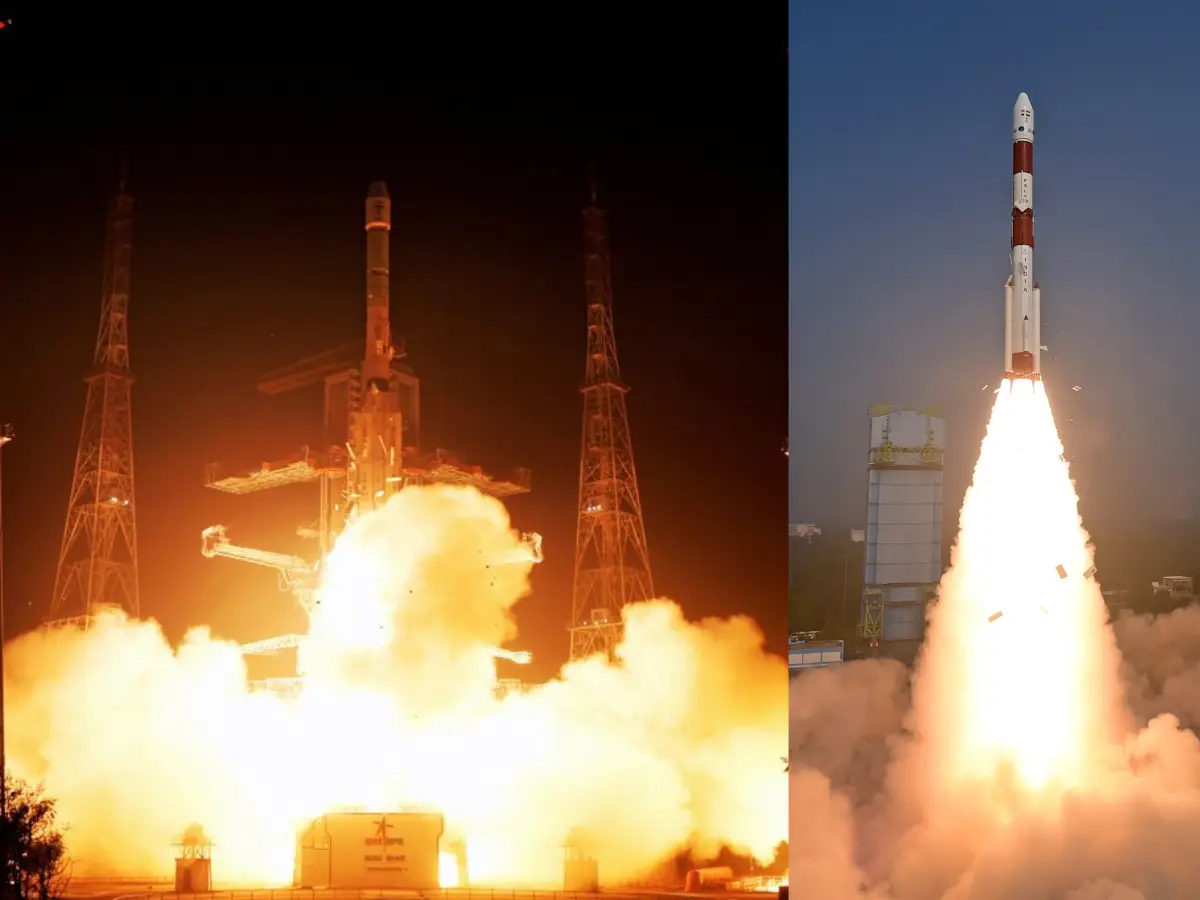
The unprecedented, repeat mid-flight failures of India's PSLV-C61 rocket on May 18, 2025 and the PSLV-C62 rocket on January 12, 2026, are major setbacks to the Indian space agency ISRO and the country's gradually growing space-based surveillance capabilities. Both mid-flight failures of PSLV have led to the loss of million-dollar Earth-imaging satellites meant for strategic use. ISRO's own statistics show that 44 missions have been undertaken between 2017 and 2026, of which five have failed, and all of them are national security missions. Of these five national security mission failures, three of them happened between January 2025 and January 2026. Such recurring patterns of failures in national security-linked missions are a serious cause for concern.
It is to be noted that these five failures occurred in rockets and satellite variants or their components that have been operational with ISRO for decades. Going by rocket and satellite cost estimates, these five mission failures in the last nine years would have cost the Indian government a few hundred million dollars, if not more. Further, the government would have to spend the same amount of money once again to redo these missions. Also, one must factor in the cost of the lost opportunities. Because, in the absence of these homegrown strategic satellites, India would have to purchase similar satellite-based services from foreign firms. Having to commit resources to redo failed missions would also considerably slow down India's planned rocket launch missions and the overall pace of executing space launches.
As per publicly available information (official data is not available for PSLV-C61 and PSLV C-62), each mission failure over the last nine years was caused by a different component/system. This re-emphasises that rocketry is a zero-error business, where even the smallest of errors or defects can lead to catastrophic failures and immense losses. While such losses offer valuable lessons for future missions, it is also important to note that these failures are delaying deployment of several important space-based capabilities developed by Indian scientists.

Here's the list of five Indian strategic space missions that have failed over the last nine years:
January 2026, PSLV-C62/EOS-N1
The PSLV-C62 flight on Monday, (12th Jan 2026), marked PSLV's return to flight after a rare setback during the previous launch in May 2025, and this is also ISRO's first launch of 2026. The primary satellite of this PSLV-C62 mission was the 'EOS-N1' or 'Anvesha', an Earth Observation satellite built by India's Defence Research Development Organization(DRDO). This satellite was to be placed 511kms above the Earth. 'EOS-N1' is a Hyperspectral imaging satellite, which means it can see much more than the human eye or a conventional optical-imaging satellite. As the surface of the Earth gets illuminated by sunlight, different materials(soil, water, metal, vegetation, concrete structure) reflect light, across various wavelengths. A hyperspectral sensor can capture these reflections, classify them and help identify what material it is made of.
Trending Stories
)
‘Kill all in the name of...’: FBI arrests 21-year-old over alleged ISIS-inspired mass-casualty attack plot
)
Space mines, lasers & robotic arms: Lt Gen Pannu decodes US disclosure of weapons in space
)
Bitter Zelensky snubs Trump for playing politics with Ukraine war | Gravitas
)
Passengers scream as Iran flight suffers mid-air scare: Boeing 737 shakes violently after take-off | VIDEO
)
US fires up to 70 interceptors against Iran attack on Jordan, putting supplies under pressure
)
India’s imports from Russia jump 57% in five months; China remains top import source
)
‘US military task force aiding Saudi Arabia forces with intel, planning support’: Official
)
OpenAI boss Sam Altman repeats AI 'slow down' call, says world 'right to be afraid'
)
Top military commanders from US, Israel, and 7 Arab nations held secret meeting on Iran War
)
Sydney Sweeney defends provocative ad choice, the internet is still not impressed
)
'Definitely feel bad for yourself': Kuldeep Yadav opens up on India Test snubs
)
Ex-India all-rounder Yuvraj Singh wants India to avoid 'massive changes' before ODI World Cup 2027
)
Ed Sheeran’s US tour loses all support acts after Macklemore’s removal | Controversy explained
)
China's property crisis deepens as investment plunges nearly 20%
)
Messi set to play in farewell match on October 6 in Argentina vs Benin friendly
)
2,200 people donate Rs 1.5 crore for 'docile' Georgia donkey 'HeeHaw' shot dead by police officer
)
Putin-linked Russian oligarch, Melania links: Why Trump skipped his son’s Bahamas wedding bash?
)
800 million years old - Scientists discover 'fingerprints' of supercontinent Gondwana in ancient rocks
)
Saudi turns to Israel for intelligence help as Houthi attacks intensify: Report
)
Trump's name cannot return to Kennedy Center, US judge rules
)
Water equivalent to two Pacific Oceans could be stashed 2,900 km inside Earth
)
1,200 Indian and US troops begin high-altitude and desert drills
)
Ex-CIA officer caught with gold bars worth $40 million seeks plea deal | Gravitas
&im=FitAndFill=(700,400))
New OTT releases this week (September 14-20, 2026): Lust Stories 3, Waiting Hai, Irumudi- 5 new titles coming on Netflix, Prime Video and more
)
Trump's Iran war faces fresh House rebuke; 7 Republicans join Democrats in push to end conflict ahead of midterms
)
US Treasury yields cross 5% as Scott Bessent warns of ‘global issues’ impacting bonds
)
Who is Kalyan Bainsla, accused in the Gurugram hit-and-run case involving woman biker?
)
Saudi Arabia discovers 110 million tonnes of Uranium-rich ore in Madinah region
)
'Now Trump is copying us': Shivakumar links US $5,000 plan to Congress guarantees
)
Los Angeles helicopter crash: At least three dead, several injured; NTSB to investigate
)
West Bengal IPS officer Bushra Bano transferred after objections to ‘Assalamualaikum’, ‘Inshallah’
)
India summons top Pakistan diplomat after Pak Navy ship collides with Indian warship at high seas
)
Spanish officer sent home from NATO base over affair with 'Russian spy' | Gravitas
)
Saudi Arabia accuses Houthis of drone attack on Mecca, first-ever red alert in Islam's holiest site sparks panic
)
'Like a thug you are using agency to go after..': Kash Patel grilled by Senate Democrats over FBI firings, journalist investigations and hiring policy
In addition to 'EOS-N1', there were 15 co-passenger satellites aboard the PSLV-C62. Seven satellites are from India, while two of them are from Europe, five of them are from Brazil, and one from Nepal. Many of these satellites are from academia or startups, and are meant to demonstrate unique experiments in space.
Speaking from the spaceport, ISRO Chief, Dr. V. Narayanan said, "We attempted PSLV-C-62 mission. PSLV is a four-stage rocket. The vehicle performance up to almost the end of the third stage was as expected. By the end of third stage, we observed a disturbance in the vehicle, and a deviation was observed in the flight path. We are analyzing the data, we will come back at the earliest." While ISRO did not say it explicitly, the PSLV-C62 rocket and all passenger satellites have been lost due to the mid-flight failure.
May 2025, PSLV-C61/EOS-09
On Sunday, 18th May, barely six minutes after liftoff, ISRO's PSLV-C61 rocket faced trouble mid-flight. "Up to the second stage performance was normal. Third stage ignited, but we made an observation regarding its functioning. Mission could not be accomplished. We are studying the data," said ISRO Chief Dr. V. Narayanan regarding the status of the four-stage PSLV rocket that was supposed to perform an 18-minutes-long mission.
EOS-09 is a radar imaging satellite(earlier known as RISAT) that is capable of day and night imaging. It can see through clouds, deliver images under all weather conditions. This 1,700kg satellite was meant to have an operational life of at least five years.
Addressing journalists at the spaceport, the ISRO Chief had elaborated on the observations. "The third stage of the PSLV uses a solid-fuel motor system. There was a fall in the chamber pressure in the motor case. We are studying the entire performance," Dr. Narayanan had said.
January 2025, GSLV-F15/NVS-02
With the first-generation of NAVIC satellites nearing their end-of-life, ISRO began replacing it with a heavier series of five satellites known as NVS. NVS-01, the first satellite in this new series was launched successfully in May 2023. The next one, NVS-02 was launched in January 2025, in what was the 100th rocket launch from the Indian spaceport in Sriharikota.
While the GSLV rocket accomplished its task of placing the NVS-02 satellite in the initial orbit, the satellite encountered an anomaly, which prevented it from firing its on-board engines and moving to the final orbit. Satellites are moved from one orbit to another by firing their liquid-fuelled engines that burn a fuel and oxidiser combination. In this case, it has not been possible to fire the engine and raise the satellite's orbit, due to an issue with the valve that releases the oxidiser.
The satellite was launched into a Geostationary Transfer Orbit (GTO), which is usually used as an initial parking orbit for heavy satellites. Approximately, the satellite was launched into an orbit that is highly elliptical- 170kms above Earth at its nearest approach (perigee) and 36,500 km at its farthest approach from Earth (apogee). Typically, a series of engine firings are performed to place the satellite into a circular orbit, where it is evenly 35,700 km above Earth. However, NVS-02 remained stuck in GTO, rendering the satellite unusable for its core purpose.
August 2021, GSLV-F10/EOS-03
Amid the COVID-19 pandemic, ISRO had launched a sophisticated Earth-imaging satellite known as GISAT-1, aboard the GSLV-F10 rocket. GISAT-1 or EOS-3 was an agile earth observation satellite, which can use different types of imaging technologies to provide a constant monitoring of a region of interest/calamity/weather pattern.
GISAT-1 was meant to provide almost real-time imaging of large regions of interest at frequent intervals, quick monitoring of natural disasters, episodic events, and also obtain spectral signatures for agriculture, forestry, mineralogy, disaster warning, cloud properties, snow & glaciers, and oceanography.
GISAT-1 was meant to stay perched 36,000kms above the Indian subcontinent and help maintain a constant vigil of a large area. This mission was ready for launch in early-2020, but delayed for "technical reasons". Finally, the rocket lifted off on August 12th 2021, but the mission ran into trouble mid-flight, after a malfunction in the Cryogenic upper stage that was meant to place the satellite into orbit. ISRO later revealed that a valve leak in the liquid hydrogen tank led to the failure.
August 2017, PSLV-C39/IRNSS-1H
Indian Regional Navigation Satellite System(IRNSS), later known as Navigation with Indian Constellation(NAVIC) is a Position, Navigation, Timing service meant to be used by the various ministries of the Indian Government and the country's Armed Forces. Simply put, NAVIC is an Indian-made, scaled-down equivalent of Global Positioning System.
During the late-night launch of PSLV-C39, all flight events took place exactly as planned, except heat shield separation. This resulted in satellite separation occurring within the heat shield. The satellite remained inside the heat shield resulting in the unsuccessful mission.
