Pakistan threatens to join war against Iran ally as Houthis attack Saudi | Gravitas

&imwidth=600&imheight=450&format=webp&quality=medium "Pakistan threatens to join war against Iran ally as Houthis attack Saudi | Gravitas")
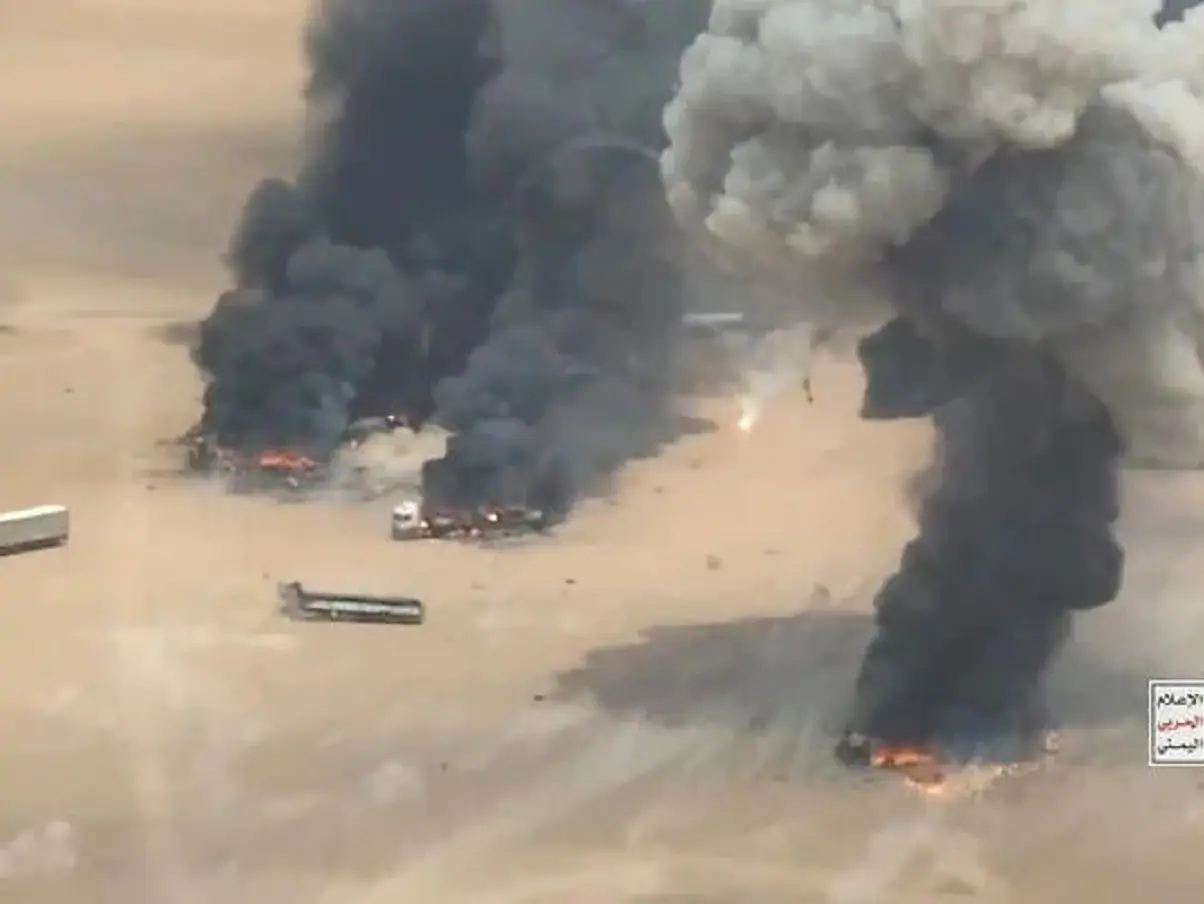
This handout image shared by Houthis purportedly shows a ballistic missile strike on trucks carrying military equipment
Pakistan's dilemma possibly stems from the fact that taking on Houthis will imply challenging Iran. Even after intense strikes by US and Israel, Iran maintains a strong military and arsenal of weapons that can cause significant damage to Pakistan in a conflict scenario.
As fighting between Saudi Arabia and Iran-backed Houthis escalated, the credibility of the Mecca Pact is again at stake.
After one month has elapsed since the signing of this trilateral agreement, Pakistan has now said that it may join Saudi in its battle against the Houthis.
Fierce fighting continued along Yemen's west coast.
Visuals showed Saudi-backed Yemeni forces firing artillery, mortar and heavy machine guns towards Houthi positions on the Maqbanah front which lies west to Taiz.
Houthis also accused Saudi Arabia of launching 32 air strikes on various areas across the regions of Marib, Al-Jawf, Taiz and Hodeida.
As of now, Saudi Arabia is yet to confirm this claim.
Trending Stories
)
)
)
)
)
)
)
)
)
)
)
)
)
)
)
)
)
)
&im=FitAndFill=(700,400))
)
)
)
&im=FitAndFill=(700,400))
)
&im=FitAndFill=(700,400))
&im=FitAndFill=(700,400))
)
Over 500 people have been killed since last week when the Iran-backed group launched a major offensive to seize territory around the Bab al-Mandeb Strait.
This comes as Saudi Arabia had vowed to respond to the drone and missile attacks launched by Houthis at four cities on its soil.
73 people, including women and children, were wounded.
Visuals showed the scale of destruction, whether it is damaged homes or injured people receiving treatment in hospital.
Houthis announced that they also attacked sites belonging to oil giant Aramco.
On its part, Riyadh revealed that several energy facilities and installations were targeted, leading to a temporary halt in some operations due to fires.
Satellite images showed smoke emanating from an Aramco distribution centre and refinery in Abha and Jazan.
This was the first attack on any Aramco facility since July 25, when Houthis claimed to have fired drones and missiles at the oil giant's sites in Jazan and Yanbu.
Now, the latest Houthi attack came barely a day after Iran's parliament speaker Mohammad Bagher Ghalibaf warned of retaliation against energy infrastructure across West Asia if the US attacks its assets.
On his part, Pakistan PM Shehbaz Sharif strongly condemned the attack by Houthis and expressed unwavering solidarity with Saudi Arabia.
However, will Asim Munir's forces formally join Saudi in attacking the Iran-backed group?
This assumes significance, as the Mecca Pact made it clear that an armed attack against any one of Saudi Arabia, Pakistan and Turkiye shall be regarded as an attack against them all.
Speaking to a Pakistani news channel, its defence minister Khawaja Asif hinted at Pakistan entering this conflict.
He said, "Unprovoked aggression or spillover of whatever is happening in Yemen into Saudi Arabia will definitely make the pact operational. There should be no doubt about it.”
However, he added an important caveat.
According to Asif, Pakistan will honour the pact only if a need arises.
Now, Pakistan's dilemma possibly stems from the fact that taking on Houthis will imply challenging Iran.
Even after intense strikes by US and Israel, Iran maintains a strong military and arsenal of weapons that can cause significant damage to Pakistan in a conflict scenario.
It is also worth noting that Munir's forces did not join hostilities against Iran despite a Mecca Pact-like clause being present in the Pakistan-Saudi defence pact signed in September last year.
Meanwhile, US Secretary of State Marco Rubio alleged an Iranian hand behind the latest offensive by Houthis.
After its failed attempt to emerge as a mediator, Pakistan is now facing a catch-22 situation as it runs the risk of offending both Saudi as well as Iran as the war drags on...