Why is this lake called the world's largest mirror?

&imwidth=600&imheight=450&format=webp&quality=medium "Why is this lake called the world's largest mirror?")
Salar de Uyuni Photograph: (Wikimedia Commons)
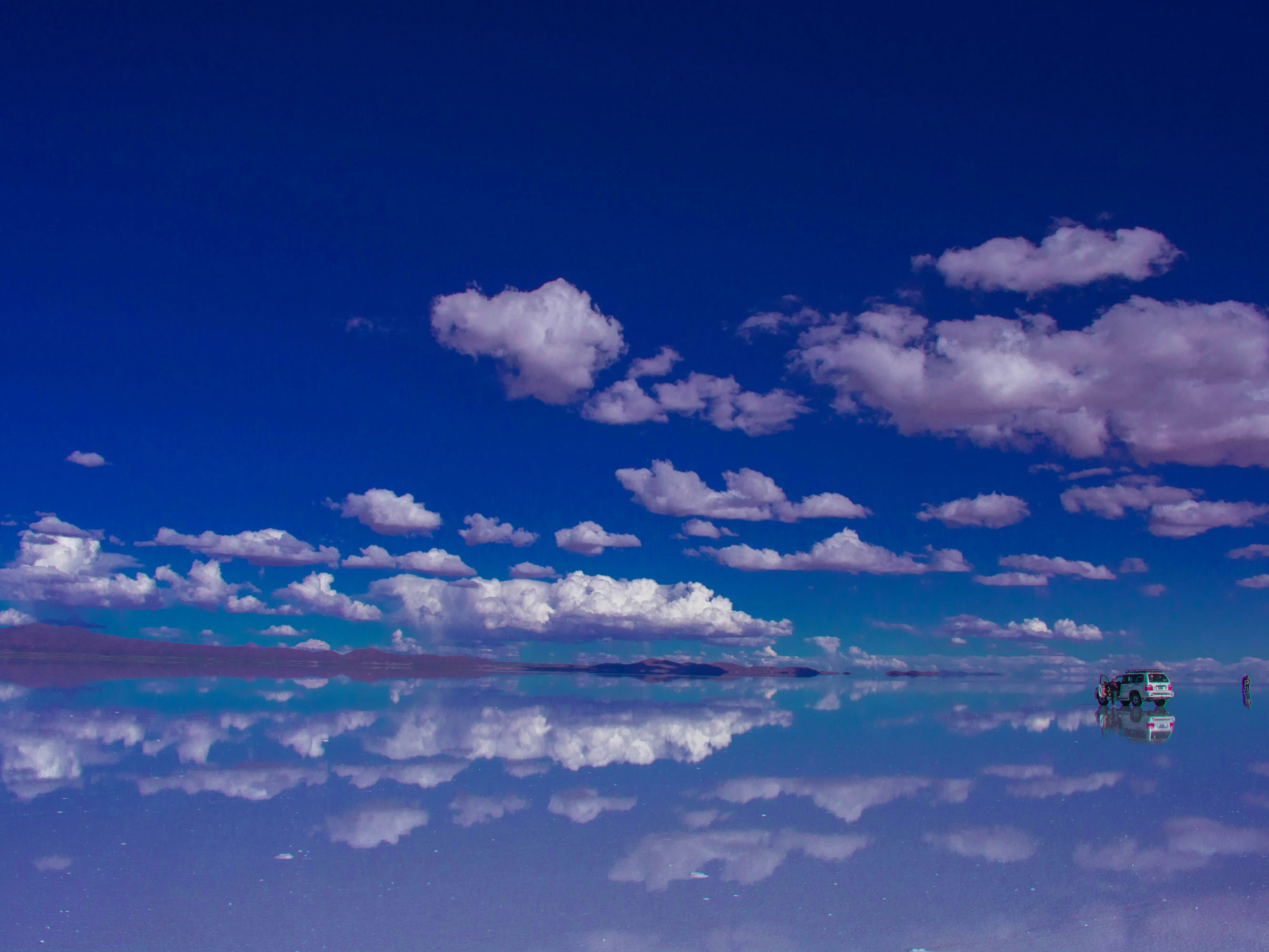
Located in Bolivia at an altitude of 3,656 metres, Salar de Uyuni is the world's largest salt flat. During the rainy season, a shallow layer of water covers its 10,582-square-kilometre surface, transforming the prehistoric lake bed into a massive, sky-reflecting natural mirror.
Deep in the Andes mountains of southwestern Bolivia lies a landscape that looks unlike anywhere else on Earth. The Salar de Uyuni spans an incredible 10,582 square kilometres, making it the largest salt flat in the world. While it remains a vast expanse of dry, white crust for most of the year, a seasonal weather shift turns this desolate terrain into a stunning visual phenomenon. Here is exactly why this South American destination is known globally as the world's largest mirror.
The remnants of prehistoric lakes
The foundation of this giant mirror was laid over 40,000 years ago. The area was once covered by massive ancient bodies of water, primarily Lake Minchin and Lake Tauca. When these prehistoric lakes eventually dried up under the intense sun, they left behind a thick crust of sodium chloride and other minerals. Beneath this hard salt crust lies a vast pool of brine that holds an exceptionally high concentration of lithium. This underground reserve is currently estimated to contain roughly 22 per cent of the world's known lithium resources.
The rainy season transformation
The famous mirror effect only occurs during the region's rainy season, which typically lasts from December to April. Runoff from the surrounding mountains floods the salt flat, but because the crystalline crust is completely impervious, the water does not sink into the ground. Instead, it forms a perfectly still, shallow pool just a few centimetres deep across the entire 10,582-square-kilometre expanse. Because the ground has an elevation change of less than one metre across the whole area, the thin layer of water acts as a flawless liquid lens, reflecting the sky and clouds with total clarity. When the winds are calm, a whiteout effect occurs, making it nearly impossible to tell where the horizon ends and the sky begins.
A vital tool for space agencies
Trending Stories
&imwidth=280&imheight=210&format=webp&quality=medium)
&im=FitAndFill=(700,400)&imwidth=280&imheight=210&format=webp&quality=medium)
&im=FitAndFill=(700,400)&imwidth=280&imheight=210&format=webp&quality=medium)
&imwidth=280&imheight=210&format=webp&quality=medium)
&imwidth=280&imheight=210&format=webp&quality=medium)
&imwidth=280&imheight=210&format=webp&quality=medium)
&imwidth=280&imheight=210&format=webp&quality=medium)
&imwidth=280&imheight=210&format=webp&quality=medium)
&imwidth=280&imheight=210&format=webp&quality=medium)
&imwidth=280&imheight=210&format=webp&quality=medium)
&imwidth=280&imheight=210&format=webp&quality=medium)
&imwidth=280&imheight=210&format=webp&quality=medium)
&imwidth=280&imheight=210&format=webp&quality=medium)
&imwidth=280&imheight=210&format=webp&quality=medium)
&imwidth=280&imheight=210&format=webp&quality=medium)
&imwidth=280&imheight=210&format=webp&quality=medium)
&imwidth=280&imheight=210&format=webp&quality=medium)
&imwidth=280&imheight=210&format=webp&quality=medium)
&imwidth=280&imheight=210&format=webp&quality=medium)
&imwidth=280&imheight=210&format=webp&quality=medium)
&imwidth=280&imheight=210&format=webp&quality=medium)
&imwidth=280&imheight=210&format=webp&quality=medium)
&im=FitAndFill=(700,400)&imwidth=280&imheight=210&format=webp&quality=medium)
&imwidth=280&imheight=210&format=webp&quality=medium)
&imwidth=280&imheight=210&format=webp&quality=medium)
&imwidth=280&imheight=210&format=webp&quality=medium)
&imwidth=280&imheight=210&format=webp&quality=medium)
&imwidth=280&imheight=210&format=webp&quality=medium)
&imwidth=280&imheight=210&format=webp&quality=medium)
&imwidth=280&imheight=210&format=webp&quality=medium)
&imwidth=280&imheight=210&format=webp&quality=medium)
&imwidth=280&imheight=210&format=webp&quality=medium)
&imwidth=280&imheight=210&format=webp&quality=medium)
This optical phenomenon is not just a tourist attraction; it has serious scientific value. The mirror is so large and highly reflective that space agencies like NASA and the European Space Agency (ESA) use it to test and calibrate their satellite altimeters. Because the Bolivian plateau sits at an extreme elevation of 3,656 metres above sea level, it remains far above most atmospheric moisture and pollution, ensuring there are no aerosols to scatter the sunlight. This pristine clarity makes the flat an essential geodetic benchmark for modern space observation.
Travellers hoping to walk on the sky should plan their visit between January and March, when the mirror effect is most prominent. Visitors must pack warm clothing and prepare for the extreme altitude, as the thin air at 3,656 metres requires proper acclimatisation before exploring the flooded flats.
