Exclusive | Tom Holland on ancient Greek perceptions of India as a land of wonders and navigating propaganda

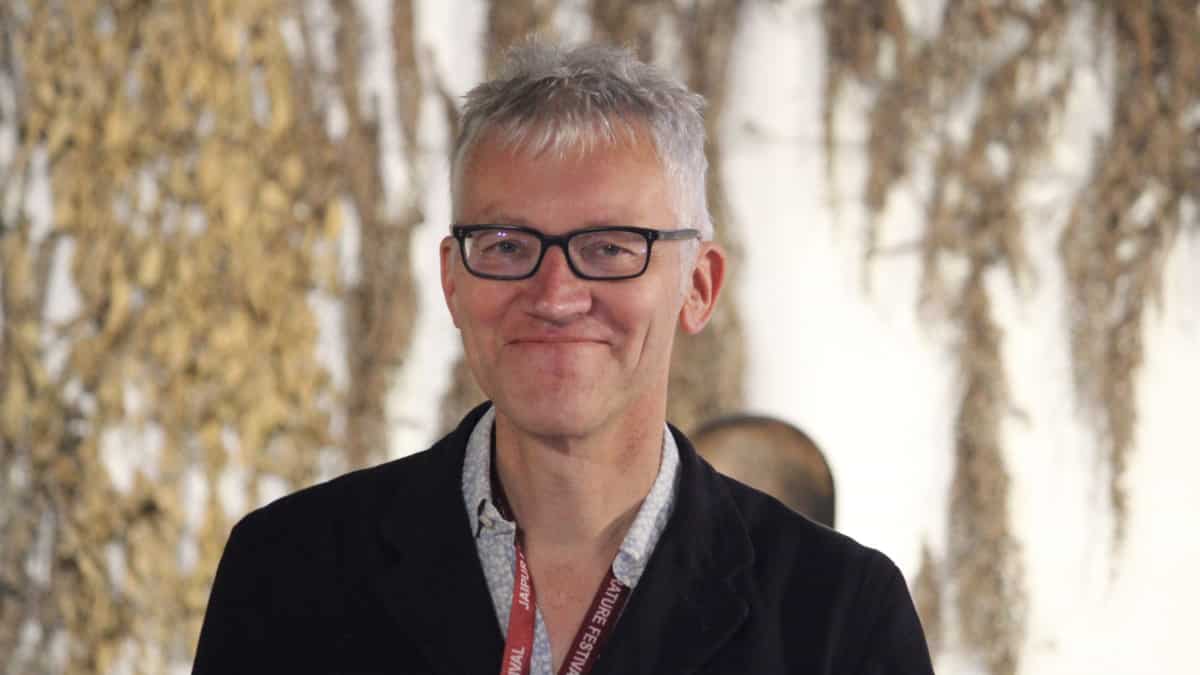
British historian Tom Holland discusses ancient Greek perceptions of India, and more.
Tom Holland is an English historian, author, and broadcaster. He has written several books on classical and religious history, including Rubicon: The Last Years of the Roman Republic, Persian Fire: The First World Empire and the Battle for the West, In the Shadow of the Sword, and Dynasty: The Rise and Fall of the House of Caesar. His latest book Dominion: How the Christian Revolution Remade the World explores the impact of Christianity on Western society and its role in shaping the modern world. He also co-hosts a popular podcast geared towards history lovers called The Rest is History with compatriot Dominic Sandbrook — also a historian.
WION caught up with Holland at the recently concluded 2023 edition of Jaipur Literature Festival. Full of infectious enthusiasm and energy about his work, the tall, slim scholar is wonderfully insightful to listen to, as the attendees at his impromptu session on Persian Empire during the festival will corroborate. As suits his oeuvre, I asked him questions on a variety of historical topics.
While every book of Holland is meticulously well-written and researched, for me, it is his brillianttranslation of a book written by a man 2500 years ago that remains the favourite. The man is Herodotus and the book is called, simply, Histories.

Regarded as the progenitor of the entire discipline of history, Herodotus' Histories is regarded as the first work of history in Western literature. As opposed to epics that were prevalent at that time, Histories employed the historical method, including emphasising the importance of eyewitness accounts and critical examination of sources. He even expresses suspicion at some of the more far-fetched accounts as Holland notes in his preface.
Also Read:Indians at Oscars: A brief history
How the west saw India and Indians in the ancient era
&imwidth=180&imheight=135&format=webp&quality=medium)
Viral video shows cross falling on Colombia priest, no official confirmation | WATCH
&imwidth=180&imheight=135&format=webp&quality=medium)
France reports first human case of livestock virus Shamonda, patient dies; what we know so far
&imwidth=180&imheight=135&format=webp&quality=medium)
Two BrahMos missiles on Tejas, triple the range and 100% indigenisation, says former BrahMos CEO
&imwidth=180&imheight=135&format=webp&quality=medium)
India-China face-off continues near Arunachal’s Taksing, reveals ITBP chief in first official confirmation of tensions
&imwidth=180&imheight=135&format=webp&quality=medium)
Ilhan Omar breaks silence over alleged marriage to her brother; Trump thinks it's 'really good answer'
&imwidth=180&imheight=135&format=webp&quality=medium)
WATCH: Trump demands Ilhan Omar removal from Congress for 'using fake name to be sworn in'. So what is her real name?
&imwidth=180&imheight=135&format=webp&quality=medium)
Netanyahu dials PM Modi, invites him and Capt Smit Machchhar to light torch on Israel’s Independence Day
&imwidth=180&imheight=135&format=webp&quality=medium)
Christa Pike's failed execution: Tennessee team struggled to insert IV lines, lawyer says
&imwidth=180&imheight=135&format=webp&quality=medium)
US midterms 2026: US Supreme Court allows New Hampshire to restrict student IDs for voting
&imwidth=180&imheight=135&format=webp&quality=medium)
A secret code, a midnight escape and 300 deaths: The Russian officer who turned on Putin
&imwidth=180&imheight=135&format=webp&quality=medium)
Trump ordered to answer questions under oath in BBC defamation lawsuit by December 11
&imwidth=180&imheight=135&format=webp&quality=medium)
Putin says Russia is ready to resume Ukraine-US peace talks but rejects 'short ceasefire' amid deadly attacks
&imwidth=180&imheight=135&format=webp&quality=medium)
Horrific video shows the moment 18-year-old fell to her death from Mexico amusement park ride
&imwidth=180&imheight=135&format=webp&quality=medium)
From Agni-V to Project Kusha: How are India’s indigenous missile systems and defence shield reshaping modern warfare
&imwidth=180&imheight=135&format=webp&quality=medium)
'It's a crime not to see this scene': Tehran puts Trump 'behind bars'
&imwidth=180&imheight=135&format=webp&quality=medium)
What is the ‘heat ray’ weapon? Pete Hegseth reportedly authorises DHS to test it at US-Mexico border
&imwidth=180&imheight=135&format=webp&quality=medium)
Koffee With Karan 9: Rashmika Mandanna calls trolling over South Indian accent ‘unreasonable’
&imwidth=180&imheight=135&format=webp&quality=medium)
Meghan Markle’s father Thomas under investigation over alleged child abuse images: Report
&imwidth=180&imheight=135&format=webp&quality=medium)
SA vs AUS 2nd Test: Temba Bavuma reveals 'Tendulkar inspiration' behind career-best 179
&imwidth=180&imheight=135&format=webp&quality=medium)
China's dancing robot turns violent bodyguard, lifts cars and fights intruders - Watch
&imwidth=180&imheight=135&format=webp&quality=medium)
Watch: India rejects ‘imprecise and unsupported’ references in UN migrant rights report
&imwidth=180&imheight=135&format=webp&quality=medium)
US to get 850 F-35 stealth fighter jets under 10-year Pentagon-Lockheed deal
&imwidth=180&imheight=135&format=webp&quality=medium)
GRAVITAS | Putin fires nuclear-capable hypersonic missiles, Zelensky ready to surrender 25% territory
&im=FitAndFill=(700,400)&imwidth=180&imheight=135&format=webp&quality=medium)
New Friday OTT releases (October 23, 2026): Gajab Raat, Dorothy, Chaar Yaar- Watch these 6 new movies and TV shows on Netflix, Prime Video and more
&imwidth=180&imheight=135&format=webp&quality=medium)
'That was great, who threw that punch?': Trump asks as protester punched at rally
&im=FitAndFill=(700,400)&imwidth=180&imheight=135&format=webp&quality=medium)
Serbia elections: Nearly 150,000 people take to streets in massive rally against Aleksandar Vucic | In pics
&imwidth=180&imheight=135&format=webp&quality=medium)
'This is despicable': Amy Acton hits back at Vivek Ramaswamy over Ohio campaign ad featuring her estranged mother
&imwidth=180&imheight=135&format=webp&quality=medium)
Finance influencer dies by suicide in Chennai; father accuses tech CEO, who denies charge
&imwidth=180&imheight=135&format=webp&quality=medium)
'Vivek should keep it up': Trump defends Ramaswamy's controversial campaign ad targeting Amy Acton
&imwidth=180&imheight=135&format=webp&quality=medium)
One man, 8 months of work, and a river dirty again: Why Bittu Tabahi may quit
&imwidth=180&imheight=135&format=webp&quality=medium)
US midterms 2026: Elon Musk’s political spending hits $445 million as Republicans battle to retain Senate control
&imwidth=180&imheight=135&format=webp&quality=medium)
ENG vs SL: Harry Brook breaks Shubman Gill’s record for fastest ODI double century
&imwidth=180&imheight=135&format=webp&quality=medium)
ENG vs SL: Harry Brook’s 202 goes in vain as Sri Lanka pull off second-highest ODI chase
&imwidth=180&imheight=135&format=webp&quality=medium)
Saudi Arabia targeted yacht carrying 14 Indians in Red Sea, rescue underway, Houthis claim
A sprawling work, Histories is also a detailed account of the conflicts between the Persian Empire and the Greek city-states like Sparta and Athens in the 5th century BCE. It also mentions India, or lands across the Indus. India was a distant and largely unknown land for the Greeks, with a culture and customs that were vastly different from those of the Greeks. There was limited interaction and a lack of direct knowledge of the land as only hardy adventurers travelled such vast distances. And thus it is not really surprising that to a reader of Herodotus, India would have appeared as almost akin to a fantasy land. There were tales of fabulous wealth as well as stories of strange creatures, such as the gold-digging ants and the dog-headed men.

Holland tells WION, "You listen to Herodotus talking about India, and you think, 'what is he on!'What's amazing is that he knows anything about India at all, because he's separated by thousands of miles from India. And there are some things that he gets right. For example, he gets right that there are Indians who are vegetarian. And he has an awareness that there are teachers in India, and that this is important. Obviously, there are all kinds of mad stuff like the semen of Indians is black, and that they only ever have sex in public. So that's a kind of interesting example of the way in which you can see the fact and the fantasy becoming confused. If you think about how Herodotus knows about India, it's because India was joined to Greece by the Persians. But there are a lot of people speaking a lot of different languages between India and Greece. And so over the course of many, many miles that separate India from Greece, it's unsurprising that stories get distorted."
Herodotus existed at a time when the Greek world was in turmoil. It was a time of great political, social, and cultural change, as the city-states were emerging from a period of relative obscurity and beginning to make their mark on the bigger stage. Herodotus himself was one of the most prominent figures of this era, as the first historian known by name. He traveled widely and collected information from various cultures and civilisations to write Histories.
Why did Indians cling to their multiple gods even as most of the world embraced monotheistic religions?
While India of Herodotus' days has changed significantly, one thing that has not changed in the country is most of the population still worships roughly the same gods. Even as others around the world lost their myths and traditions to Christianity and Islam — Christianisation of Europe, for instance made Norse, Celtic and other religions extinct — Indians have by and large persisted with their gods. This is not to diminish the importance of reformist movements in the country, of course.
"Christianity has cut us off from that inheritance (polytheistic faiths). It's very difficult for us in the West, if you've been raised with a Christian background, to make sense of what it was that the Greeks and the Romans believed in how they believed it. Which isn't to say that Greek gods and Hindu gods are coterminous, but I think that the practice of worship in India is closer to how the Greeks and the Romans understood the dimension of the supernatural than Christianity or Islam. One of the things is I think that they (polytheistic faiths) are not religion. Religion is a Christian idea, right? The thinking of religion as something that is separate from everything else is wrong. And that's one of the things I found fascinating about India, the sense of the divine is everywhere. And I think that in the 60s, the Beatles discovered, India, and everything that was a huge part of the appeal of it was the sense that in the West, so much had been drained of the spiritual and the holy and the supernatural. Whereas in India, that wasn't the case. And that was the opinion of people like George Harrison"
Is the west still more Christian than it thinks it is?
In Dominion, Holland argues that Christianity has played a much larger role in shaping Western culture and politics than is commonly acknowledged and that its influence can be seen in everything from the concept of human rights to the rise of science and democracy.
It is almost a well-established belief that post-Enlightenment, the West has rejected Christianity. But Holland makes the case, very eloquently if I may say so, that Christianity still pervades the modern west.
But did Christianisation of Europe really change the West in significant ways as he claims? Some may say, considering the Crusades, the witch trials, and so on, the Christian West was not as different from the pagan West, after all.
"I think that people in the West have tended to reject Christianity for very Christian reasons. And they think that they have emancipated themselves from the inheritance of the Christian past. But all they've really done is to make assumptions that are actually very, very Christian," says Holland.
Is there something like true history?
Different political and religious outfits around the world present their own 'historical narratives'. Is there anything like true history? Holland insists there is. In his words, "I do think it is possible to extrapolate yourself from very obviously propagandistic narratives. You can never be purely neutral because the ambition to be neutral is itself not neutral. You can never escape that paradox. But I think the ambition not to engage in propaganda is a very important first principle. And I don't think that all versions of history are equally valid. I think some are more valid than others.
WATCH WION LIVE HERE
You can now write for wionews.com and be a part of the community. Share your stories and opinions with us here.