Ashley Lobo: We lack dance education in India, are 10-15 years behind the West

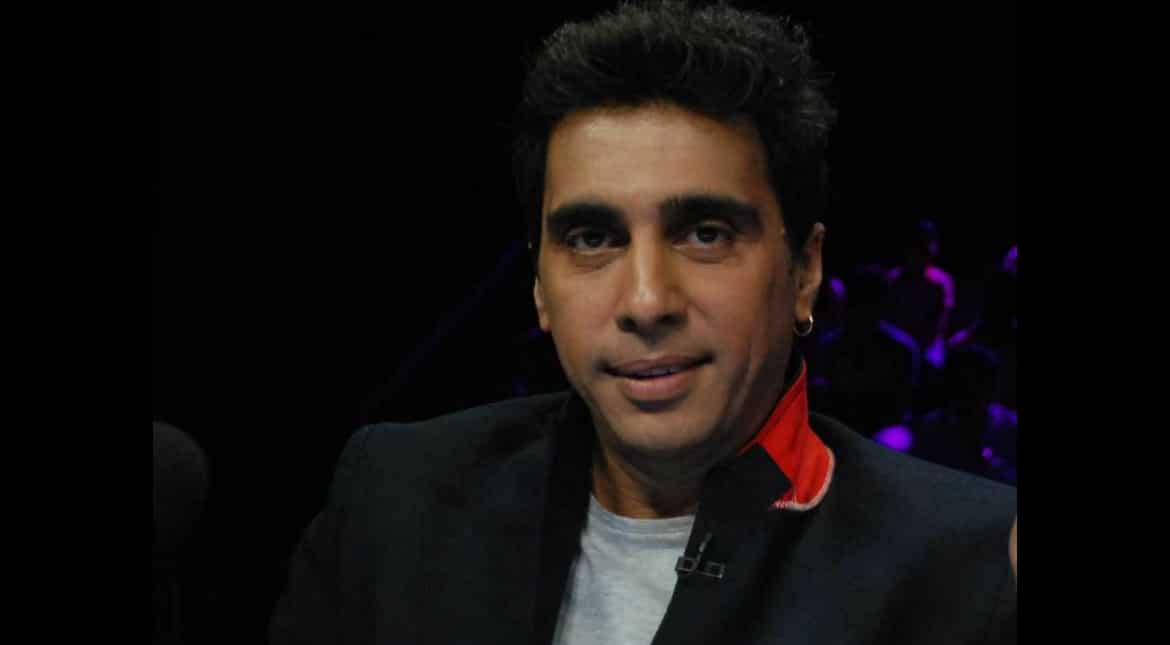
Ashley Lobo
In a candid chat with WION, ace choreographer Ashley Lobo opened up about the growing trend of recreating old songs, directing songs in a biopic, how Bollywood will never get over song-dance sequences and more.
Everybody can dance. Rooting for this thought and turning it into a reality, eminent choreographer Ashley Lobo is helping hundreds in achieving their dream of dancing. A major game changer in the world of dance, Ashley can be single-handedly attributed to creating awareness for it in its truest form in India while also opening the doors of abstract contemporary, a dance style that is relatively new to the country.
He recently took a team of dancers to Istanbul, Turkey after being commissioned by Yair Vardi, director of the renowned Suzanne Dellal Centre in Tel Aviv in Israel. They performed a piece called ‘Agni,’ an abstract contemporary dance that is “like modern art”. “While most dances in India are more on the classical side and story-driven, abstract is about dance” as he explained the passion that drove the piece -- given that fire is both a symbol of “fear and passion.”
An adventure-seeker who would have become a fighter pilot if not for a choreographer, Ashley has been teaching dance for over 30 years now.In a candid chat with WION, Ashley spoke about the growing trend of recreating popular songs, dance direction in a biopic film, the difference between theatre and films, how Bollywood will never get over song-dance sequences and much more.
What is dance for you?
I come from a place that dance for me is minimalistic in terms of movement, and more about taking the audience on a journey. It’s not so much about the shape of the movement. I’m not here to wow them with shapes. There are enough dances that will wow them with shapes. For me, dance is about communication, connecting with them and taking them on a journey that is deep and relatable to them.
_1.jpg)
How has dance in India changed in comparison to when you started?
In India, the contemporary style is still evolving. I still feel we are 10-15 years behind the West. In the West, every dancer learns jazz, ballet. The two dance forms that get the highest kind of traction are ballet and abstract contemporary -- neither of the styles is popular in India right now. There’s no formal training of ballet or jazz at a widespread level in India. We are still at the stage of pedestrian dancing. Street dance and pedestrian contemporary are popular.
Once you go abstract and contemporary, you need to understand structure to de-structure it from a point of information. I think that the whole Indian dance industry has not yet come to the point of structure but they are already working from a point of de-structure.
What form is popular in India currently?
Most of the untrained styles are very popular in India. The reason behind this is lack of dance education that has not yet taken on formal levels, at the level, it is globally. I think once that happens, it’s only a matter of time.
Dance also has a syllabus where you’re actually teaching how to dance and not just the steps. When we dance without it, it’s like we don’t understand the structure of the body and only know the steps. We need a holistic learning of dance. When you’re learning dance, you learn the whole format, physiology, how to create, first position, second position, a pirouette; it’s about learning the language.
How different is a performance on stage from that in a Bollywood film?
They are quite different. The first time I did films and now 30 films later, a lot has changed. The first time I directed a film, I’d say it was a little intimidating. The film is a moving frame; the stage is a fixed frame. With film, your camera is moving; with stage,you don’t need toas your eye is the film. For you, the audience is static; with films, your camera has a posture -- going in, coming out, and doing various things. It’s a little different and a bit challenging from that perspective. Having said that, basic performance is where the truth of both cinema and theatre is. If you are a good theatre actor and you know how to adapt to the camera then that’s fantastic.
Preparation in both is basically the same. The only difference is, that in theatre, you have to prepare the whole song in one go. In film its 32 beats at a time. In film, you screenplay so you can write it down. Dancers can make a mistake, you can clean it up, and you can also shoot it at various angles and club them together to increase the pace. When you’re shooting for stage, it’s a straight 4 minutes, one shot.

How different is teaching a well-trained dancer a sequence from a Bollywood actor who has no formal training?
For me its communication, the rules are the same. In both, your job as a director is to make sure you tell the story in the best way possible, with whom you have, what you have. If I have dancers of certain ability, certain inclination; then I highlight those inclinations and abilities. The same goes on for an actor. The worst thing you can do is to showcase the weakness of a dancer or an actor -- because you’re not able to narrate the story and at the same time you’re letting down the actor because you’re not able to convince the audience that he is that character.
Is working for films as a choreographer tougher than stage?
The film process is much faster; theatre is a little deeper for me because we also do different genres of dance. In the film genre, I’m narrating a story. In abstract contemporary dance, there is no narrative. You have to thinkof how to hold the audience for 45 minutes where there’s no story. It's like you’re on an emotional roller coaster as there’s no story. But if you are watching a film, there’s a story.
As a choreographer, is it difficult to recreate an old, iconic song and make it click with the audience of this generation?
I have only done one song like that. It's Har KisikoNahiMiltaYahanPyar Zindagi Mein...I would just stick to what the musician is telling me. If I stick to the truth of connecting to what the music is telling me, then the audience will connect to it. There are some songs that can be remade and can be made better and more modern than the original one. I don’t think one needs to think of how the audience is going to feel about this; you need to think about the truth of that moment.
What about directing a song in a biopic like that in ‘Sanju’?
My job as a choreographer is to convince you that Ranbir is fit in that character.If I am trying to make 'Sanju'more than what Sanju is, then that’s a problem or if I am attached to my own baggage of what I want to create, to show the audience how great I am. If my honesty helps me in making the audience believe that this is Sanju then my job is done.
Will Bollywood song-and-dance sequence survive for long?
We have music all over the country. I don’t think we will ever get over this. Songs in India are not so much about dance, but more about how to take the story forward. Today songs, music and choreography are used in a more realistic way.
It’s impossible for Bollywood to get over songs. Even today, sometimes a film works because of its promo songs. We sell on music even if it’s a story-based film. We are emotional and we connect to music. Pick any festival and music is a part of our celebrations. We put on music and we burn crackers.
&imwidth=180&imheight=135&format=webp&quality=medium)
Blasts heard in Sanaa as Saudi-led coalition warns civilians to evacuate; Houthis vow retaliation
&imwidth=180&imheight=135&format=webp&quality=medium)
Saudi Arabia strikes Yemen oil sites as Houthi missiles target Riyadh; 'limited fire' breaks out at Aramco
&im=FitAndFill=(700,400)&imwidth=180&imheight=135&format=webp&quality=medium)
Navratri 2026: 9 days, 9 forms of Goddess Durga and 9 colours- Check the complete list
&imwidth=180&imheight=135&format=webp&quality=medium)
Trump accuses Houthis of driving up oil prices before US midterms, warns of consequences
&imwidth=180&imheight=135&format=webp&quality=medium)
‘Don’t blame SIR, Congress will lose 2029 too’: Amit Shah tells Rahul Gandhi after Gujarat local poll results
&imwidth=180&imheight=135&format=webp&quality=medium)
New Delhi rejects Beijing’s claims and remarks on Ladakh location naming exercise
&imwidth=180&imheight=135&format=webp&quality=medium)
CMs Vijay-Naidu meet in Vijayawada, discuss water sharing, river-linking
&imwidth=180&imheight=135&format=webp&quality=medium)
US Midterms 2026: In Alaska, cost-of-living anxiety meets strangest ballot in high-stakes Senate race
&imwidth=180&imheight=135&format=webp&quality=medium)
OpenAI employee arrested by FBI after allegedly hiding recording device in office
&imwidth=180&imheight=135&format=webp&quality=medium)
Man dies at Six Flags Georgia: Past accidents at Six Flags amusement parks across US
&imwidth=180&imheight=135&format=webp&quality=medium)
1,500 drones illuminate Mumbai sky as Cordelia Cruises unveils second ship, Cordelia Sky
&imwidth=180&imheight=135&format=webp&quality=medium)
Pope Leo XIV diagnosed with lung cancer after surgery, Vatican says 'successful surgery and recovering'
&imwidth=180&imheight=135&format=webp&quality=medium)
Pakistan to chair UN-backed global Borrowers’ Platform as its own debt burden mounts, triggers sarcastic reactions on social media
&imwidth=180&imheight=135&format=webp&quality=medium)
Suicidal man survives jump from 11th floor in Japan, could now be tried for murder
&imwidth=180&imheight=135&format=webp&quality=medium)
Robot gropes girl, makes thrusting movements in bizarre crime in Germany
&imwidth=180&imheight=135&format=webp&quality=medium)
Trump says Republicans face equally tough fight in House and Senate midterms
&imwidth=180&imheight=135&format=webp&quality=medium)
France accuses Musk of ‘online harassment’ of European leaders, warns of poll interference
&imwidth=180&imheight=135&format=webp&quality=medium)
MI5 chief warns Russia is UK’s ‘aggressor number one’ as Iran and AI threats grow
&imwidth=180&imheight=135&format=webp&quality=medium)
'Turn approver, resign, we'll forgive you': Rahul Gandhi claims receiving messages from CEC Gyanesh Kumar
&imwidth=180&imheight=135&format=webp&quality=medium)
Inside the alleged drug-money trail behind a Mumbai couple’s properties
&imwidth=180&imheight=135&format=webp&quality=medium)
‘My president, I mean my husband’: Trump's new press secretary Katie Zacharia's first briefing goes off the rails in 14 minutes
&im=FitAndFill=(700,400)&imwidth=180&imheight=135&format=webp&quality=medium)
IMF World Economic Outlook: 10 economies to watch for growth in FY27 and FY28 - Where does India stand?
&imwidth=180&imheight=135&format=webp&quality=medium)
L Murugan resigns as Union Minister, expresses wish to return to grassroots
&imwidth=180&imheight=135&format=webp&quality=medium)
'Ouch!!! That must hurt': Kangana Ranaut hails Kamal Haasan's sharp reply to Elon Musk over Starlink row
&imwidth=180&imheight=135&format=webp&quality=medium)
Sidhu Moose Wala’s younger brother wins hearts by recreating late singer’s signature move at Toronto Hologram Show
&imwidth=180&imheight=135&format=webp&quality=medium)
Girl 'dead' for 8 hours wakes up at her own funeral, dad insists she wasn't breathing
&imwidth=180&imheight=135&format=webp&quality=medium)
UK school ditches technology, shifts from screen to pen and paper for learning
&im=FitAndFill=(700,400)&imwidth=180&imheight=135&format=webp&quality=medium)
New OTT releases this week (October 12-18, 2026): Sacrifice, Koffee with Karan S9, Roadies Rebirth- 6 titles coming on Netflix, JioHotstar and more
&imwidth=180&imheight=135&format=webp&quality=medium)
Rahul Gandhi speaks on Anti-CeC protests: Gathering over tea after Supreme Court rally
&imwidth=180&imheight=135&format=webp&quality=medium)
Anupam Kher joins Ranbir Kapoor's Ramayana as Jatayu, new poster unveiled
&imwidth=180&imheight=135&format=webp&quality=medium)
Measles kills again: 6 dead in Pennsylvania as America faces its worst outbreak in decades | Gravitas
&imwidth=180&imheight=135&format=webp&quality=medium)
Ken Paxton's Dubai night out with two US fugitives sparks political storm as Texas Senate race tightens
&imwidth=180&imheight=135&format=webp&quality=medium)
Mundhe: Fight against unsafe food goes on
&imwidth=180&imheight=135&format=webp&quality=medium)
Cornell University suspends fraternity parties over 2024 gang rape allegations
How do you work with actors who can’t dance or are known to be not so good at dancing?
The only thing that stops us from dancing is the belief that we can’t dance. We dance at different levels. My job is to tell the story. My job is not to show how great a choreographer I am. Whoever the dancer is, my job is to tell the story and to showcase them in their character. Whether I do it just by moving his hand or his thumb, as long as I am delivering a message, my job is done.
As an audience, a rickshaw driver is not going to understand complications. He is going to understand simplicity so I have to think like that. If I don’t then I am an obnoxious artist.
Who is your favourite dancer among the recent crop of actors?
It’s very difficult to say, I’ve worked with almost all of them and have had fun working with each of them. Govinda is an amazing dancer; he says so much with his body. At the end of the day, it’s not about the dance but the individual flavour. (He spoke about how Salman Khan could dance and make it work just with the twinkle of his eye, that there is so much dance within that movement.)
Ashley was recently in Delhi to introduce his students to abstract contemporary, important for those who wish to perform overseas.

