Su-57’s Drone army: Russia turns stealth fighter into an airborne commander

&imwidth=600&imheight=450&format=webp&quality=medium "Su-57’s Drone army: Russia turns stealth fighter into an airborne commander")
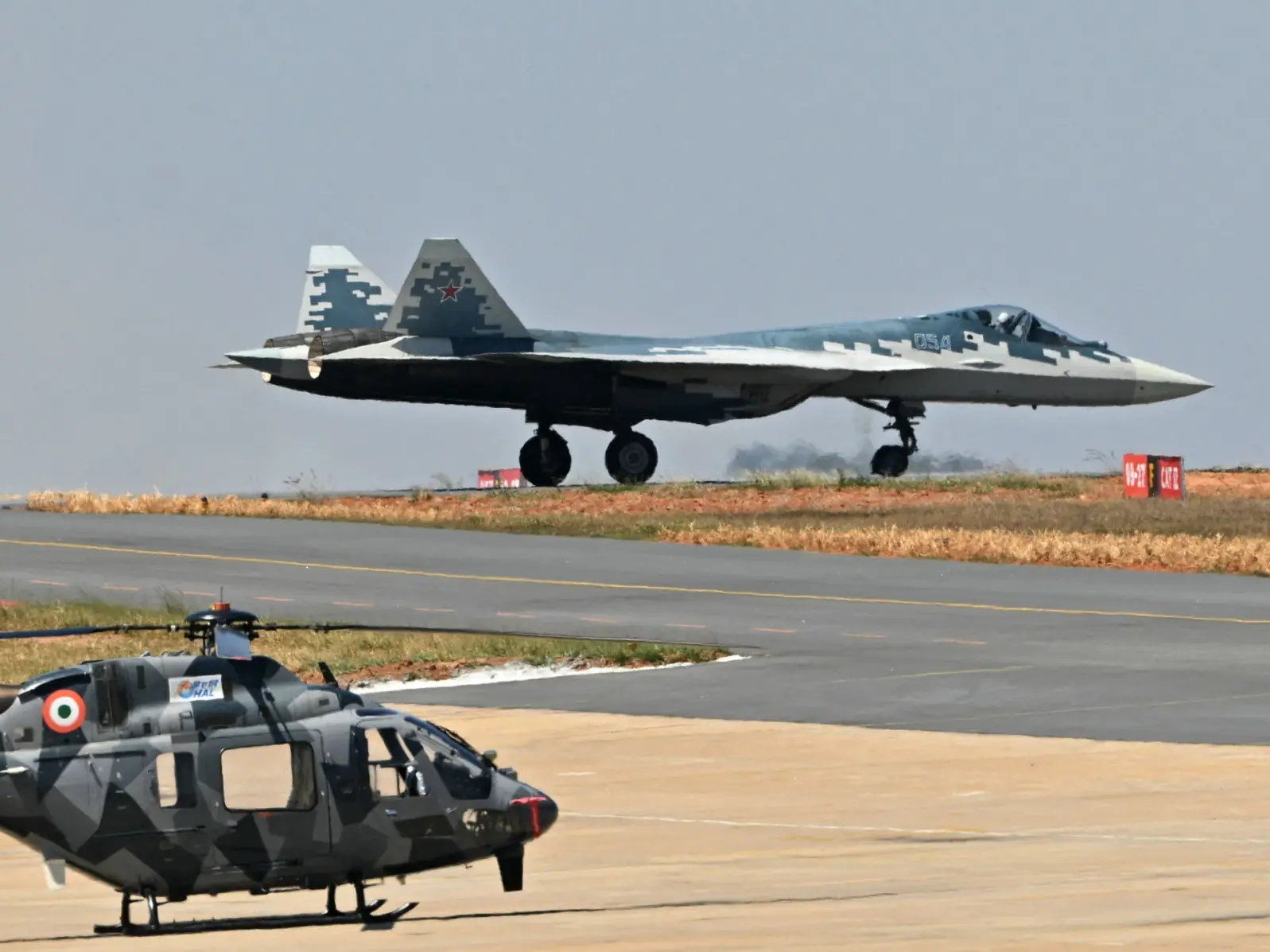
The Russian Sukhoi Su-57 fifth-generation fighter aircraft prepares to take-off during Aero India 2025, a military aviation exhibition at the Yelahanka Air Force Station in Bengaluru on February 12, 2025. Photograph: (AFP)
Russia is developing unmanned aircraft designed to work with the Su-57, pointing to a future where fighter jets command drones in combat.
The fighter jet of the future may not fly into battle alone. Instead, it could command an entire formation of unmanned aircraft, sending drones ahead to detect threats, jam radars, deceive air defences and strike targets.
Russia is now pushing this concept around its Su-57 fifth-generation stealth fighter.
Russian defence conglomerate Rostec is showcasing low-observable unmanned aircraft designed to operate with the Su-57. The concept points towards a fundamental change in air warfare: the fighter evolving from a standalone combat aircraft into an airborne command node for drones.
Speaking on WION’s Defence Pulse, former Indian Air Force fighter pilot Air Marshal Anil Chopra explained why manned-unmanned teaming could transform operations in heavily defended airspace.
“The manned aircraft could be the mother aircraft, the controller, and there could be a large number of drones which could act either as loyal wingmen or could even be a swarm.”
Such drones could perform different tasks. Some could fly ahead as decoys, others could carry sensors for reconnaissance and targeting, while electronic warfare drones could attempt to disrupt enemy systems. Armed unmanned aircraft could eventually carry out strikes, allowing the expensive crewed fighter to remain farther from the most dangerous air defences.
Trending Stories
)
)
)
)
)
)
)
)
)
)
)
)
)
)
)
)
)
)
&im=FitAndFill=(700,400))
)
)
)
&im=FitAndFill=(700,400))
)
&im=FitAndFill=(700,400))
&im=FitAndFill=(700,400))
)
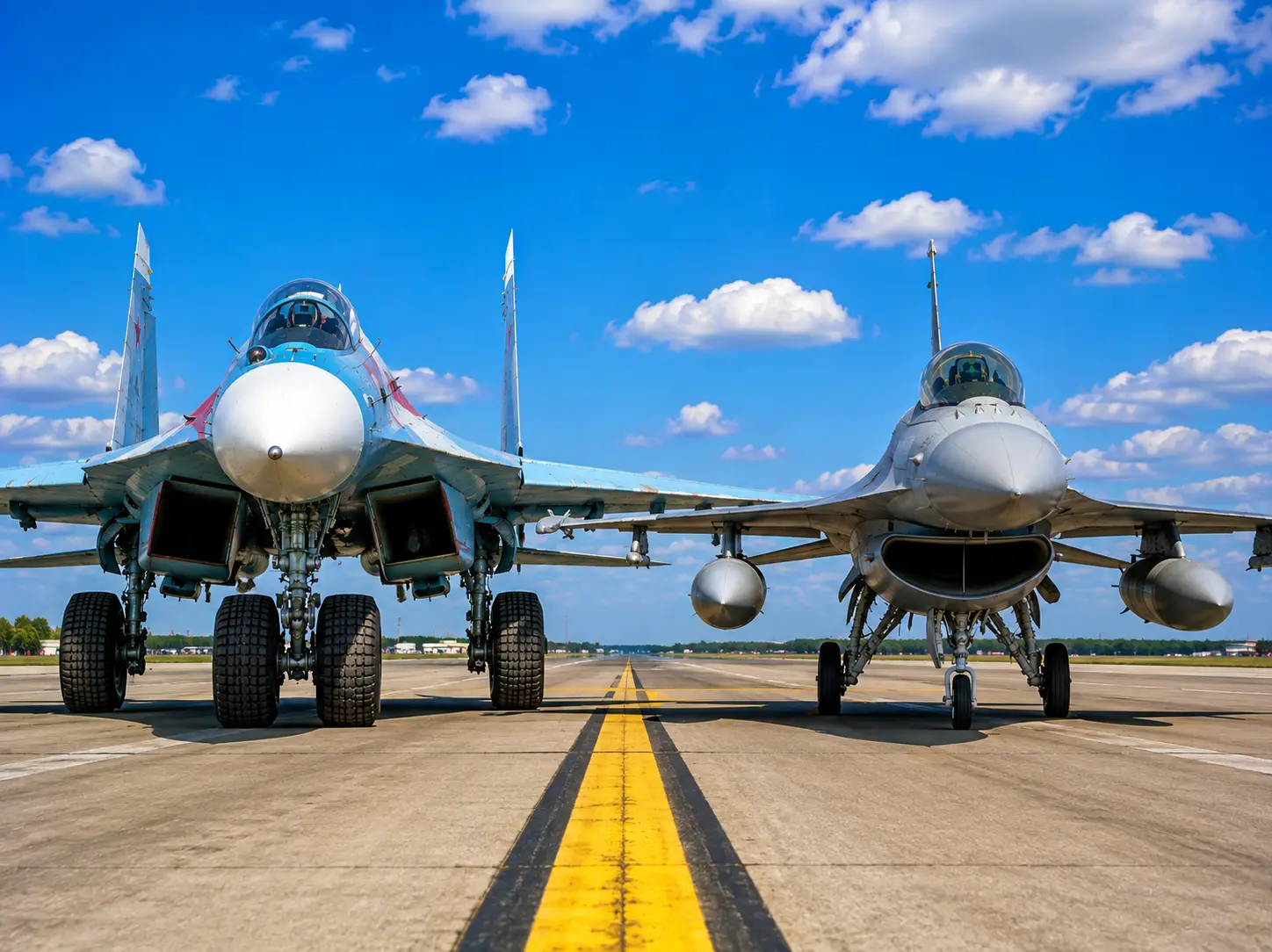
The concept is not uniquely Russian. The United States is developing Collaborative Combat Aircraft, including the YFQ-42A and YFQ-44A prototypes, while China is pursuing its own advanced unmanned combat aircraft and manned-unmanned teaming concepts.
The challenge is what happens inside the cockpit.
A fighter pilot already has to fly the aircraft, monitor sensors, track threats and employ weapons. Controlling multiple drones simultaneously could create an enormous workload. This is where artificial intelligence and greater drone autonomy become critical.
Chopra believes the drones cannot depend on the pilot for every decision.
“There will be a high degree of autonomy that will have to be given to the drones after a target has been assigned or a job has been assigned.”
The transformation could change the economics and risks of air warfare as well. Relatively expendable drones can be pushed into highly contested airspace before a valuable fighter and its pilot. The fighter jet, therefore, may not disappear. Its role could become even more important. Instead of being the lone hunter in the sky, it could become the commander of a flying army.

