
&imwidth=800&imheight=600&format=webp&quality=medium "Stanley Fischer: Architect of modern macroeconomics dies at 81")
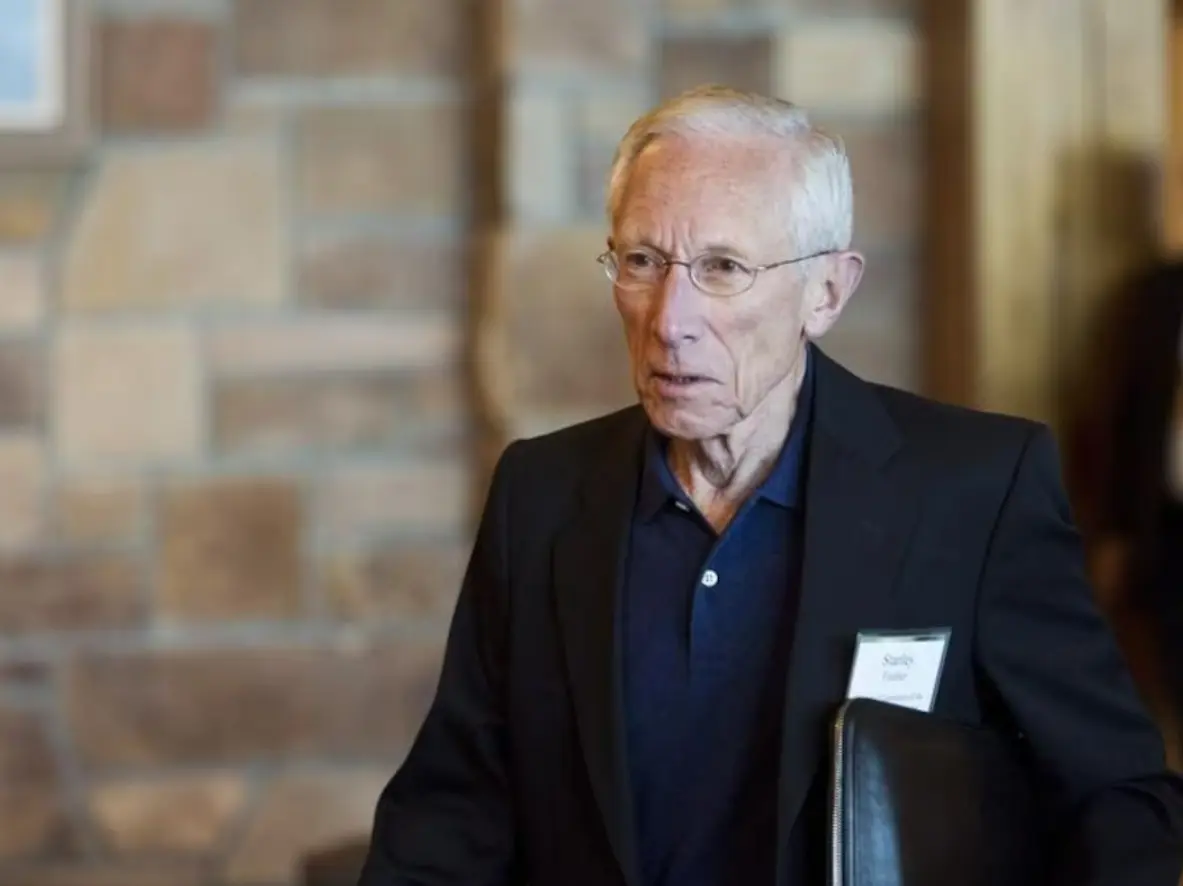
Stanley Fischer, the quietly powerful figure who influenced modern macroeconomics across academia, global financial institutions, and central banks, passed away on Saturday at the age of 81.
His death was confirmed by the Bank of Israel, according to Bloomberg, marking the end of an era in economic thought and crisis management.
Fischer’s life was one of service to stability, whether as an academic at MIT, a crisis manager at the International Monetary Fund, or a central banker guiding Israel and the US through turbulent financial waters. The Financial Timesonce called him “the pocket-sized colossus of modern central banking.”

From Africa to the world stage
Born on 15 October 1943 in Mazabuka, Northern Rhodesia now Zambia, Fischer was raised in a Jewish family within southern Africa’s immigrant communities. As a teenager, he moved to Southern Rhodesia (now Zimbabwe), where he joined the Habonim Zionist youth movement and met his future wife, Rhoda Keet, as reported by The Times of Israel.
He pursued economics at the London School of Economics, completing both his bachelor’s and master’s degrees by 1966.
Trending Stories
)
The Early Spring is proof not everyone can talk about their real feelings, and it is perfectly OK
)
UN votes to ‘correct the map’ as India backs fairer world view
)
Nigerian Navy discovers 99,000 litres of suspected stolen, illegally refined products as it intensifies anti-crude oil theft operations
)
Who is Aditi Paudel? 17-year-old becomes Japan's first literacy ambassador
)
Bengaluru: Officials find 40 kg expired chilli at chairman's club
)
Jaishankar rejects trade link to ending Ukraine war
)
Israeli strikes on Lebanon kill three, injure 23 despite truce
)
Alpine glacier was covered with sheep wool sheets to prevent melting. It worked
)
South Korea mulls deploying military assets to Strait of Hormuz
)
World's fifth-largest economy, British army can't afford to train
)
Breaking | Vance takes the podium: First White House briefing since Leavitt's exit
)
Taiwan raises 'concerns' over China's missile test
)
BRICS 2026: $1 trillion sovereign capital set to converge in Delhi for first iBRICS Summit
)
What is Iran's Pickaxe Mountain that Trump has again threatened to bomb?
)
UN votes to correct world map that visually shrank Africa for 450 years
)
Former NewJeans member Danielle launches YouTube channel, hints at new solo journey
)
Bangladesh batter Towhid Hridoy creates history with 350 not out in South Africa
)
Brendan Fraser’s transformation fuels The Mummy 4 excitement as fans welcome back Rick O’Connell
&im=FitAndFill=(700,400))
Krishna Janmashtami 2026: From Dhaniya Panjiri to Makhana Kheer- 5 best sweet dishes perfect for celebrating Lord Krishna’s birth
)
Donald Trump plans to travel to Ireland on Qatari-donated jet amid security concerns
)
Nazi-looted art to return to Jewish heirs
)
Eight killed in Kerala’s Thrissur after car rams into lorry parked on highway
&im=FitAndFill=(700,400))
Why Russian fighter jets use bulky, low-pressure tyres compared to US jets
)
FBI-wanted fraud accused arrested in Jalandhar over $600,000 scam
&im=FitAndFill=(700,400))
Why US tanks weigh over 20 tons more than Russian tanks
&im=FitAndFill=(700,400))
New Friday OTT releases (September 4, 2026): GDN, Dhamaal 4, Jagamae Sangeetham- Watch 6 new movies and TV shows on Netflix, Prime Video and more
)
Killing the Himalayas slowly: Human urine is melting a glacier on Mount Everest
Fischer later moved to the United States to earn a PhD from the Massachusetts Institute of Technology (MIT), graduating in 1969 under the supervision of Nobel laureates Paul Samuelson and Robert Solow, according to Bloomberg.
The teacher of titans
Fischer began teaching at MIT in the 1970s and went on to shape a generation of economic policymakers who would lead the world’s most powerful institutions.
Among his students were Ben Bernanke, former Chair of the US Federal Reserve; Mario Draghi, former President of the European Central Bank and later Prime Minister of Italy; Lawrence Summers, former US Treasury Secretary; Kazuo Ueda, the current Governor of the Bank of Japan; Greg Mankiw, who advised US President George W. Bush; and IMF chief economists Olivier Blanchard and Maurice Obstfeld, according to Bloomberg.
Blanchard later remarked, “It is hard to think of any other macroeconomist alive who has had as much direct and indirect influence… on macroeconomic policy around the world,” Bloomberg reported.
In 1978, Fischer co-authored the foundational textbook Macroeconomicswith Rudi Dornbusch. The book educated generations of students and was still being updated decades later its 13th edition was released in 2018, according to Bloomberg.
The global crisis whisperer
Fischer was not just a teacher; he was a crisis whisperer for nations on the brink. From 1994 to 2001, he served as First Deputy Managing Director at the International Monetary Fund. During that period, he led responses to some of the most severe financial meltdowns in modern history, including the crises in Mexico, South Korea, Thailand, Indonesia, Russia, and Brazil.
According to Bloomberg, he oversaw nearly 250 billion US dollars in emergency lending and became the face of the IMF’s crisis management during those turbulent years.
Long before that, in 1985, Fischer helped design an economic stabilisation programme for Israel at a time when the country was struggling with hyperinflation. The plan, backed by 1.5 billion US dollars in American aid, helped pull the economy back from the brink.
According to The Times of Israel, that experience solidified Fischer’s reputation as someone who could bridge theory and real-world application.
Later, he moved to the private sector, serving as vice chairman at Citigroup. There, he chaired the bank’s country risk committee and advised its global strategy, as reported by Bloomberg.
Israel’s central banker in crisis
In 2005, Fischer accepted the role of Governor of the Bank of Israel and became an Israeli citizen. According to Bloomberg, he conducted meetings in fluent Hebrew and helped modernise the central bank’s structure and policy approach.
His leadership during the 2008 global financial crisis drew global praise. The Bank of Israel was among the first central banks to cut interest rates at the onset of the crisis and among the first to raise them during the recovery.
Fischer established a new Monetary Policy Committee, shifting authority from a single governor to a more collaborative six-member board that included external academic voices. Under his leadership, Israel’s economy grew every year during the global crisis, defying recessionary trends.
From Jerusalem to Washington
In 2014, Fischer was nominated by US President Barack Obama to serve as Vice Chair of the Federal Reserve under Janet Yellen.
Although frequently mentioned as a possible candidate to head the Fed or the IMF, Fischer never reached those top roles, largely due to timing and age-related factors, according to Bloomberg.
He retired from the Fed in 2017 and later became a senior adviser at BlackRock, the world’s largest asset manager.
Reflecting on Fischer’s legacy, Lawrence Summers told Bloomberg, “In a just world, Stan would have served as Fed chairman or IMF managing director. But fate is fickle. And yet, his influence through teaching, writing, advising and leading touched hundreds of millions of lives.”
Fischer’s wife, Rhoda, his partner since their teenage days in a Zionist youth group, passed away in 2020. He is survived by three children, and by a global network of students, colleagues, and admirers who carry forward his intellectual legacy.
He once said that macroeconomics attracted him because it dealt with “big questions.” Through every classroom, crisis, and central bank, Stanley Fischer spent a lifetime answering those big questions with clarity, humility, and an unwavering sense of purpose.