Premium push pays off for US airlines amid slump in economy travel

&imwidth=600&imheight=450&format=webp&quality=medium "Premium push pays off for US airlines amid slump in economy travel")
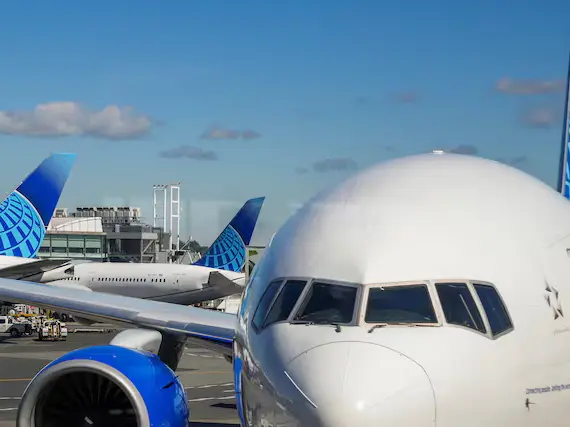
United Airlines planes are seen at the tarmac at Newark International Airport in Newark, New Jersey, U.S., May 7, 2025. Photograph: (Reuters)
The success of premium cabins has prompted Delta Airlines and United Airlines to consider further segmentation within their high-end offerings. Mimicking the tiered structure of the main cabin, the airlines are exploring new fare classes within business travel.
US airlines are reporting sharply diverging fortunes in 2025, with full-service carriers that invested heavily in premium cabins reaping financial rewards, while low-cost rivals face mounting losses amid tepid demand in the economy segment. Delta Airlines and United Airlines, in particular, have emerged as industry leaders in profitability thanks to booming demand for premium-class seats. Despite a broader slowdown in air travel and rising pressure on main cabin pricing, both carriers posted better-than-expected second-quarter results fuelled by high-margin premium revenue. Delta reported record Q2 revenues, with premium ticket sales climbing 6 per cent even as main cabin revenues declined by 4 per cent. At United Airlines, premium revenue rose 5.6 per cent year-on-year, offsetting operational challenges and sluggish growth elsewhere.
Premium cabins now account for a growing share of total revenue. At Delta, nearly 43 per cent of passenger revenue came from premium classes in Q2, up from 33 per cent before the pandemic. Analysts expect this segment to surpass main cabin revenue by 2027. United, too, is benefiting from similar trends, with the strength in premium travel helping it weather airport disruptions and competitive pressures.
American Airlines is also capitalising on strong premium and international demand, positioning itself for long-term growth. The airline, once considered a laggard, is now drawing attention from institutional investors due to its improved financial footing, expanding international network, and robust earnings leverage. Premium services such as Flagship First and Flagship Business have seen high uptake, helping the carrier offset softness in domestic economy travel.
Budget carriers struggle to compete
While the top-tier carriers are enjoying success, low-cost airlines are being squeezed by weakening demand from price-sensitive travellers. Airlines like JetBlue, Frontier, and Spirit have reported persistent losses in the first half of 2025, largely driven by weak sales in the main cabin and discount fare categories. Some, like JetBlue, have acknowledged that achieving breakeven margins this year is unlikely.
As demand from lower-income passengers declines, due in part to inflation and economic uncertainty, budget carriers have been forced to slash fares and cut flights to maintain occupancy. In response, these airlines are attempting to pivot into the premium market. JetBlue is introducing first-class seating on domestic routes and building upscale lounges, while Frontier is retrofitting aircraft with business-class-style seats. Spirit is rebranding itself as a more premium-friendly airline by expanding its enhanced economy offerings.
Trending Stories
)
)
)
)
)
)
)
)
)
)
)
)
)
)
)
)
)
)
)
)
)
&im=FitAndFill=(700,400))
)
)
)
)
)
)
)
)
)
)
)
Despite these efforts, premium travel remains dominated by Delta and United. The risk of oversaturation looms as more carriers chase the same high-end traveller, with premium seat capacity in the US already up 14 per cent since 2019—more than triple the growth in economy-class capacity.
The next phase: Segmenting premium
The success of premium cabins has prompted Delta and United to consider further segmentation within their high-end offerings. Mimicking the tiered structure of the main cabin, the airlines are exploring new fare classes within business travel, including stripped-down versions of existing products for price-conscious travellers. These could include reduced services or limited access to perks like lounges and mileage bonuses, allowing for greater flexibility in pricing and upselling.
This strategy reflects a broader trend across the industry to extract more value from affluent travellers who continue to prioritise comfort and experience even amid broader economic uncertainty. Executives at both airlines see premium segmentation as a way to maintain momentum while capturing additional revenue from diverse traveller segments.
American airlines eyes growth amid sector shifts
American Airlines is leveraging similar strategies as it positions for growth in the second half of the decade. With a broad international network spanning over 350 destinations and improved operational efficiency, the carrier is capitalising on long-haul premium travel to drive earnings. Financially, American has made significant progress, reducing its debt, improving free cash flow, and strengthening its earnings leverage.
Co-branded credit card partnerships are also playing a key role in revenue diversification, providing a steady income stream tied to loyalty programs and consumer spending. These programs are helping the airline maintain passenger retention and upsell opportunities in a volatile market. As the airline industry continues to adapt post-pandemic, the gap between high-end and low-end carriers is becoming increasingly clear. With premium travel offering both revenue stability and brand differentiation, full-service carriers like Delta, United, and now American are pulling ahead, leaving discount rivals scrambling to catch up.