

&imwidth=800&imheight=600&format=webp&quality=medium "India won’t face major inflation shock from oil surge, says top government adviser")
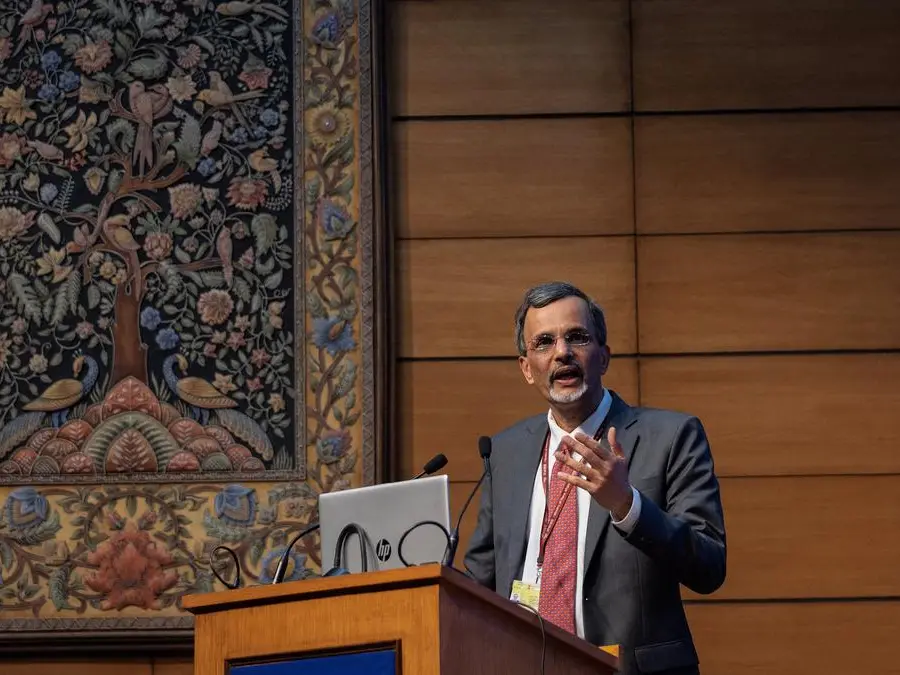
India’s Chief Economic Adviser, V. Anantha Nageswaran has said that the country is well-positioned to absorb the recent spike in global crude oil prices without experiencing a significant rise in inflation.
In an interview published on Friday, Nageswaran told Bloomberg that India’s economic fundamentals remain strong, and that the oil-driven price surge though a concern does not yet warrant alarm.
His comments come as Brent crude prices jumped nearly 20 per cent in the past month, driven by fears of a wider regional conflict following renewed hostilities between Israel and Iran.
Oil prices rise but impact seen as limited
According to Bloomberg, Nageswaran acknowledged that the rise in oil prices is linked to escalating tensions in the Middle East, but said the impact on domestic inflation would remain limited for now. “It is still not something that is going to be significant in terms of impact,” he said.
India is the world’s third-largest importer of crude oil, making it highly vulnerable to global energy price shocks.
Trending Stories
&imwidth=180&imheight=135&format=webp&quality=medium)
Nagpur man fails to pay rent, allegedly prints fake Rs 500 notes worth Rs 37 lakh
&imwidth=180&imheight=135&format=webp&quality=medium)
Clayface tops North American box office, Elizabeth Holmes documentary follows close behind
&imwidth=180&imheight=135&format=webp&quality=medium)
'I've done my work sincerely': AR Rahman on facing backlash over Ramayana soundtrack
&imwidth=180&imheight=135&format=webp&quality=medium)
‘That is a miss’: Ravi Ashwin questions Sooryavanshi’s demotion to No. 3 in 2nd T20I vs NZ
&imwidth=180&imheight=135&format=webp&quality=medium)
Donald Trump targets Bill Maher in lengthy post after White House dinner, says ‘Don’t call anymore’
&imwidth=180&imheight=135&format=webp&quality=medium)
Serbia’s student-led movement defeats Vucic’s party after 14 years in power: Why it matters
&im=FitAndFill=(700,400)&imwidth=180&imheight=135&format=webp&quality=medium)
New OTT releases this week (October 26-November 1, 2026): Baththa, Akka, The One About Matthew Perry- 7 titles coming on Netflix, Prime Video and more
&im=FitAndFill=(700,400)&imwidth=180&imheight=135&format=webp&quality=medium)
Why does this fighter jet have a golden window that looks like alien technology?
&imwidth=180&imheight=135&format=webp&quality=medium)
Pakistan airline PIA unveils new crew uniforms, faces online criticism
&imwidth=180&imheight=135&format=webp&quality=medium)
'Already tired of his 9-to-5': Baby born with a moustache becomes internet sensation, video goes viral | Watch
&imwidth=180&imheight=135&format=webp&quality=medium)
Brazil re-elects factory worker Lula for fourth term; Indian PM Modi congratulates 'dear friend'
&imwidth=180&imheight=135&format=webp&quality=medium)
Maldives opposition leader demands transparency on Muizzu Govt's Pakistan defence, security deals
&imwidth=180&imheight=135&format=webp&quality=medium)
Elon Musk’s Grok releases first AI-generated Odyssey episode, months after promising ‘historically accurate’ full-length film
&imwidth=180&imheight=135&format=webp&quality=medium)
'He is a red flag': Ex-India strength and conditioning coach on Rohit's fitness regime
&imwidth=180&imheight=135&format=webp&quality=medium)
'Hell of a beautiful a**': Trump compliments Nicki Minaj as rapper joins him in Michigan rally
&imwidth=180&imheight=135&format=webp&quality=medium)
'I promised Gautam & Kotak Sir that...': Tilak Varma opens up on match-winning mindset against NZ
&im=FitAndFill=(700,400)&imwidth=180&imheight=135&format=webp&quality=medium)
Armoured vehicles vs main battle tanks: What is the real difference?
&imwidth=180&imheight=135&format=webp&quality=medium)
'Hire the robot, fire the human': Bill Gates's words hint at a bleak future
&im=FitAndFill=(700,400)&imwidth=180&imheight=135&format=webp&quality=medium)
Why do some fighter jets have two engines while others use one?
&imwidth=180&imheight=135&format=webp&quality=medium)
Netanyahu warns Israelis of ‘existential threat’ from Iran, posts AI image of nuclear strike
&imwidth=180&imheight=135&format=webp&quality=medium)
Telangana unveils AI avatar of IT minister D Sridhar Babu at Hyderabad DevFest 2026
&imwidth=180&imheight=135&format=webp&quality=medium)
Fire breaks out at Delhi’s North Block, thick black smoke seen | VIDEO
&imwidth=180&imheight=135&format=webp&quality=medium)
Can Putin cheat death? All about his daughter’s billion-dollar quest for immortality
&imwidth=180&imheight=135&format=webp&quality=medium)
Daler Mehndi controversy: Mika Singh’s team confirms Subodh Uniyal’s apology
&imwidth=180&imheight=135&format=webp&quality=medium)
'Clear overkill': Putin rejects claims Russia is behind mass protests in Europe
&imwidth=180&imheight=135&format=webp&quality=medium)
Harry Kane favourite to win 2026 Ballon d’Or ahead of Lamine Yamal and Kylian Mbappé
&imwidth=180&imheight=135&format=webp&quality=medium)
IND vs NZ: Tilak Varma sets world record with most T20I catches in a year
&imwidth=180&imheight=135&format=webp&quality=medium)
Formula 1: Mercedes' Kimi Antonelli one race and ninth spot finish away from title after US Grand Prix win
&imwidth=180&imheight=135&format=webp&quality=medium)
WATCH | Virat Kohli returns to training ahead of New Zealand ODI series
&imwidth=180&imheight=135&format=webp&quality=medium)
FIR filed against opposition MPs for ‘trespassing’ amid Jamia Millia students’ protest
&im=FitAndFill=(700,400)&imwidth=180&imheight=135&format=webp&quality=medium)
How do army night-vision systems see in almost complete darkness?
&imwidth=180&imheight=135&format=webp&quality=medium)
Who is Eyal Zamir, Israeli army chief, who reportedly clashed with Netanyahu over Iran?
&imwidth=180&imheight=135&format=webp&quality=medium)
Israel elections 2026: How the country is gearing up for a crucial vote
&imwidth=180&imheight=135&format=webp&quality=medium)
Delhi's new entry rules for vehicles begin November 1. Here's all you need to know about the ban
Costlier crude can push up inflation, squeeze household budgets, and threaten the consumption-driven recovery in a country where private spending contributes around 60 per cent of GDP.
However, Nageswaran noted that domestic factors such as cooling inflation, sufficient liquidity, and stable interest rates will act as cushions against global headwinds.
Government not pressing the panic button
Nageswaran also emphasised that the situation does not yet call for emergency economic measures. “It is too soon to get overly concerned yet,” he said, adding that any inflationary effect would depend on the duration of high oil prices. “It might have to take more than a quarter or even getting into a couple of quarters before we really have to worry,” he told Bloomberg.
India’s retail inflation eased to an 11-month low of 4.75 per cent in May, comfortably within the Reserve Bank of India’s 2–6 per cent target range.
Economists suggest that unless oil prices cross $100 per barrel and remain elevated for a prolonged period, the broader inflation outlook may not be significantly affected.
Growth outlook remains intact
The government expects India’s GDP to grow between 6.3 and 6.8 per cent in the current fiscal year ending March 2026. While this is slower than the 8 per cent average seen over the past two years, India is still projected to remain the fastest-growing major economy.
Nageswaran said other positive factors, including a favourable monsoon, are expected to boost rural demand and agricultural output. “The underlying price pressures are quite absent, and ample rainfall will also aid India’s economy,” he said, as quoted by Bloomberg.
Why it matters?
India’s ability to withstand external shocks such as oil price volatility is critical at a time when many emerging economies are struggling with inflationary pressures, weak growth, and tight global financial conditions.
A muted inflation fallout could give policymakers more space to focus on investment-led growth and infrastructure spending in the run-up to the 2026 Union Budget.
Moreover, India’s stable inflation outlook may allow the Reserve Bank of India to hold interest rates steady for longer, avoiding the disruptions seen in other oil-importing nations.
As global energy markets remain on edge due to geopolitical uncertainty, India’s cautious optimism as voiced by its top economic adviser sends a reassuring signal to investors.
(With inputs from the agencies)