India faces record-high US tariff rate, exports worth $87 billion at risk: Details here

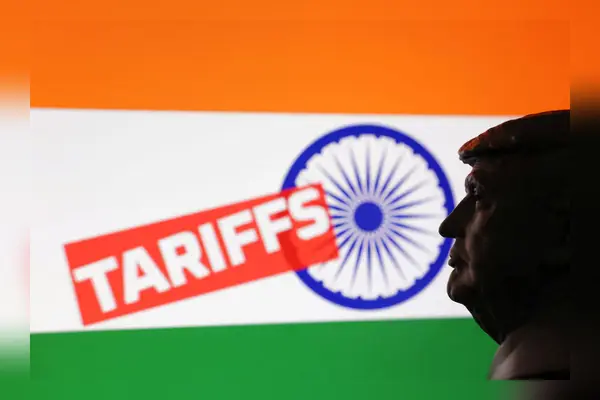
A 3D-printed miniature model of US President Donald Trump, the Indian flag and the word "Tariffs" are seen in this. Photograph: (Reuters)
India faces a record 50% US tariff on $87 billion in exports, threatening jobs, investment, and Modi’s “Make in India” ambitions.
India’s manufacturing dreams, nurtured for over a decade under Prime Minister Narendra Modi’s “Make in India” campaign, are now facing one of their biggest challenges yet. As per Bloomberg, US President Donald Trump has announced that tariffs on Indian exports will be doubled to 50 per cent, the highest US tariff rate for any Asian economy.
A direct hit to India’s export sector
The shock decision has already halted major investment plans. Farida Group, India’s largest shoemaker, had secured a 150-acre site in Tamil Nadu for a new export plant worth 10 billion rupees ($114 million). With the US accounting for 60 per cent of its business, the firm froze the project after the announcement.
“With 25 per cent tariffs, you can still work, negotiate and adjust profits. At 50 per cent, you don’t have anything,” said Rafeeque Ahmed, Farida’s chairman, as quoted by Bloomberg.
Trump’s move spares smartphones and pharmaceuticals for now, but it puts at risk the rest of India’s $87 billion worth of US-bound exports. Bloomberg Economics warns that the impact could be severe, exports could fall by 60 per cent, costing nearly 1 per cent of India’s GDP. Without sectoral exemptions, the drop could reach 80 per cent.
India now faces the steepest tariff in Asia
Trending Stories
&imwidth=280&imheight=210&format=webp&quality=medium)
&imwidth=280&imheight=210&format=webp&quality=medium)
&imwidth=280&imheight=210&format=webp&quality=medium)
&imwidth=280&imheight=210&format=webp&quality=medium)
&imwidth=280&imheight=210&format=webp&quality=medium)
&imwidth=280&imheight=210&format=webp&quality=medium)
&imwidth=280&imheight=210&format=webp&quality=medium)
&imwidth=280&imheight=210&format=webp&quality=medium)
&imwidth=280&imheight=210&format=webp&quality=medium)
&imwidth=280&imheight=210&format=webp&quality=medium)
&imwidth=280&imheight=210&format=webp&quality=medium)
&imwidth=280&imheight=210&format=webp&quality=medium)
&im=FitAndFill=(700,400)&imwidth=280&imheight=210&format=webp&quality=medium)
&imwidth=280&imheight=210&format=webp&quality=medium)
&imwidth=280&imheight=210&format=webp&quality=medium)
&imwidth=280&imheight=210&format=webp&quality=medium)
&imwidth=280&imheight=210&format=webp&quality=medium)
&imwidth=280&imheight=210&format=webp&quality=medium)
&imwidth=280&imheight=210&format=webp&quality=medium)
&imwidth=280&imheight=210&format=webp&quality=medium)
&imwidth=280&imheight=210&format=webp&quality=medium)
&imwidth=280&imheight=210&format=webp&quality=medium)
&imwidth=280&imheight=210&format=webp&quality=medium)
&imwidth=280&imheight=210&format=webp&quality=medium)
&imwidth=280&imheight=210&format=webp&quality=medium)
&imwidth=280&imheight=210&format=webp&quality=medium)
&imwidth=280&imheight=210&format=webp&quality=medium)
&im=FitAndFill=(700,400)&imwidth=280&imheight=210&format=webp&quality=medium)
&imwidth=280&imheight=210&format=webp&quality=medium)
&imwidth=280&imheight=210&format=webp&quality=medium)
&imwidth=280&imheight=210&format=webp&quality=medium)
&imwidth=280&imheight=210&format=webp&quality=medium)
&imwidth=280&imheight=210&format=webp&quality=medium)
&imwidth=280&imheight=210&format=webp&quality=medium)
&imwidth=280&imheight=210&format=webp&quality=medium)
&imwidth=280&imheight=210&format=webp&quality=medium)
The White House data, compiled by Bloomberg, shows that India’s reciprocal tariff rate announced by the US in August 2025 surpasses even that of China’s.
US Reciprocal Tariff Rates in Asia (August 2025)
| Rank | Country | Tariff Rate (%) |
| 1 | India | 50 |
| 2 | Laos | 40 |
| 2 | Myanmar | 40 |
| 4 | Bangladesh | 20 |
| 4 | Vietnam | 20 |
| 4 | Sri Lanka | 20 |
| 4 | Taiwan | 20 |
| 8 | Cambodia | 19 |
| 8 | Indonesia | 19 |
| 8 | Malaysia | 19 |
| 8 | Pakistan | 19 |
| 8 | Philippines | 19 |
| 8 | Thailand | 19 |
| 14 | Japan | 15 |
Source: The White House / Bloomberg. Data excludes China, which faces separate tariff rates.
Strategic and political ripple effects
According to Bloomberg, Trump has linked the tariff hike to India’s purchases of discounted Russian oil, which he argues help fund President Vladimir Putin’s war in Ukraine. Notably, India is the only major economy targeted with such “secondary tariffs,” even though China is Moscow’s largest crude buyer.
The move also poses political challenges for Modi, with India now paying a higher blanket tariff rate than China. It risks undoing recent gains from Apple’s expanded iPhone assembly, growth in pharmaceuticals and green tech, and increased foreign investment from companies pursuing a “China Plus One” diversification strategy.
Industry anxiety grows
Exporters warn of an immediate slowdown. Ajay Sahai of the Federation of Indian Export Organisations told Bloomberg that orders for summer 2026 are already at risk, with buyers hesitating amid the higher costs. Apparel makers, scaffolding producers, and textile exporters are slashing prices to keep clients, but many say margins are unsustainable.
Some companies are even exploring relocation. “Forget China Plus One right now. Companies are thinking India Plus One,” Ahmed said, referring to the search for alternative sourcing destinations.
Possible off-ramps, but the clock is ticking
US–India trade talks are ongoing, with hopes that a partial bilateral deal this autumn could reduce tariffs. Any progress in Trump’s upcoming meeting with Putin in Alaska might also ease oil-related penalties. But analysts warn that supply chains can shift quickly, and India’s share in many product categories is too small to deter US buyers from switching suppliers.
On the factory floor, the human cost looms large. Farida Group employs 23,000 people, over half dedicated to US orders. “What will happen to workers? Shall I send them back?” Ahmed asked. “Workers would be one of the biggest sufferers.”
With export orders drying up and sentiment sliding, the 50 per cent tariff risks not just economic slowdown but a direct setback to India’s manufacturing ambitions, potentially undoing years of progress in its push to challenge China’s dominance.
(With inputs from the agencies)