
&imwidth=800&imheight=600&format=webp&quality=medium "How SpaceX's trillion-dollar IPO just redrew the global space race map")
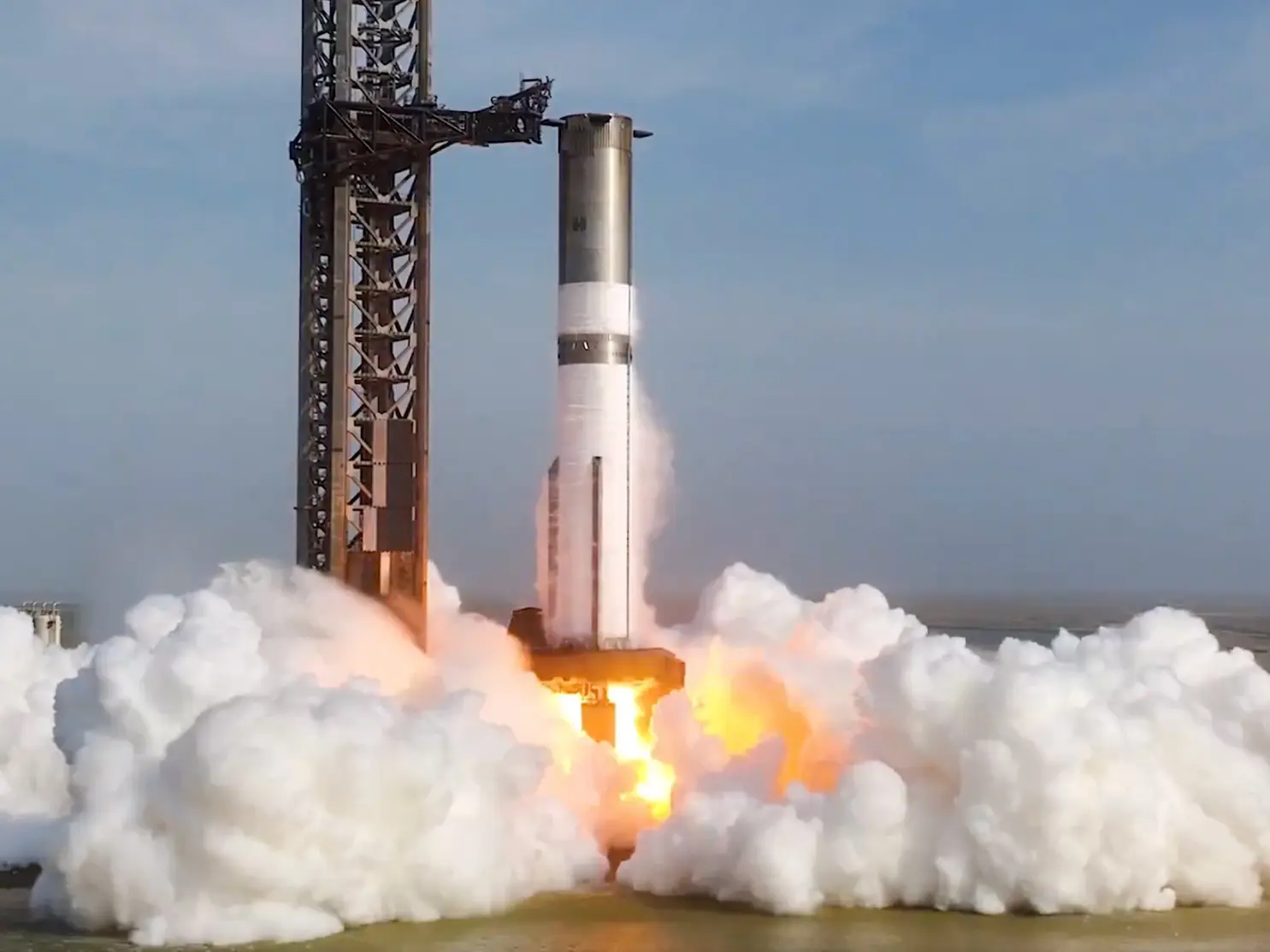
SpaceX's Nasdaq debut did more than create the largest IPO in history. By raising over $30 billion and securing a $1.8 trillion valuation, the company has given itself access to a pool of capital that dwarfs the combined resources of nearly every other player in the global space industry, government space agencies included. For competitors and would-be challengers, the calculus around the space race just changed dramatically.
A Capital Gap That Was Already Wide
SpaceX entered its IPO already dominating global orbital launch, responsible for the overwhelming majority of all payloads sent to orbit worldwide through its Falcon 9 fleet. Its Starship program, despite repeated test setbacks over the years, remains the only fully reusable super-heavy launch system in active development anywhere on Earth. With public market capital now available, capital that can be raised quickly through follow-on offerings, convertible bonds, or other instruments available to public companies, SpaceX can fund Starship's development, expand Starlink's satellite constellation, and build out its AI infrastructure business simultaneously, at a pace privately funded competitors simply cannot match.

Where Does This Leave Blue Origin?
Jeff Bezos's Blue Origin has spent years positioning itself as SpaceX's primary American rival, with its New Glenn rocket finally reaching orbit after a long development period. But Blue Origin remains privately held, funded primarily through Bezos's personal wealth and a smaller pool of outside investment. Without access to public markets at anything close to SpaceX's scale, Blue Origin's ability to out-invest SpaceX in the coming years looks increasingly difficult, though Bezos's personal fortune remains a significant war chest.
China's State-Backed Push
Trending Stories
)
Why asking questions could be more important than memorising answers
&im=FitAndFill=(700,400))
Shahid Kapoor to Rajkummar Rao: Actors who rule both theatres and OTT
&im=FitAndFill=(700,400))
How 2nm technology improves iPhone performance
)
Did India risk its US trade deal despite softer stance at BRICS?
)
BRICS Summit 2026: Trump wants to weaken BRICS, but maybe doing the opposite
&im=FitAndFill=(700,400))
Meet top 5 batters fastest to 3000 runs in T20Is
)
Did BRICS Summit 2026 prove that an 11-member bloc with India and China in it can still agree on key issues?
)
Top 5 places to visit in Goa beyond its famous beaches
&im=FitAndFill=(700,400))
Why European Meteor missiles use ramjet engines compared to standard US solid rockets
)
'He is popular...': Malaysian PM Anwar Ibrahim's praise for PM Modi during bilateral meeting | WATCH
)
BRICS Summit 2026: PM Modi, Xi reach key consensus on ties, China to assume BRICS chairmanship in 2027
)
‘Want to reset ties with India, have engagement based on mutual interests,’ says Bangladesh minister
)
Russia-Ukraine-US talks in October? Kremlin says not ruling out possibility of trilateral
)
UK breakup on the cards? Scotland, Wales and Northern Ireland push for independence
)
Trump says Canada eager to reach a deal, it could come ‘fairly soon’ if Ottawa treats US farmers better
)
The Verdict | Africa is too big to remain a guest at the BRICS table
)
‘Partners, not rivals’: Xi outlines four point plan for stronger India-China ties
&im=FitAndFill=(700,400))
Why Chinese PL-15 air-to-air missiles use dual-pulse motors compared to European interceptors
)
'It’s going to be a war': Ben Shelton on facing Zverev in US Open title clash
)
NATO under Russian threat? Drone strikes just 2 km from Poland, narrow escape for former UK PM, CIA chief
)
Trump defends Lincoln Memorial pool amid NYT report blaming renovation flaws, not vandalism
)
'80% of Indians are non-vegetarian': Rahul Gandhi slams BRICS Summit dinner menu, BJP calls it 'politics on food menu'
)
BRICS Summit: New Delhi declaration adopted with full consensus, big diplomatic win for India
)
800 million years old - Scientists discover 'fingerprints' of supercontinent Gondwana in ancient rocks
)
Russian drone hits Warsaw-bound train near Polish border, Zelensky accuses Moscow of ‘deliberate’ targeting
)
War is making Russia stronger? How Ukraine is shaping Moscow’s next generation of weapons
)
BRICS Summit 2026: Russia-India-China grouping never formalised
)
From severe mobility problems to recovery: Madhuri the elephant’s journey of wildlife care
)
9-year-old Chennai prodigy clears Cambridge IGCSE grade 10 exams
)
Indian importers urge Bangladesh to lift export ban on 'Hilsa' fish ahead of Durga Puja
)
Humans may lose control of AI: Anthropic CEO calls for slowdown, Altman, Musk back him
)
US diplomat accused of possessing child abuse images secretly flown out of UK by US Marines
)
BRICS Summit 2026: Modi-Xi moment highlights India-China thaw at BRICS
)
Why does your skin need protection from UV rays?
)
PM Modi and China's Xi offered to help resolve Russia-Ukraine war: Kremlin
)
Akram, Afridi, Mushtaq tear into PCB after Pakistan’s Test series collapse in UK
China's space program operates on a different model entirely, state-funded, strategically prioritized, and insulated from market valuations. Chinese companies have been rapidly developing reusable rocket technology and expanding satellite internet constellations explicitly positioned as alternatives to Starlink for countries wary of dependence on a US company. SpaceX's IPO doesn't change China's funding model, but it does sharpen the contrast: one superpower's space ambitions are now partly underwritten by global public markets and retail investors, while the other's remain a direct extension of state policy.
What This Means for India and ISRO
India's space program, anchored by ISRO, has achieved remarkable cost-efficiency, landing on the Moon and reaching Mars orbit on budgets that are a fraction of comparable Western missions. India has also been actively encouraging private space startups through its space sector reforms, with companies like Skyroot and Agnikul Cosmos developing indigenous launch capabilities. But none of these companies are remotely close to a listing on the scale of SpaceX's, and India's total space sector investment, public and private combined, remains a small fraction of the capital SpaceX alone now has access to as a public company. For India, SpaceX's IPO is less a direct threat and more a signal of how large the capital requirements for serious space ambitions have become.
The New Shape of the Space Economy
What SpaceX's listing really signals is the arrival of the space economy as a mainstream asset class. Pension funds, retail investors, and sovereign wealth funds that previously had no way to gain exposure to rockets, satellites, or orbital infrastructure can now buy a stock. That changes incentives across the entire industry, competitors will face pressure to either find their own paths to public capital or risk being permanently outspent by a company that can now tap Wall Street whenever it needs to. The space race was always about technology and ambition. After June 12, 2026, it is also unmistakably about access to capital markets and right now, SpaceX has a head start nobody else can match.
