Gold demand surges in Q2, driven by strong investment flows: WGC

&imwidth=600&imheight=450&format=webp&quality=medium "Gold demand surges in Q2, driven by strong investment flows: WGC")
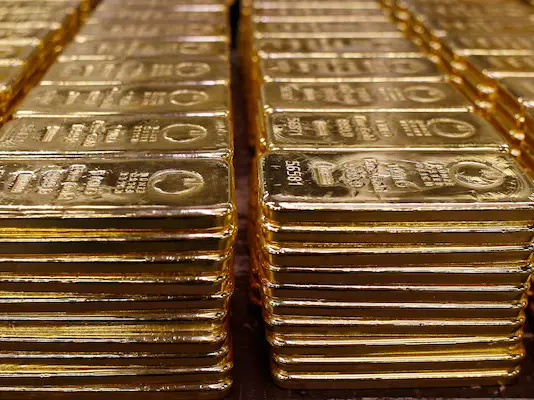
Bars of 250 gram fine gold are stored at a plant of gold refiner and bar manufacturer Argor-Heraeus SA in the southern Swiss town of Mendrisio. Picture taken on November 13, 2008. Photograph: (Reuters)
Institutional investors, particularly high-net-worth individuals, were drawn to gold’s safe-haven status as a hedge against global uncertainty. Additionally, demand for gold bars rose by 21 per cent, highlighting the growing trend of physical gold investment.
Global gold demand surged in the second quarter of 2025, driven by an unprecedented 78 per cent increase in investment demand, according to the World Gold Council (WGC). Total gold demand, including over-the-counter (OTC) trading, rose by 3 per cent year-on-year to 1,248.8 tonnes. In value terms, the demand spiked by 45 per cent, reaching a record $132 billion. The surge in demand was largely fuelled by rising gold prices, which hit a historic high of $3,500 per ounce in April, amid ongoing global trade tensions and geopolitical instability.
Gold-backed exchange-traded funds (ETFs) played a key role in driving this growth, recording their largest semi-annual inflow since 2020. Institutional investors, particularly high-net-worth individuals (HNIs), were drawn to gold’s safe-haven status as a hedge against global uncertainty. Additionally, demand for gold bars rose by 21 per cent, highlighting the growing trend of physical gold investment.
Jewellery demand drops as high prices impact consumer behaviour
While overall gold demand grew, global jewellery consumption saw a significant decline. Total gold jewellery demand fell by 14 per cent to 341 tonnes in Q2, the lowest level since the pandemic-induced slump in 2020. The sharp increase in gold prices, which rose 26 per cent year-to-date, deterred many buyers, particularly in key markets like China and India. These two countries, which traditionally account for a substantial portion of global jewellery demand, saw a notable drop in consumption, with their combined market share falling below 50 per cent for only the third time in five years.
In India, where gold holds strong cultural and economic importance, high local prices pushed down jewellery purchases. Gold prices in India hit a record ₹101,078 per 10 grams in June, marking a 28 per cent rise in 2025. As a result, India’s demand for gold in Q2 fell by 10 per cent, with jewellery demand dropping by 17 per cent. However, investment demand for gold in India saw a modest rise of 7 per cent, with gold ETFs becoming increasingly popular as the country becomes more digitised.
Central bank demand shows signs of stabilisation
Trending Stories
)
)
)
)
)
)
)
)
)
)
)
)
)
)
)
)
)
)
&im=FitAndFill=(700,400))
)
)
)
&im=FitAndFill=(700,400))
)
&im=FitAndFill=(700,400))
&im=FitAndFill=(700,400))
)
Central banks, a significant source of global gold demand, reduced their purchases by 21 per cent to 166.5 tonnes in Q2. Despite this decline, the longer-term trend of central banks diversifying their reserves from US assets to gold remains intact. The WGC revised its forecast for central bank purchases downward but continues to expect a healthy demand outlook for the remainder of 2025.
With geopolitical risks, inflationary pressures, and rising gold prices, the WGC anticipates that demand for gold ETFs will continue to grow in the second half of the year, despite a slight softening of retail investment.
(With inputs from agencies)