Flashback Friday: The rise and fall of pre-colonial India’s richest family – the Jagat Seths

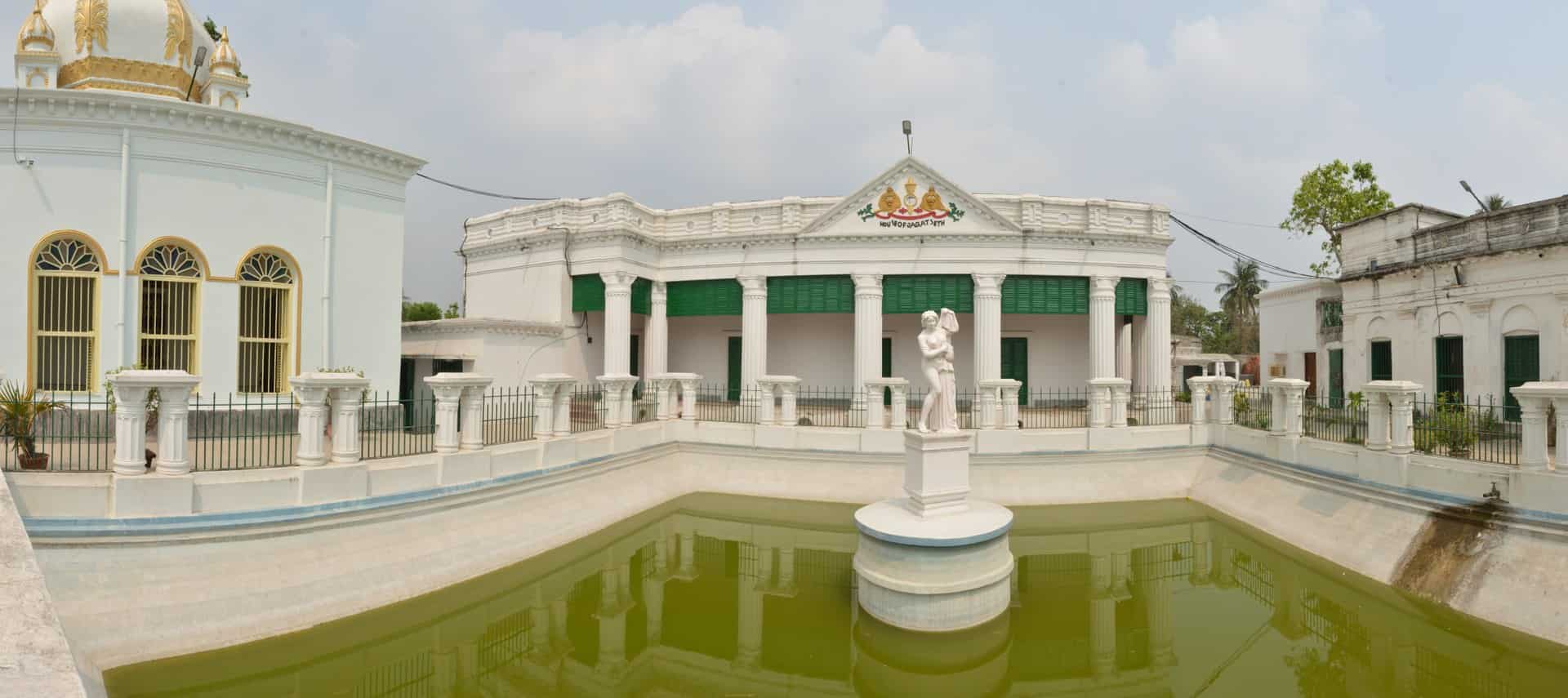
House of Jagat Seth
Pre-colonial India was one of the most prosperous times in Indian history and a lot is attributed to the traditional banking system involving bankers and merchants. But there were other groups who were a part of the banking system and contributed immeasurably to the prosperity of the regions they were situated in. One such group present throughout the 18thcentury in India’s Bengal region was the family of the Jagat Seths.
For years, the family dominated the Bengal money market, provided funds for both trade and government. The Jagat Seths were in close contact with the European Companies that imported a lot of silver due to their control over the credit market and coinage of specie. Companies borrowed directly from the Seths’ agencies in Calcutta, Kasimbazar, Dhaka, Hughli, Patna, et cetera.
After visiting the Seths’ house in Murshidabad following the battle of Plassey, Robert Clive wrote:

“The city of Murshidabad is as extensive, populous and rich, as the city of London, with this difference that there are individuals in the first possessing infinitely greater property than any of the last city.”
Who were the Jagat Seths?
The House of the Jagat Seths’ is traced back to Manickchand, a banker who founded the house after migrating from Nagar in Marwar to Murshidabad.
&imwidth=180&imheight=135&format=webp&quality=medium)
WATCH | Langur walks into Odisha repair shop, hugs shopkeeper; internet reacts to heartwarming video
&imwidth=180&imheight=135&format=webp&quality=medium)
'Already tired of his 9-to-5': Baby born with a moustache becomes internet sensation, video goes viral | Watch
&imwidth=180&imheight=135&format=webp&quality=medium)
Indian embassy warns nationals in Saudi Arabia against filming missile strikes
&im=FitAndFill=(700,400)&imwidth=180&imheight=135&format=webp&quality=medium)
What is the real meaning behind Pete Hegseth's tattoos?
&imwidth=180&imheight=135&format=webp&quality=medium)
Pahalgam, Gulmarg record season’s first sub-zero temperatures as winter chill intensifies in Kashmir
&imwidth=180&imheight=135&format=webp&quality=medium)
Govinda breaks silence on divorce rumours with Sunita Ahuja, calls her his first love
&imwidth=180&imheight=135&format=webp&quality=medium)
'I promised Gautam & Kotak Sir that...': Tilak Varma opens up on match-winning mindset against NZ
&imwidth=180&imheight=135&format=webp&quality=medium)
Kerala judge's 17-year-old son allegedly driving Mercedes kills scooter rider
&imwidth=180&imheight=135&format=webp&quality=medium)
'This is humiliation': Vijay Deverakonda under fire over controversial marriage proposal remark on Koffee With Karan 9
&imwidth=180&imheight=135&format=webp&quality=medium)
'Clear overkill': Putin rejects claims Russia is behind mass protests in Europe
&imwidth=180&imheight=135&format=webp&quality=medium)
Saudi says debris fell in Mecca, Medina after missile interceptions; Houthis deny targeting holy cities
&imwidth=180&imheight=135&format=webp&quality=medium)
Horrific video shows the moment 18-year-old fell to her death from Mexico amusement park ride
&imwidth=180&imheight=135&format=webp&quality=medium)
‘Saddam Hussein opened a cheesecake factory’: Obama mocks Trump’s White House renovations; defends Abdul El-Sayed
&imwidth=180&imheight=135&format=webp&quality=medium)
Javed Akhtar backs Rashmika Mandanna after Koffee With Karan 9 accent trolling, calls out ‘linguistic superiority’
&im=FitAndFill=(700,400)&imwidth=180&imheight=135&format=webp&quality=medium)
Why do some fighter jets have two engines while others use one?
&imwidth=180&imheight=135&format=webp&quality=medium)
Venezuelan opposition leader María Machado returns home after over 10 months in exile
&imwidth=180&imheight=135&format=webp&quality=medium)
Anthropic's leaked AI bill would act only at 50 deaths or $1bn in harm
&imwidth=180&imheight=135&format=webp&quality=medium)
China's dancing robot turns violent bodyguard, lifts cars and fights intruders - Watch
&imwidth=180&imheight=135&format=webp&quality=medium)
‘Modi ka baap bhi jayega,’ Kharge loses cool at party event in Patna; BJP slams him
&im=FitAndFill=(700,400)&imwidth=180&imheight=135&format=webp&quality=medium)
New Friday OTT releases (October 23, 2026): Gajab Raat, Dorothy, Chaar Yaar- Watch these 6 new movies and TV shows on Netflix, Prime Video and more
&imwidth=180&imheight=135&format=webp&quality=medium)
Trump revives ‘shithouse countries’ slur, targets Abdul El-Sayed and Ilhan Omar at Georgia rally
&imwidth=180&imheight=135&format=webp&quality=medium)
Bigg Boss 20: Rohit Shetty indirectly reacts to firing at his Mumbai home
&imwidth=180&imheight=135&format=webp&quality=medium)
Nagpur man fails to pay rent, allegedly prints fake Rs 500 notes worth Rs 37 lakh
&imwidth=180&imheight=135&format=webp&quality=medium)
Telangana unveils AI avatar of IT minister D Sridhar Babu at Hyderabad DevFest 2026
&imwidth=180&imheight=135&format=webp&quality=medium)
Can Putin cheat death? All about his daughter’s billion-dollar quest for immortality
&imwidth=180&imheight=135&format=webp&quality=medium)
Russia-Ukraine drone attacks kill 6, injure 31 across both countries
&imwidth=180&imheight=135&format=webp&quality=medium)
Why Europe’s protests are about more than austerity and rising costs
&imwidth=180&imheight=135&format=webp&quality=medium)
‘Do I make a deal or finish them off’: What Trump said on resuming Iran strikes
&imwidth=180&imheight=135&format=webp&quality=medium)
Kim Kardashian, Kris Jenner turn heads with Bold looks at All’s Fair season 2 premiere in Rome
&imwidth=180&imheight=135&format=webp&quality=medium)
'If it was up to me, it wouldn't have ended like this': James Anderson opens up on Lancashire exit
&imwidth=180&imheight=135&format=webp&quality=medium)
Tiger Shroff’s team calls report on actor’s reaction to Mumbai attack ‘completely untrue’
&imwidth=180&imheight=135&format=webp&quality=medium)
Byeon Woo Seok makes first public appearance as Sung Jin Woo for Solo Leveling at Netflix Korea’s 10th anniversary event
&imwidth=180&imheight=135&format=webp&quality=medium)
Netanyahu warns Israelis of ‘existential threat’ from Iran, posts AI image of nuclear strike
&imwidth=180&imheight=135&format=webp&quality=medium)
IND-W vs ZIM-W, 2nd ODI: Harmanpreet Kaur, Vaishnavi Sharma star in India's 121-run win
&imwidth=180&imheight=135&format=webp&quality=medium)
Pakistan airline PIA unveils new crew uniforms, faces online criticism
Since its founding in 1704, the house’s financial standing and prestige in that city reached a point where the Mughal emperor bestowed on the latter the title of “Jagat Seth,” which translates to "the Banker of the World,” by the time it emerged distinct in 1722.
The house’s fame and fortune came during the reign of Fatechand, who passed away in 1742 after nearly thirty years of influence on Bengal’s political, economic, and commercial life. His two grandchildren, Maharaja Swaroopchand and Jagat Seth Mahtab Rai, succeeded him.
How did they rise?
The House of the Jagat Seth initially made their fortune by farming the Murshidabad and Dhaka mints, collecting two-thirds of the provincial tax revenue. They were later able to influence exchange and interest rates, bill-broking, and the granting of credit. By 1720, the Seth family had completely taken control of the mint farms, with the help of Nawab Murshid Quli Khan.
The family’s power over Bengal’s money market was so strong that everyone involved accepted the exchange rate that the house set. Fatechand was able to persuade the government to take actions and adopt regulations for the rate of money exchange that would benefit the house because to his influence over the Bengal administration, which he acquired by providing financial assistance to the Nawab.
Due to the lack of liquid capital for investments for all European businesses, they were compelled to borrow from the local capital market.The Jagat Seths served as their mainstay. The family was the largest lender to European businesses, and because of their control over the market, they were able to set interest rates as per their own terms.
How wealthy was their family?
Although the exact figure of their wealth could never be measured, the family remains well-known for their assets. The House of Jagat Seth family was often compared to the Bank of England. They performed a variety of duties for the Bengal government, including tax collection and financial management. They even produced their own coinage and worked with foreign currency, which increased their fortune.
Sources say that the Jagat Seth family fortune was bigger than that of the British Empire. They had assets worth at least $1 trillion in today’s value. They possessed more cash than all of England’s banks combined, according to British newspapers.
What happened to the Seths?
Mahtab Chand succeeded his grandfather Fateh Chand in 1744. During the reign of Alivardi Khan, Mahtab Chand and his relative Maharaja Swarup Chand had tremendous influence over the market. However, when Siraj-ud-Daula assumed authority, everything changed, and they ultimately teamed up with the British to plot against him.
Ultimately, the Seths lost control of their lands, and the British East India Company never repaid their loan. The 1857 uprising was the last straw. The Jagat Seths had disappeared from public eye by the 1900s. Just like the Mughals, their descendants remain a mystery.