Failed 3 times before success: What can founders learn from SpaceX's first three failures?

&imwidth=600&imheight=450&format=webp&quality=medium "Failed 3 times before success: What can founders learn from SpaceX's first three failures?")
Failed 3 times before success: What can founders learn from SpaceX's first three failures?
Before becoming a trillion-dollar company, SpaceX suffered three failed Falcon 1 launches and faced growing financial pressure. The company's response to those setbacks continues to offer practical lessons for founders on resilience, learning and long-term focus.
SpaceX is one of the world's most valuable companies. But before reaching orbit, the company suffered three consecutive rocket failures. Those setbacks offer lessons that many founders still discuss today. SpaceX is known for launching astronauts, operating the Starlink satellite network and building some of the world's most advanced rockets. The company's public listing in 2026 pushed its valuation into the trillion-dollar range and further strengthened the wealth of founder Elon Musk.
Yet in its early years, SpaceX looked anything but unstoppable.
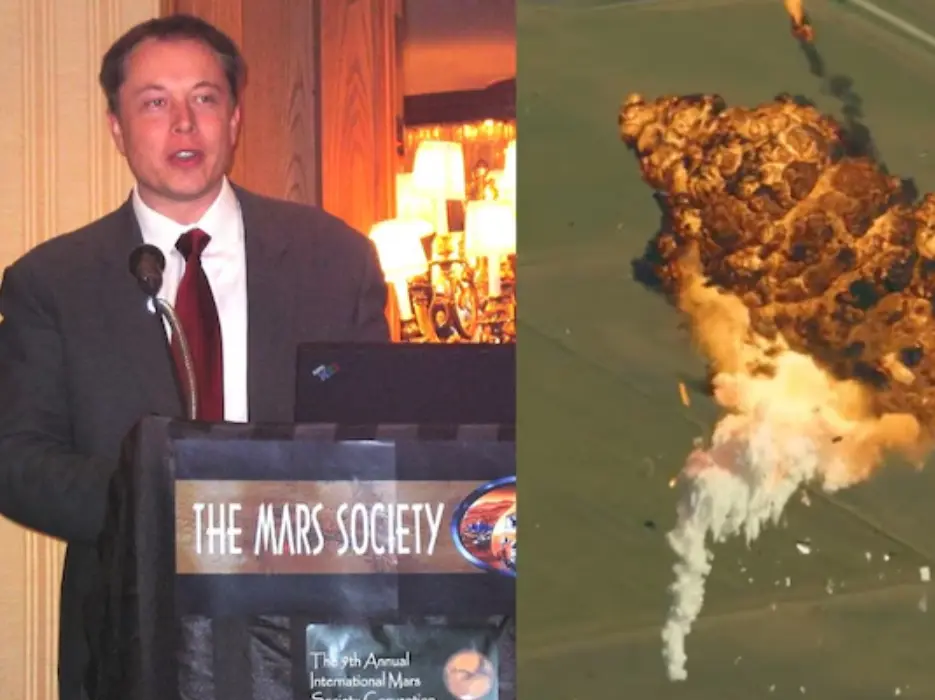
Between 2006 and 2008, the company suffered three failed Falcon 1 launches. Money was becoming scarce, pressure was growing and many doubted whether the business would survive. The fourth launch finally succeeded and changed the company's future.
For founders and entrepreneurs, those difficult years still offer valuable lessons.
Failure is information, not the end
The first Falcon 1 launch failed in 2006 due to an engine-related problem.
Trending Stories
)
)
)
)
)
)
)
)
)
&im=FitAndFill=(700,400))
)
)
&im=FitAndFill=(700,400))
)
&im=FitAndFill=(700,400))
)
)
)
)
)
&im=FitAndFill=(700,400))
)
)
)
)
)
)
)
)
)
)
)
)
)
)
)
)
The second mission in 2007 also failed. A third launch in August 2008 came close to reaching orbit but ultimately fell short.
Many businesses view failure as a sign to stop. SpaceX took a different approach.
After each launch, engineers analysed what went wrong, made changes and prepared for another attempt. The company treated failures as a source of information rather than proof that the idea itself was flawed. For founders, the lesson is clear: understanding mistakes can be more valuable than avoiding them.
Persistence matters, but learning matters more
Continuing after setbacks is important, but persistence alone is not enough.
SpaceX did not simply repeat the same process four times. The company adjusted designs, improved systems and used lessons from previous launches.
The eventual success of Falcon 1 was built on hundreds of small improvements.
For start-ups, resilience works best when combined with continuous learning.
Managing resources can determine survival
By 2008, SpaceX was under significant financial pressure.
Musk was investing much of his own money into both SpaceX and Tesla. Resources were limited and the company had little room for further mistakes. Rather than expanding rapidly, SpaceX remained focused on its core objective: getting a rocket into orbit. Many young companies struggle because they attempt too many things at once. SpaceX's experience highlights the importance of concentrating resources on the most important goal.
Build a team that believes in the mission
One of the lesser-known aspects of SpaceX's early years was the commitment of its workforce. Hundreds of employees continued working through failed launches and uncertainty about the company's future. Without that belief in the mission, the company may not have survived long enough to achieve success. For founders, building a strong team culture can be just as important as raising money or developing technology.
Breakthroughs often arrive after the hardest period
The fourth Falcon 1 launch succeeded on September 28, 2008. It became the first privately developed liquid-fuel rocket to reach orbit and helped establish SpaceX as a serious player in the space industry. That breakthrough came after years of setbacks and just when the company was facing its greatest pressure. While every business is different, the story serves as a reminder that important progress sometimes comes after repeated disappointments.
Why the SpaceX story still resonates
SpaceX's first three failures are now part of business and technology history. The company that once struggled to reach orbit is today one of the world's most influential firms. Its rockets carry astronauts, launch satellites and support global communications through Starlink. For founders, the biggest lesson may be that early setbacks do not always determine the final outcome. What matters is how a company responds when things go wrong.
