China slips into deflation as economic headwinds persist

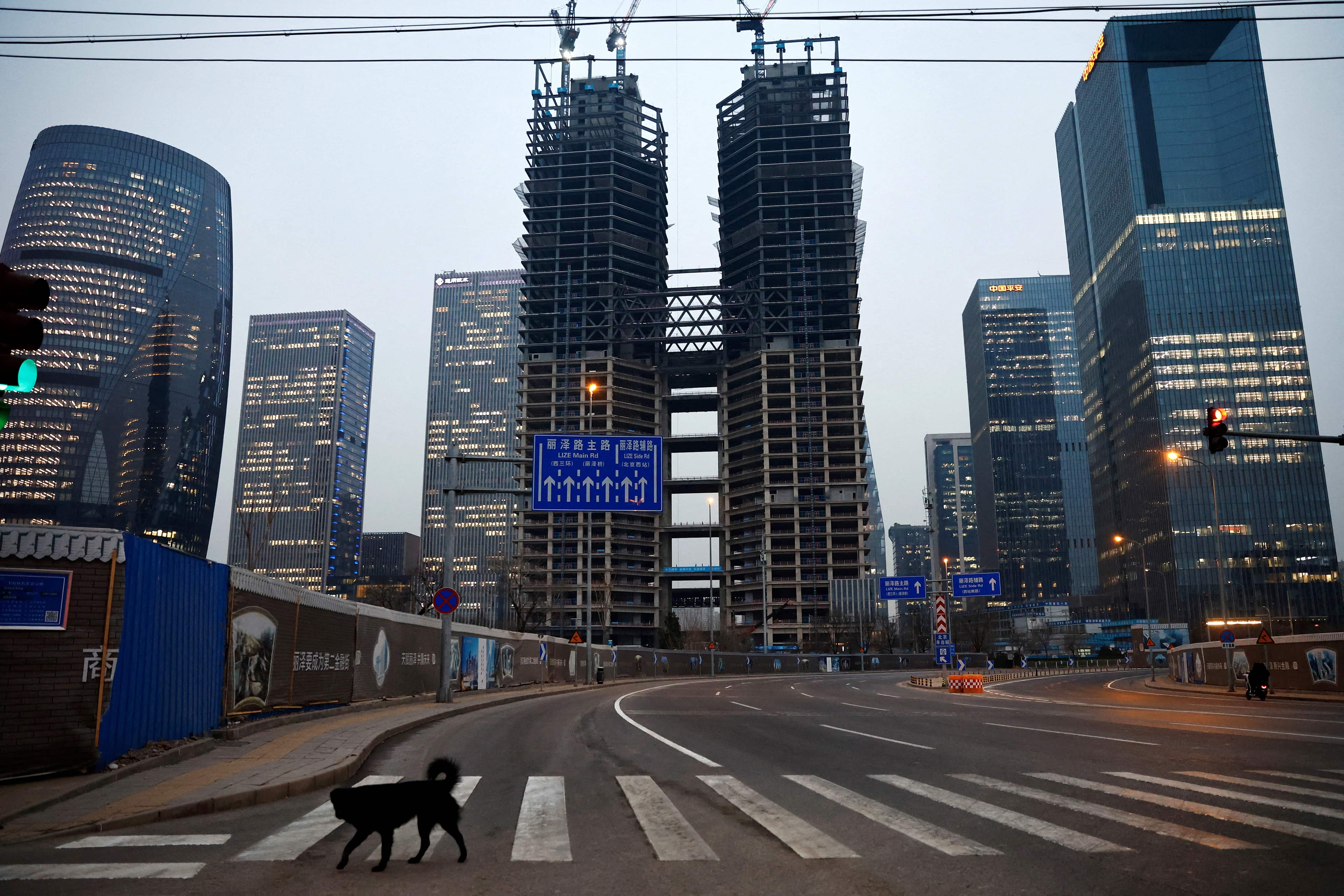
A dog crosses a road at a financial district with buildings under construction, in Beijing
China has once again slipped into deflation in October, drawing attention to the challenges the country faces in stabilising growth through domestic demand. According to a report by Bloomberg, The National Bureau of Statistics reported a 0.2 per cent decline in consumer prices last month, contrary to expectations, following two months of near-zero inflation.
Producer prices also extended their decline for the 13th consecutive month, dropping 2.6 per cent, slightly better than the estimated 2.7 per cent decline. The struggle to spur growth through internal consumption is evident, and the recent data challenges the earlier optimism expressed by the People's Bank of China about a rebound in prices after a challenging summer.
China's inflationary woes in 2023 are rooted in both domestic and international factors. A housing slump, weakened consumer confidence, and a significant drop in global commodity prices from the highs of the previous year contribute to the nation's low inflation rate.

Additionally, the subdued demand for Chinese goods on the international stage has led to declining exports. The delicate balance required for a strong economic recovery continues to elude China, posing challenges for policymakers grappling with the complexities of both local and global economic dynamics.
The ongoing struggles in China's consumer price index are particularly pronounced, with deflationary pressures surfacing in July and persisting throughout the year.
While The People's Bank of China had expressed confidence in a rebound, the latest data suggests a more challenging reality. Moreover, the offshore yuan and Chinese 10-year government bond yields remained relatively stable immediately after the release of the deflationary figures.
)
The Early Spring is proof not everyone can talk about their real feelings, and it is perfectly OK
)
UN votes to ‘correct the map’ as India backs fairer world view
)
Nigerian Navy discovers 99,000 litres of suspected stolen, illegally refined products as it intensifies anti-crude oil theft operations
)
Who is Aditi Paudel? 17-year-old becomes Japan's first literacy ambassador
)
Bengaluru: Officials find 40 kg expired chilli at chairman's club
)
Jaishankar rejects trade link to ending Ukraine war
)
Israeli strikes on Lebanon kill three, injure 23 despite truce
)
Alpine glacier was covered with sheep wool sheets to prevent melting. It worked
)
South Korea mulls deploying military assets to Strait of Hormuz
)
World's fifth-largest economy, British army can't afford to train
)
Breaking | Vance takes the podium: First White House briefing since Leavitt's exit
)
Taiwan raises 'concerns' over China's missile test
)
BRICS 2026: $1 trillion sovereign capital set to converge in Delhi for first iBRICS Summit
)
What is Iran's Pickaxe Mountain that Trump has again threatened to bomb?
)
UN votes to correct world map that visually shrank Africa for 450 years
)
Former NewJeans member Danielle launches YouTube channel, hints at new solo journey
)
Bangladesh batter Towhid Hridoy creates history with 350 not out in South Africa
)
Brendan Fraser’s transformation fuels The Mummy 4 excitement as fans welcome back Rick O’Connell
&im=FitAndFill=(700,400))
Krishna Janmashtami 2026: From Dhaniya Panjiri to Makhana Kheer- 5 best sweet dishes perfect for celebrating Lord Krishna’s birth
)
Donald Trump plans to travel to Ireland on Qatari-donated jet amid security concerns
)
Nazi-looted art to return to Jewish heirs
)
Eight killed in Kerala’s Thrissur after car rams into lorry parked on highway
&im=FitAndFill=(700,400))
Why Russian fighter jets use bulky, low-pressure tyres compared to US jets
)
FBI-wanted fraud accused arrested in Jalandhar over $600,000 scam
&im=FitAndFill=(700,400))
Why US tanks weigh over 20 tons more than Russian tanks
&im=FitAndFill=(700,400))
New Friday OTT releases (September 4, 2026): GDN, Dhamaal 4, Jagamae Sangeetham- Watch 6 new movies and TV shows on Netflix, Prime Video and more
)
Killing the Himalayas slowly: Human urine is melting a glacier on Mount Everest
However, the broader implications of this economic scenario raise concerns about the effectiveness of policy measures in fostering a sustained recovery.
(With inputs from Bloomberg)
WATCH WION LIVE HERE