

&imwidth=800&imheight=600&format=webp&quality=medium "China’s crackdown on low-grade coal puts Indonesian exports at risk")
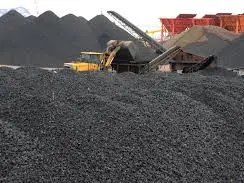
China is likely to slash imports of low-grade coal from Indonesia this year, dealing a blow to one of its key suppliers as weak domestic demand, surging output, and climate goals reshape the world’s biggest coal market.
Indonesian coal, particularly lignite or brown coal, has been a staple of China’s thermal coal mix over the past few years. But this trade is now being undercut by collapsing prices and shifting policy priorities in Beijing.
Reutersreported that Li Xuegang, a senior official at the China Coal Transportation and Distribution Association, said at the Coaltrans China conference in Beijing that the country’s tighter emissions rules would “slash demand for low-heating and poor-quality grades”.
“Imports of low-calorie coal are no longer economically viable given the current price levels and China’s domestic supply,” said Li, warning that the fall in overall coal imports in 2025 could be steeper than expected, possibly dropping by 50 to 100 million tonnes compared to 2024’s record 543 million tonnes.
Why is Indonesian coal in the firing line?
Indonesia, one of China’s top overseas coal suppliers, is particularly vulnerable to the shift. The bulk of its exports to China are lignite, a highly polluting, low-energy fuel that’s now under scrutiny as China doubles down on decarbonisation.
Trending Stories
&imwidth=180&imheight=135&format=webp&quality=medium)
Anti-SIR protest in Mumbai: Protestors wear black masks & ribbons in Mumbai
&im=FitAndFill=(700,400)&imwidth=180&imheight=135&format=webp&quality=medium)
How does a robot decide what to do next?
&imwidth=180&imheight=135&format=webp&quality=medium)
‘This is just the start’: Maaya Rajeshwaran on historic ITF title, confidence boost and future goals
&imwidth=180&imheight=135&format=webp&quality=medium)
Rahul Gandhi's plea against Election Commission delayed as Supreme Court registry flags 14 ‘defects’
&imwidth=180&imheight=135&format=webp&quality=medium)
'Absolutely disgusting': Australia slams US plan to livestream Nidal Hasan's execution; Mike Johnson raises concerns, warns of terrorist propaganda
&imwidth=180&imheight=135&format=webp&quality=medium)
'Almost certainly': UK Prime Minister Andy Burnham says Iran's IRGC behind RAF Fairford threat
&imwidth=180&imheight=135&format=webp&quality=medium)
'I am thoroughly unamused': Judge slams Trump administration after 400 trees cut at Washington golf course
&imwidth=180&imheight=135&format=webp&quality=medium)
Sidhu Moose Wala’s younger brother wins hearts by recreating late singer’s signature move at Toronto Hologram Show
&imwidth=180&imheight=135&format=webp&quality=medium)
UK school ditches technology, shifts from screen to pen and paper for learning
&imwidth=180&imheight=135&format=webp&quality=medium)
Houthis warns US of 'painful response' if Washington joins Saudi war in Yemen as airlines suspend flights to Saudi Arabia
&imwidth=180&imheight=135&format=webp&quality=medium)
Trump says he 'may' meet North Korean leader Kim Jong Un during upcoming Asia trip
&imwidth=180&imheight=135&format=webp&quality=medium)
Girl 'dead' for 8 hours wakes up at her own funeral, dad insists she wasn't breathing
&imwidth=180&imheight=135&format=webp&quality=medium)
China’s gold rush puts billion in focus
&im=FitAndFill=(700,400)&imwidth=180&imheight=135&format=webp&quality=medium)
Navratri 2026: 9 days, 9 forms of Goddess Durga and 9 colours- Check the complete list
&imwidth=180&imheight=135&format=webp&quality=medium)
Korean peninsula tensions escalate as North Korea launches multiple ballistic missiles, PACOM says 'no threat to US personnel'
&imwidth=180&imheight=135&format=webp&quality=medium)
'Turn approver, resign, we'll forgive you': Rahul Gandhi claims receiving messages from CEC Gyanesh Kumar
&imwidth=180&imheight=135&format=webp&quality=medium)
Robotic surgery, advanced treatment: What is coming to this small Gujarat town?
&imwidth=180&imheight=135&format=webp&quality=medium)
Congress demands action against chief election commissioner
&imwidth=180&imheight=135&format=webp&quality=medium)
Trump weighs firing Kimberly Guilfoyle as US ambassador to Greece amid misconduct allegations: Report
&imwidth=180&imheight=135&format=webp&quality=medium)
Pakistan's government blames PTI for rise of terrorism in Khyber Pakhtunkhwa
&im=FitAndFill=(700,400)&imwidth=180&imheight=135&format=webp&quality=medium)
New OTT releases this week (October 12-18, 2026): Sacrifice, Koffee with Karan S9, Roadies Rebirth- 6 titles coming on Netflix, JioHotstar and more
&imwidth=180&imheight=135&format=webp&quality=medium)
'Ouch!!! That must hurt': Kangana Ranaut hails Kamal Haasan's sharp reply to Elon Musk over Starlink row
&imwidth=180&imheight=135&format=webp&quality=medium)
Delhi protest: CJI Surya Kant declines to meet India Bloc leaders
&imwidth=180&imheight=135&format=webp&quality=medium)
'I will not be silenced': Ilhan Omar alleges political intimidation after federal officers search her Washington home
&imwidth=180&imheight=135&format=webp&quality=medium)
India's Ajit Doval, Iran's Mohsen Rezaei hold talks amid escalating West Asia tensions, discuss 'issues of mutual interest'
&imwidth=180&imheight=135&format=webp&quality=medium)
Elon Musk pumps $276 million into Republican campaigns ahead of US midterm elections
&imwidth=180&imheight=135&format=webp&quality=medium)
Opposition’s 10 demands in Supreme Court petition range from stay on SIR to audit of voter rolls
&imwidth=180&imheight=135&format=webp&quality=medium)
1,500 drones illuminate Mumbai sky as Cordelia Cruises unveils second ship, Cordelia Sky
&imwidth=180&imheight=135&format=webp&quality=medium)
BCCI rejects venue shift reports, India vs Sri Lanka 1st ODI to remain in Delhi
&imwidth=180&imheight=135&format=webp&quality=medium)
I.N.D.I.A. Bloc lists 10 requests to Supreme Court
&imwidth=180&imheight=135&format=webp&quality=medium)
UK PM Andy Birnham renews claims of Russian meddling in Brexit vote
&imwidth=180&imheight=135&format=webp&quality=medium)
New Cold War: Why is China buying more gold? Explained
Chinese utilities had long blended Indonesian lignite with higher-grade coal to power thermal plants, but this practice is losing favour.
China’s domestic coal production surged to 4.7 billion tonnes in 2024. Over the first four months of 2025, China produced 1.58 billion tonnes of coal, which was 6.6 per cent higher than the output booked for the same period a year earlier. In April alone, China produced 3.8 per cent more coal than a year ago, at 389.31 million tonnes.
With stockpiles swelling and renewables taking a growing share of the electricity mix, utilities now have easier access to higher-quality domestic or imported alternatives.
In May, China’s coal imports dropped for the third consecutive month, falling to 36.04 million tonnes from 43.82 million tonnes in April. Cumulative imports for the first five months of 2025 are down 8 per cent year-on-year, official data shows. This trend is expected to accelerate in the latter half of the year.
China’s broader energy landscape
China’s coal policy is now walking a tightrope between energy security and climate commitments. After being hit by power shortages earlier this decade, Beijing approved a wave of new coal power projects to stabilise its grid.
Yet, even as approvals rose again in 2025, thermal power output fell 4 per cent in the first four months, with wind and solar stepping up to meet rising electricity demand.
Renewables now account for 26 per cent of China’s power output, while coal’s share dipped to a record low of 54 per cent in April, according to energy think tank Ember. But coal remains critical, especially with power demand expected to rise due to expanding data centres and high-tech manufacturing.
Domestically, coal production is projected to increase by 70 to 80 million tonnes this year. Officials believe production will only peak around 2027, providing a buffer to reduce imports further.
With local supplies strong and emissions pressure mounting, Indonesia’s once-lucrative lignite exports to China may continue to fade. The result could not only reshape regional trade dynamics but also signal a quiet but significant shift in China’s carbon trajectory.
(With inputs from agencies)