China’s apparel exports decline as US tariffs and rising costs weaken its dominance

&imwidth=600&imheight=450&format=webp&quality=medium "China’s apparel exports decline as US tariffs and rising costs weaken its dominance")
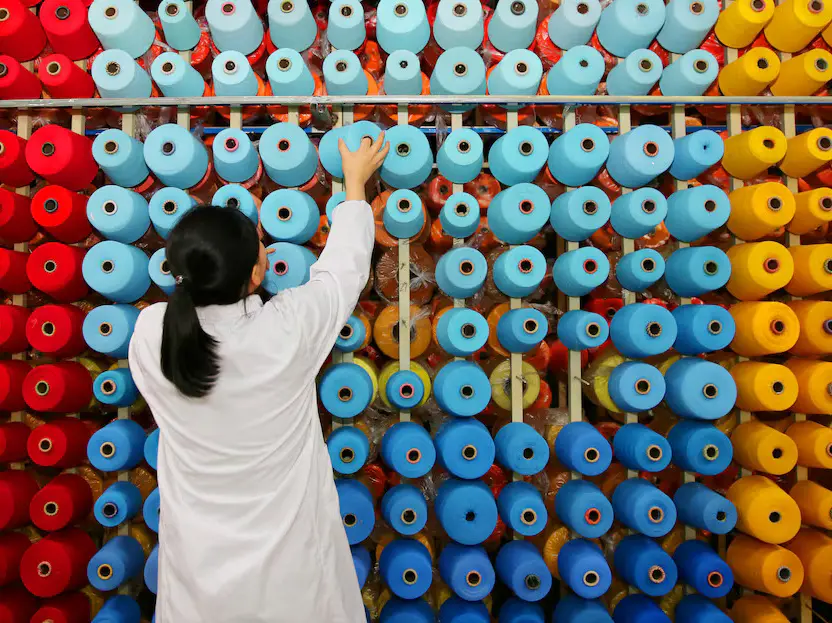
An employee arranges bobbins at a textile plant in Haian county, Jiangsu province, China. Photograph: (Reuters)
Despite an apparent easing in trade tensions between the US and China, US fashion companies are continuing to reduce their exposure to Chinese manufacturing.
The United States’ apparel imports from China have plummeted to their lowest monthly level in 22 years, marking a significant shift in the global clothing trade. According to data from the US International Trade Commission (USITC), the value of apparel imports from China dropped to $556 million in May 2025, a sharp decline from $796 million in April, marking the fourth consecutive month of decreases. This reduction highlights the continued impact of the US administration's aggressive tariff policies, which have deterred American retailers from sourcing clothing from Chinese manufacturers.
President Donald Trump’s decision to impose tariffs as high as 145 per cent in April 2025 has spurred many US companies to seek alternatives in countries such as Vietnam, Bangladesh, India, and Mexico. This trend has resulted in significant changes to global apparel supply chains, with China’s share of the US apparel market steadily shrinking in recent years.
Despite an apparent easing in trade tensions between the US and China, US fashion companies are continuing to reduce their exposure to Chinese manufacturing. Earlier this year, anticipating the implementation of tariffs, retailers had stocked up on Chinese imports. In January 2025, apparel imports from China were valued at $1.69 billion, up 15 per cent from the previous year, but the ongoing tariff burden has led many businesses to move their sourcing operations elsewhere.
Southeast Asia and Mexico gaining ground
As China’s dominance wanes, Southeast Asia and Mexico are emerging as major beneficiaries of the shift in US sourcing patterns. According to data from QIMA, a global auditing firm, US sourcing from China fell nearly 25 per cent in the second quarter of 2025 compared to the previous year, while demand for factories in Southeast Asia surged by 29 per cent. In May 2025, the US imported $259 million worth of apparel from Mexico, up 12 per cent from the same month in 2024.
QIMA’s report underscores the broader regional shift, with countries like Bangladesh, Cambodia, Pakistan, Vietnam, and India benefiting from US retailers seeking to diversify their supply chains away from China. While the shift has been gradual since mid-2023, the recent tariff hikes have accelerated the trend, further solidifying Southeast Asia’s position as the primary alternative to Chinese apparel.
Trending Stories
)
)
)
)
)
)
)
)
)
)
)
)
)
)
)
)
)
)
)
)
)
)
)
)
)
)
)
)
&im=FitAndFill=(700,400))
)
)
)
)
)
)
)
)
)
)
&im=FitAndFill=(700,400))
)
)
“While the US administration’s tariff policies took several sharp turns during Q2 2025, the procurement patterns of US-based brands and retailers have stayed largely within the bounds of long-standing trends,” QIMA noted. This sustained trend of diversifying supply sources is expected to continue as US retailers prepare for the busy holiday season, which will put US supply chains to the test.
China’s apparel industry faces mounting challenges
On a global scale, China’s apparel sector is grappling with a combination of rising wages, stricter environmental regulations, and increasing production costs. According to trade credit insurance firm Coface, China’s share of the global apparel export market has fallen from 54 per cent in 2010 to 41 per cent in 2023. The country’s growing wages, which have increased by an average of 6 per cent annually since 2010, have reduced its competitive advantage, particularly in comparison to other low-cost manufacturing hubs like Bangladesh and Vietnam.
Coface’s analysis points out that while China houses 19 per cent of the world’s apparel companies, these companies account for only 10 per cent of the sector’s profits between 2020 and 2024. This highlights the inefficiencies in the Chinese apparel manufacturing model, which relies heavily on subcontracting for low-paying work.
Countries like Bangladesh, India, and Vietnam are emerging as key players in the global apparel market, poised to capture market share due to their competitive advantage in terms of labour costs and favourable trade agreements. Additionally, as global customs duties remain uniform, these countries could further benefit from China’s declining dominance, particularly in markets outside of the US.
“China’s losing ground in global apparel exports is a trend that we expect to continue, with South and Southeast Asia becoming the new epicentre of global clothing production,” said Coface analysts.
As US tariffs on Chinese imports continue to reshape the apparel supply chain, the long-term outlook for China’s once-dominant apparel export industry appears uncertain, while Southeast Asia, Mexico, and other emerging markets stand poised to capture a larger share of the global market.