Are cracks in China’s economy widening as it walks a tightrope between external pressure and internal weakness?

&imwidth=600&imheight=450&format=webp&quality=medium "Are cracks in China’s economy widening as it walks a tightrope between external pressure and internal weakness?")
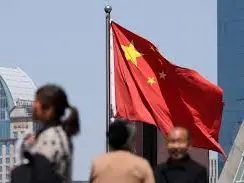
Chinese national flag flies as people walk on a pedestrian bridge in Shanghai, China April 15, 2025. Photograph: (Reuters)
Chinese exports rose 4.8 per cent compared to May 2024, and the underperformance was attributed largely to weakened shipments to the US, where exports fell 34.5 per cent year-on-year, the steepest drop since the COVID-related disruptions in early 2020.
China posted a larger-than-expected trade surplus in May, driven by a steep drop in imports and modest gains in exports, even as high tariffs from the United States weighed on overseas demand.
The trade developments come just ahead of another round of crucial US-China trade talks in London, amid lingering tensions and uncertainty over the path forward.
According to government data released Monday, China’s trade surplus widened to $103.22 billion in May, surpassing market expectations of a $101.10 billion surplus and increasing from $96.18 billion in April. This 25 per cent year-on-year rise in trade surplus was fuelled by a sharp 3.4 per cent year-on-year fall in imports, which exceeded expectations for a 0.9 per cent decline and reflected tepid domestic demand and ongoing economic fragility.
On the export front, exports rose 4.8 per cent compared to May 2024, falling short of the expected 5 per cent and slowing from an 8.1 per cent gain in April. The underperformance was attributed largely to weakened shipments to the United States, where exports fell 34.5 per cent year-on-year, the steepest drop since the COVID-related disruptions in early 2020.
Imports from the US also contracted over 18 per cent, reducing China’s trade surplus with America by 41.55 per cent to $18 billion.
Though exports to Southeast Asia and Africa surged—up nearly 15 per cent and 33 per cent, respectively—and those to the EU rose by 12 per cent, the rebound was insufficient to offset the drag from US trade tensions.
Trending Stories
&imwidth=280&imheight=210&format=webp&quality=medium)
&imwidth=280&imheight=210&format=webp&quality=medium)
&imwidth=280&imheight=210&format=webp&quality=medium)
&imwidth=280&imheight=210&format=webp&quality=medium)
&imwidth=280&imheight=210&format=webp&quality=medium)
&imwidth=280&imheight=210&format=webp&quality=medium)
&imwidth=280&imheight=210&format=webp&quality=medium)
&imwidth=280&imheight=210&format=webp&quality=medium)
&imwidth=280&imheight=210&format=webp&quality=medium)
&imwidth=280&imheight=210&format=webp&quality=medium)
&imwidth=280&imheight=210&format=webp&quality=medium)
&imwidth=280&imheight=210&format=webp&quality=medium)
&imwidth=280&imheight=210&format=webp&quality=medium)
&imwidth=280&imheight=210&format=webp&quality=medium)
&imwidth=280&imheight=210&format=webp&quality=medium)
&imwidth=280&imheight=210&format=webp&quality=medium)
&imwidth=280&imheight=210&format=webp&quality=medium)
&imwidth=280&imheight=210&format=webp&quality=medium)
&imwidth=280&imheight=210&format=webp&quality=medium)
&imwidth=280&imheight=210&format=webp&quality=medium)
&imwidth=280&imheight=210&format=webp&quality=medium)
&imwidth=280&imheight=210&format=webp&quality=medium)
&imwidth=280&imheight=210&format=webp&quality=medium)
&imwidth=280&imheight=210&format=webp&quality=medium)
&imwidth=280&imheight=210&format=webp&quality=medium)
&im=FitAndFill=(700,400)&imwidth=280&imheight=210&format=webp&quality=medium)
&im=FitAndFill=(700,400)&imwidth=280&imheight=210&format=webp&quality=medium)
&imwidth=280&imheight=210&format=webp&quality=medium)
&imwidth=280&imheight=210&format=webp&quality=medium)
&imwidth=280&imheight=210&format=webp&quality=medium)
&imwidth=280&imheight=210&format=webp&quality=medium)
&imwidth=280&imheight=210&format=webp&quality=medium)
&imwidth=280&imheight=210&format=webp&quality=medium)
&imwidth=280&imheight=210&format=webp&quality=medium)
&imwidth=280&imheight=210&format=webp&quality=medium)
Export categories like cars and ships rose by 22 per cent and 5 per cent, respectively, but smartphone and appliance shipments dropped by around 10 per cent and 6 per cent.
High-stakes talks in London
The May trade data comes ahead of the US-China trade talks in London, following a preliminary Geneva agreement in May. That deal saw both sides agree to a temporary reduction in tariffs: the US scaled back duties to 30 per cent from a peak of 145 per cent, while China lowered its tariffs on American goods to 10 per cent from 125 per cent.
Despite attempts to ease the situation, tensions have persisted. US officials accused Beijing of dragging its feet in approving critical mineral exports, while China criticised new restrictions on Chinese student visas and chip exports.
Analysts believe the full impact of tariff reductions may only show in June’s trade figures, with modest rebound potential for key exports like rare earths and electric machinery.
Rare earth exports surge, but outlook mixed
China’s exports of rare earths—vital for electric vehicles and semiconductors—rose 23 per cent in May from April, hitting their highest monthly total in a year at 5,865 tonnes.
However, Beijing’s tighter controls on certain categories of rare earth exports have already caused disruptions across Europe, forcing some auto and semiconductor plants to suspend operations.
Although China’s rare earth exports for the first five months of 2025 saw a marginal annual rise, data on specific categories, particularly magnets, show steep drops. Export volumes of rare earth magnets fell by 50 per cent in April, highlighting the impact of export curbs, which continue to serve as a bargaining chip in trade negotiations.
Deflation worsens in consumer and producer prices
Alongside trade data, inflation indicators released on June 9 paint a sobering picture of China’s economic health. The Consumer Price Index (CPI) fell 0.1 per cent year-on-year in May, marking the fourth straight month of deflation. The Producer Price Index (PPI) declined 3.3 per cent, the steepest drop since July 2023.
Although core inflation (excluding food and energy) rose by 0.6 per cent—its highest level in nearly a year—economists warn that persistent overcapacity and sluggish consumer demand will keep prices low.
Sectors like automotive and property have experienced price wars, deepening the deflationary trend. Factory-gate prices in coal mining and oil extraction sectors plunged 18.2 per cent and 17.3 per cent, respectively, underlining the pervasive cost pressures.
Policy dilemma: Stimulus or structural reform?
With external trade uncertain and internal demand stagnating, the Chinese government faces mounting pressure to inject further stimulus. The People's Bank of China has already cut interest rates and lowered reserve requirements this year, but analysts believe more aggressive easing may be needed to revive consumer confidence and industrial activity.
At stake is whether China can sustain growth amid global supply chain shifts, geopolitical tensions, and a fragile domestic recovery.
The outcome of trade talks in London, set to feature Vice Premier He Lifeng and US Treasury Secretary Scott Bessent, may determine whether recent tariff truce gains can translate into a durable economic rebound or merely delay a deeper slowdown.
With exports slowing, prices falling, and trade tensions unresolved, China’s economy continues to grapple with external pressure and internal weakness.