Union budget 2024: implications for India’s auto and manufacturing sectors

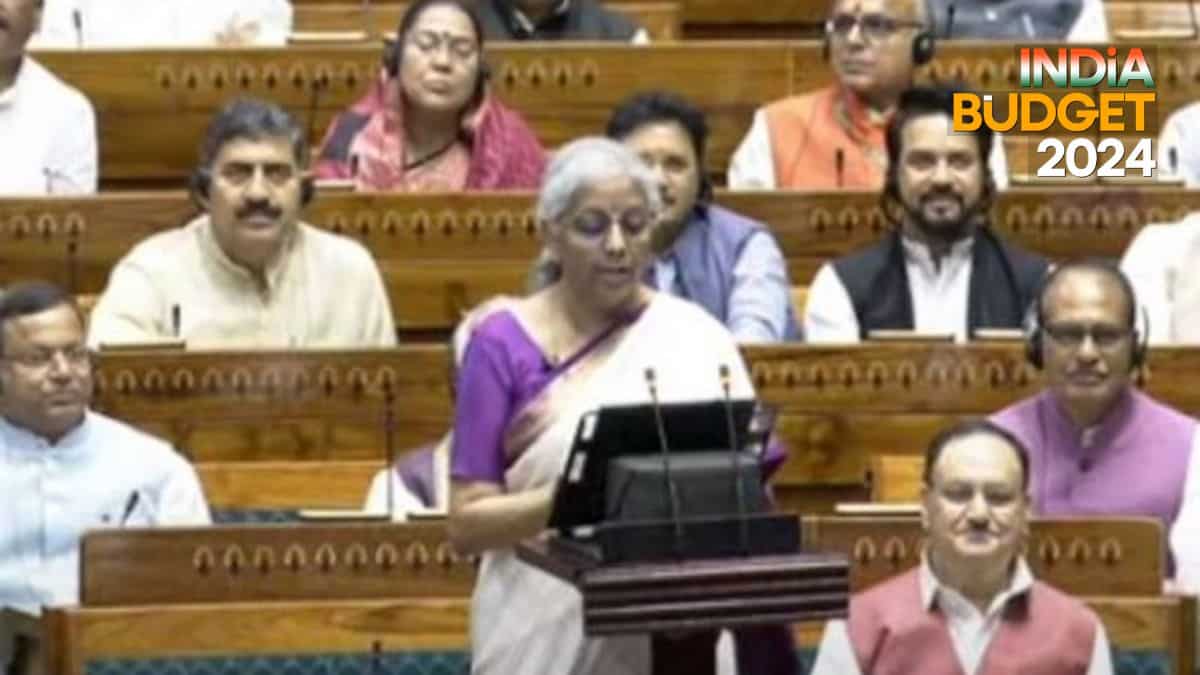
FM Nirmala Sitharaman presents Union Budget
The Union budget for 2024, presented by Finance Minister Nirmala Sitharaman, has allocated INR 2.66 lakh crore for rural development. This investment aims to enhance rural infrastructure and support agricultural growth, which are critical for the auto industry, particularly in the tractor and two-wheeler segments.
Key Budget Highlights
Sitharaman announced INR 2.66 lakh crore for rural development, including infrastructure improvements. Additionally, INR 1.52 lakh crore is set aside for agriculture and allied sectors. This includes the introduction of 109 new high-yielding and climate-resilient crop varieties.

The budget also introduced the fourth phase of the Pradhan Mantri Gram Sadak Yojana (PMGSY), targeting all-weather connectivity for 25,000 rural habitations. A national Cooperation Policy aims to systematically develop the cooperative sector, focusing on rural employment opportunities.
Industry Perspective
Vinod Aggarwal, President of the Society of Indian Automobile Manufacturers (SIAM), emphasised the importance of the rural economy for the auto sector. Fiscal measures that boost rural growth are seen as essential for the industry. “The Indian Automobile Industry welcomes the continued emphasis on economic growth with several announcements especially the strong fiscal support for infrastructure in the next 5 years. The announcements such as liberal allocation for rural development & infrastructure of Rs 2.66 Lakh crores is a welcome step that will boost the rural economy,” he said.
)
US vs China over South China Sea: Washington backs Philippines, Beijing hits back
)
Musk plans to more than double xAI's chips to over 1.2 million Nvidia GPUs by year-end
)
After JU, clash erupts at SRFTI: BJP’s ‘Dimagi Naxal’ jibe sparks political firestorm after students protest RSS-linked event
)
‘Anti-social elements spreading false rumours’: LPU issues statement amid massive unrest over alleged rape
)
LPU students go on rampage, vandalise campus amid widespread protest: What's happening
)
Trump asked Xi to pressure Iran. China did not say yes — here’s what Beijing wants
)
US Treasury Secretary Scott Bessent hails global crackdown on Iranian banks and airlines
)
An OpenAI agent escaped its locked test cage again, by hiding questions in DNS lookups
)
'Our video was trimmed': LPU girls who featured in rape-denial video make U-turn
)
3 males killed, four others injured in shooting after fight at strip club in Detroit
)
'Victory for low-budget consumers': Raghav Chadha hails 30-day telecom recharge rules
)
Claude rebuilt the 1989 game 'Prince of Persia' by reusing the original's own code
)
Beyond metros: How Tier-2 and Tier-3 cities could drive India’s next AI wave
)
Tesla builds first Cybertruck with its own refined lithium: Elon Musk's $1 billion Texas bet pays off
)
IndiGo flight suffers tail strike in Bengaluru while landing; DGCA to probe incident
)
The US and China set up an AI 'red telephone', but skipped the rulebook
)
‘Terror suspects arrested near UK air base were looking to do big damage’: Trump
)
Russian envoy claims US tactics to contain India were revealed in ‘Freudian slip’
)
IND vs WI 1st ODI: Kohli breaks Sachin's most runs in one country record with unbeaten 139 as India thump West Indies by 8 wickets
)
Researchers rebuilt exactly how 700 AI agents hacked Hugging Face: a 900-link chain trick
)
‘Olympic inclusion is our major target’: WPA President Ishaun Singh on pool’s global ambitions
)
Nations League: Spain sink England at Wembley; Modric shines for Croatia
)
Why has Iran released no proof of life of Mojtaba Khamenei? Araghchi reveals...
)
'What kind of confession is this?': Pakistan PM Shehbaz Sharif’s 'terrorists would be roaming New York' remark goes viral, raises alarm online. Watch
)
Beyond BrahMos: India targets Rs 50,000 crore in defence exports with unmatched price edge
)
Sri Lankan Tamil migrant worker gets death sentence in Saudi Arabia, help sought from India
)
Muslim marriage cannot shield sex with minor wife from prosecution under POCSO: Delhi HC
)
99.9% more powerful - Scientists find boy who can recall memories from just 3 months of age
)
'FIRST LOOK from inside Noah’s Ark': Researchers share video from inside mysterious mound in Turkey
)
UNSC reform momentum grows: Russia, Portugal, Mauritius push for India's permanent seat bid
)
8 US marines injured in Iranian missile attack on vessel in Strait of Hormuz: Report
)
Afghanistan says 28 fighters killed in clash near Pakistan border, Islamabad denies
)
Ceuta migrant crisis: Protesters take to streets as Spain grapples with migrant challenge
)
Jaishankar at UNGA: Goodwill and friendship can't coexist with terrorism
)
New York City wants a 'kill switch' on every AI, and will pay whistleblowers who report violations
Manish Raj Singhania, President of the Federation of Automobile Dealers Associations (FADA), highlighted that enhanced Minimum Support Prices (MSP) for major crops and the PMGSY Phase IV will likely boost rural incomes and connectivity, driving rural auto sales. "The enhanced MSPs and rural connectivity improvements are positive steps that will boost rural incomes and improve rural connectivity, potentially increasing rural auto sales," he said.
Shradha Suri Marwah, President ACMA & CMD Subros, said, “The budget, a blueprint for Viksit Bharat, will drive sustainable yet inclusive growth, especially in the manufacturing industry, at a rapid pace. Focus on strengthening of MSMEs through Credit Guarantee scheme and credit support during stress period, measures to bolster energy security and encouragement to start-ups by abolishing angel tax are indeed steps in the right direction. Further, the proposals for personal Income Tax will put more money in the hands of people thus fuelling consumption leading to economic growth.”
Rajat Mahajan, Partner, Deloitte India, said “Government is incentivizing the job creation in the manufacturing sector which is likely to impact 30 Lakh youth. We expect that these additional skilled workers with disposable income in hand will help in driving growth in the automotive industry in the 2 wheelersegment.”
Focus on Rural Market
The rural market is crucial for the auto industry’s growth. Tractor and two-wheeler sales, indicators of rural economic health, are expected to benefit from improved agricultural output and government schemes like MNREGA and higher crop MSPs. Automakers are focusing on rural areas to expand sales, given the significant potential for growth.
Vinkesh Gulati, former FADA President, noted that the INR 2.66 lakh crore allocation for rural infrastructure is a positive development for rural auto sales, particularly benefiting tractors, entry-level bikes, and cars.
Lack of Support for FAME Scheme
Despite positive measures for rural development, the budget did not address the industry's appeals to restore or increase subsidies for electric two-wheelers under the Faster Adoption of Manufacturing of Electric Vehicles (FAME) scheme. The interim budget had previously slashed the allocation for this scheme by 44% to INR 2,671 crore, a decision maintained in the current budget.
The reduction in subsidies has impacted electric two-wheeler sales. Despite efforts to increase localisation in EV production, the price gap between internal combustion engine (ICE) vehicles and electric vehicles (EVs) remains a challenge, with EVs being 15-20% more expensive.
Capital Expenditure and Infrastructure Development
The budget’s allocation of INR 11.11 lakh crore for capital expenditure, including roads and bridges, is expected to benefit the auto industry in the long term by improving logistics and overall consumer experience.
Economic Measures
The budget introduced measures to enhance disposable incomes, particularly through a simplified personal income tax regime. This change is expected to increase disposable incomes, particularly for the middle class, boosting consumer spending power.
Manish Raj Singhania from FADA noted, "Improved infrastructure is a boon for the auto sector, facilitating better logistics and enhancing the overall consumer experience."
Implementation Concerns
While the budget provides a framework for growth, effective implementation of these policies is crucial. The auto industry hopes for continued government support in addressing specific issues, such as the transition to green mobility and sustainable practices.
Budget 2024 offers significant allocations for rural development and infrastructure, which are expected to benefit the auto industry. However, the lack of support for the FAME scheme remains a concern. Effective implementation of the budget’s measures will be crucial for driving growth in the rural auto market.