Working with India to deal with the issue of black money, says Mauritius minister Jyoti Jeetun

&imwidth=600&imheight=450&format=webp&quality=medium "Working with India to deal with the issue of black money, says Mauritius minister Jyoti Jeetun")
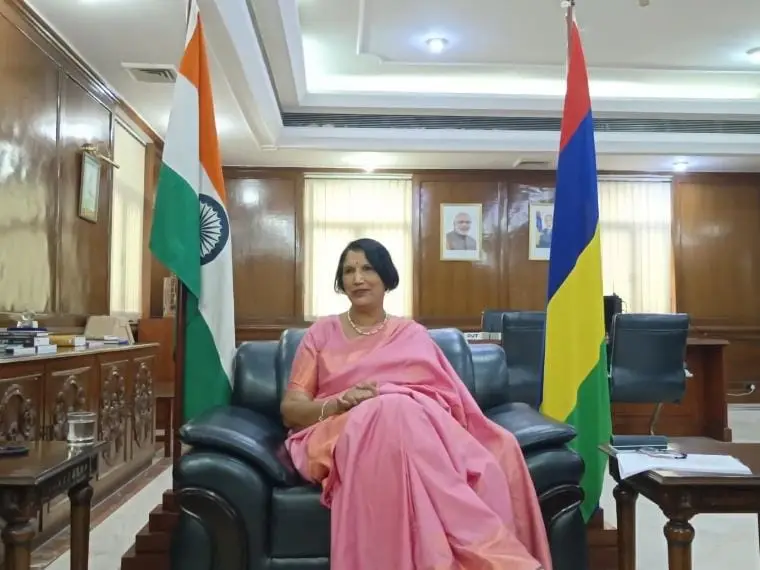
Minister of Financial Services, Mauritius Photograph: (WION)
Mauritius was briefly on the Financial Action Task Force (FATF) grey list in 2020 for money laundering concerns, but was removed in 2023 after implementing stricter regulations.
Top Mauritius Minister Dr. Jyoti Jeetun has said that her country is working with India to deal with the concerns over black money and to deal with the issue of illicit money flow. The Minister of Financial Services and Economic Planning Jeetun speaking to WION's Sidhant Sibal said, " we have to be very careful that our jurisdictions are not used for illicit terrorism or any sort of illegal financing instrument..", adding, "12 agencies that are working together in Mauritius to make sure that we are constantly on the watch and fighting this battle".
During PM Modi's visit to Mauritius this year, the top agencies of both countries, India's Enforcement Directorate (ED) and the Financial Crime Commission of Mauritius, signed an MoU to enhance cooperation in intelligence and technical assistance to combat money laundering and related crimes.
In 2016, India and Mauritius amended the DTAA to allow India to tax capital gains on investments from Mauritius starting April 1, 2017, which was a significant step to curb round-tripping, with a phased implementation. The country was briefly on the Financial Action Task Force (FATF) grey list in 2020 for money laundering concerns, but was removed in 2023 after implementing stricter regulations. The minister also lauded the strong India-Mauritius ties, pointing to the deep linkages. Full interview:
Sidhant Sibal: How do you see India-Mauritius ties?
Dr. Jyoti Jeetun: Our ties between people of Mauritius, and the people of India and both our countries, goes back several centuries. As you know, the vast majority of the people from Mauritius originally come from various parts of India. So we have very deep-rooted ancestral ties with India, cultural ties with India, ties of language as well; we speak Bhojpuri, English, and a number of other regional languages are present in Mauritius. Since this new government came into place, the focus has really to deepen the economic ties and shared philosophy of mutual benefit for the prosperity of the people of both our countries. My visit comes within the spirit of how to expand our horizon on the economic front as well.
Sidhant Sibal: How do you see India's outreach to Africa, especially when the African Union gained membership of the G20 under India's G20 summit?
Trending Stories
&imwidth=280&imheight=210&format=webp&quality=medium)
&imwidth=280&imheight=210&format=webp&quality=medium)
&imwidth=280&imheight=210&format=webp&quality=medium)
&imwidth=280&imheight=210&format=webp&quality=medium)
&imwidth=280&imheight=210&format=webp&quality=medium)
&imwidth=280&imheight=210&format=webp&quality=medium)
&imwidth=280&imheight=210&format=webp&quality=medium)
&imwidth=280&imheight=210&format=webp&quality=medium)
&imwidth=280&imheight=210&format=webp&quality=medium)
&imwidth=280&imheight=210&format=webp&quality=medium)
&imwidth=280&imheight=210&format=webp&quality=medium)
&im=FitAndFill=(700,400)&imwidth=280&imheight=210&format=webp&quality=medium)
&imwidth=280&imheight=210&format=webp&quality=medium)
&im=FitAndFill=(700,400)&imwidth=280&imheight=210&format=webp&quality=medium)
&imwidth=280&imheight=210&format=webp&quality=medium)
&imwidth=280&imheight=210&format=webp&quality=medium)
&imwidth=280&imheight=210&format=webp&quality=medium)
&imwidth=280&imheight=210&format=webp&quality=medium)
&imwidth=280&imheight=210&format=webp&quality=medium)
&imwidth=280&imheight=210&format=webp&quality=medium)
&imwidth=280&imheight=210&format=webp&quality=medium)
&imwidth=280&imheight=210&format=webp&quality=medium)
&imwidth=280&imheight=210&format=webp&quality=medium)
&imwidth=280&imheight=210&format=webp&quality=medium)
&imwidth=280&imheight=210&format=webp&quality=medium)
&imwidth=280&imheight=210&format=webp&quality=medium)
&im=FitAndFill=(700,400)&imwidth=280&imheight=210&format=webp&quality=medium)
&imwidth=280&imheight=210&format=webp&quality=medium)
&imwidth=280&imheight=210&format=webp&quality=medium)
&imwidth=280&imheight=210&format=webp&quality=medium)
&imwidth=280&imheight=210&format=webp&quality=medium)
&imwidth=280&imheight=210&format=webp&quality=medium)
&imwidth=280&imheight=210&format=webp&quality=medium)
&imwidth=280&imheight=210&format=webp&quality=medium)
Dr. Jyoti Jeetun: That was a momentous moment, really. You know, a groundbreaking historical moment for the African Union. It's good to remember that Mauritius is part of a number of African and regional corporations. Mauritius is a member of the African Union, etc. So we have these ties, these historical ties with India, and we could be a bridge to Africa, to where we are. You know, all our brothers and sisters in Africa, we are part of Africa, and we are working actively to build this partnership with all African countries.
Sidhant Sibal: How do you see the India-Mauritius FTA working?
Dr. Jyoti Jeetun: The Comprehensive Economic Cooperation and Partnership Agreement (CECPA) gives access to products in Mauritius and in India, to both countries. The trade in goods is operational, whereas trading in services is being fine-tuned. So some work is still going on to finalize the trade in services, but we are very confident that we are going to finalize that as well very soon, because that is also going to be a cornerstone for my ministry, which is financial services.
Sidhant Sibal: What new money laundering measures are being implemented to prevent its financial systems from being used to channel black money into India?
Dr. Jyoti Jeetun: Increasingly, we have to be very careful that our jurisdictions are not used for illicit terrorism or any sort of illegal financing instrument. Mauritius was on the FATF's grey list and has come out of it. We are today compliant with all 40 recommendations, compliant, or largely compliant with all 40 FATF recommendations.
And we are every day working through all our systems, all our procedures, all our institutions to make the integrity of our system robust. People are there; they are always trying to outsmart the system. So you have to be constantly looking at the system to make sure that, you know, they are not coming up with something else to beat you. So we are constantly working on it. It's an important pillar of the financial services sector.
Sidhant Sibal: How is Mauritius ensuring its full compliance with the amended India-Mauritius DTAA to curb tax evasion and round-tripping of funds?
Dr. Jyoti Jeetun: We have worked a lot to make sure that structures that are based in Mauritius can demonstrate substance. As you know, the DTAA with India was amended back in 2016. This has had some impact on the trade that was in services that was happening between our countries. And my mission is really to make sure that we work to grow this as India is growing, that we can also grow with India, while also ensuring that whatever is going through Mauritius as a structure is not just for tax purposes, but that they can actually demonstrate substance. And in that context, there are also discussions going on at the moment between our countries that I hope will be finalized again soon.
Sidhant Sibal: What steps are being taken to enhance transparency, since you have already mentioned quite a lot in terms of Mauritius' financial transactions, to address India's concerns about illicit funds flow?
Dr. Jyoti Jeetun: As I said earlier, we are really working very hard to make sure that all our institutions, all our regulatory and supervisory systems, are working. We have a core group, a National Committee , we have the Financial Crime Commission, and we have the Financial Intelligence Unit. 12 agencies that are working together in Mauritius to make sure that we are constantly on the watch and fighting this battle.
Sidhant Sibal: And how is Mauritius cooperating with Indian agencies such as the Enforcement Directorate to share information on black money investigations?
Dr. Jyoti Jeetun: Prime Minister Modi visited for our independence day in March this year, and a MoU between India's Enforcement Directorate (ED) and the Financial Crime Commission of Mauritius. And that really is a basis of collaboration and cooperation between our agencies to make sure that, you know, there's intelligent sharing, there's capacity building, there's training happening. So a number of collaborative efforts between the two enforcement departments.
Sidhant Sibal: My last question, since you're here to attend the Africa summit by CII financial Summit, please tell us about your trip overall here in India
Dr. Jyoti Jeetun: Always a pleasure to be in India. You know, as I said earlier, we have emotional and cultural links to India. So it's not just about business, it's also about the food, the atmosphere, the people, the culture. So you feel very much at home. I have had very constructive meetings with people you know, the Government of India, and also some very constructive meetings with the private sector from India and from African countries.

