'We are nothing but a lucrative business,' a Rohingya refugee's life amid chaos

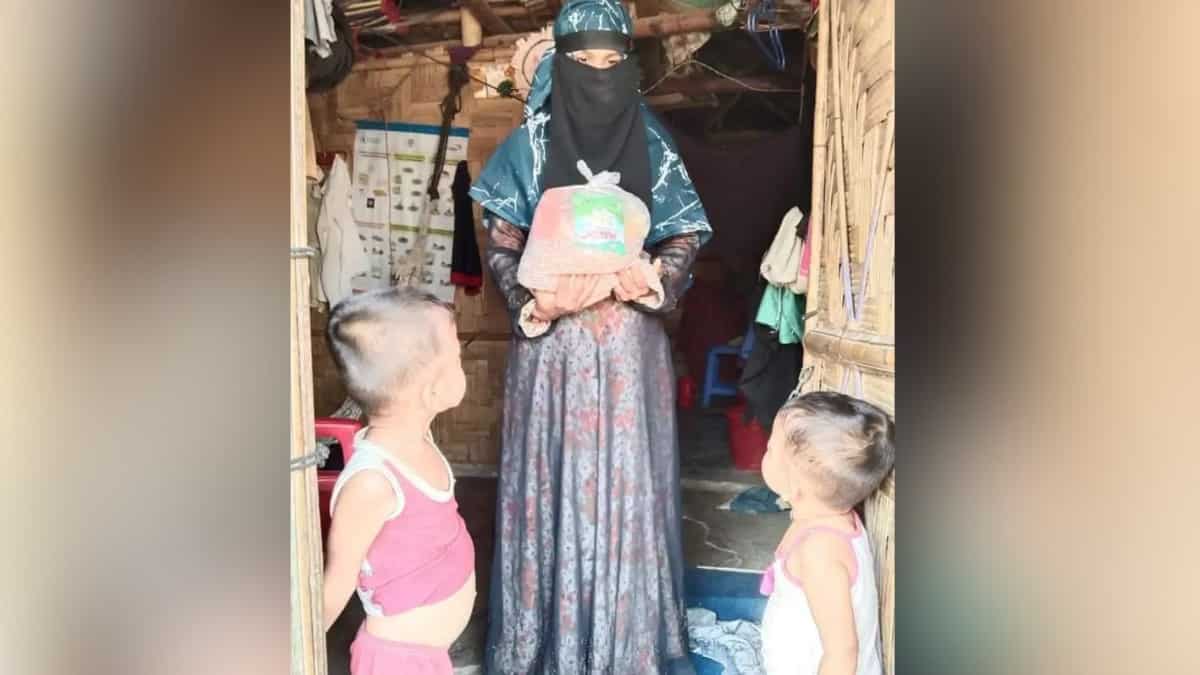
Rohingyas
A dozen bamboo sticks, two ropes, a tarpaulin sheet. What can you do with them?
If you’re a Rohingya refugee family in Bangladesh’s Cox’s Bazar, the world’s largest refugee camp, you would be expected to combine the three to put a roof over your head.
For years now that’s been the ground reality, and a grim one at that, for Rohingyas, a Muslim ethnic minority group who have lived for centuries in predominantly Buddhist Myanmar, seeking refuge in neighbouring Bangladesh after being uprooted.

Since the threat of genocide has hung over them like the proverbial sword of Damocles, the Rohingya have been forced to disperse, and have fled Myanmar over the past few years, calling Cox’s Bazar home. It’s a place filled with the displaced. A dreary and forlorn people, for whom the hopes and dreams of a better future away from their homeland - Myanmar, formerly Burma - continue to linger.
Rohingya camps have been set up in both hilly and plain terrain. The world has labelled them the 'boat people' for their instinctive and, rather, fundamental call to row away from their homeland against the tide when the military took over their livelihood, tossing aside their basic human right to freedom.
Food, clothing, shelter, otherwise assumed people’s basic needs, have now become a luxury. A hearty meal on good days is rice and dal (lentil soup), a refugee says, and now with the lack of funds their sustenance hinges on rice and salt.
&im=FitAndFill=(700,400)&imwidth=180&imheight=135&format=webp&quality=medium)
What is the real meaning behind Pete Hegseth's tattoos?
&imwidth=180&imheight=135&format=webp&quality=medium)
India-US ties: Marco Rubio seeks India's oil & energy co-operation Ad Ad options Learn more
&imwidth=180&imheight=135&format=webp&quality=medium)
Man marries off wife of 17 years to her lover in Uttar Pradesh
&imwidth=180&imheight=135&format=webp&quality=medium)
Boeing 737 MAX10 gets FAA certification, deliveries expected to begin in 2027
&imwidth=180&imheight=135&format=webp&quality=medium)
Shastri backs Shami comeback; lauds Bhuvi and warns Bumrah on format workload ahead of World Cup
&imwidth=180&imheight=135&format=webp&quality=medium)
US midterms 2026: Red seats once deemed safe now appear shaky as Republicans spend big on ads
&imwidth=180&imheight=135&format=webp&quality=medium)
WATCH | Albania protesters set Supreme Court on fire as anti-Rama riots escalate
&imwidth=180&imheight=135&format=webp&quality=medium)
'Tap dancing through a minefield': Musk backs SpaceX-Tesla merger as AI boom fuels rocket firm's first profit
&imwidth=180&imheight=135&format=webp&quality=medium)
Dandiya Nite ’26: Indian High Commissioner hails diaspora as bridge between India and Nigeria
&imwidth=180&imheight=135&format=webp&quality=medium)
Trump says Ilhan Omar 'could go to jail' amid federal probe, calls Somalia a 's***house'
&imwidth=180&imheight=135&format=webp&quality=medium)
Punjab CM Bhagwant Mann allegedly detained for three hours at Delhi airport, fined ₹50,000: AAP
&imwidth=180&imheight=135&format=webp&quality=medium)
What the Mecca Joint Defence Agreement says about withdrawal and military support. Read full text of the pact here
&imwidth=180&imheight=135&format=webp&quality=medium)
Musk ordered Starlink restrictions that caught Ukraine off guard amid escalating tensions: Report
&imwidth=180&imheight=135&format=webp&quality=medium)
India vs New Zealand T20I Series 2026: Complete schedule, match timings, squads and live streaming details
&imwidth=180&imheight=135&format=webp&quality=medium)
Trump calls Le Pen France’s ‘conservative voice’ after riots, but holds back on endorsement
&imwidth=180&imheight=135&format=webp&quality=medium)
Trump considers removing White House press corps to restore historic indoor swimming pool
&imwidth=180&imheight=135&format=webp&quality=medium)
Ukrainian soldier rescued by a drone chopped off own leg while hiding for 491 days
&imwidth=180&imheight=135&format=webp&quality=medium)
US-Iran war | Tehran: Must end port blockade, oil sanctions and regional attacks
&im=FitAndFill=(700,400)&imwidth=180&imheight=135&format=webp&quality=medium)
Priyanka Chopra to Shilpa Shetty: 6 Bollywood actresses and their fitness secrets
&imwidth=180&imheight=135&format=webp&quality=medium)
'US will never part with niche technology' former IAF assistant chief on India's fighter jet ambitions
&imwidth=180&imheight=135&format=webp&quality=medium)
Pujara says 'Samson and Vaibhav cannot be in Playing XI' for India on NZ tour
&imwidth=180&imheight=135&format=webp&quality=medium)
'What's wrong with you? Are you a sick person?': Trump at it again as he snaps at reporters, faces backlash
&imwidth=180&imheight=135&format=webp&quality=medium)
Over 100 US lawmakers urge FBI to probe foiled Hindu temple shooting as hate crime
&im=FitAndFill=(700,400)&imwidth=180&imheight=135&format=webp&quality=medium)
New OTT releases this week (October 19-25, 2026): Gajab Raat to Chaar Yaar-8 titles to watch during Dussehra week on Netflix, Prime Video and more
&imwidth=180&imheight=135&format=webp&quality=medium)
Ukrainian drone airlifts wounded soldier in what is likely a world first
&imwidth=180&imheight=135&format=webp&quality=medium)
Trump says he wants Zelensky to 'make a deal' with Russia, asks Putin to release American prisoner Stephen Hubbard
&imwidth=180&imheight=135&format=webp&quality=medium)
The Verdict | Trump, Putin and Xi: A superpower triangle that could reshape global diplomacy
&imwidth=180&imheight=135&format=webp&quality=medium)
India moves to buy 10,000 more AI chips for a national compute pool open to startups
&imwidth=180&imheight=135&format=webp&quality=medium)
'They are not even telling us' - Mysterious metallic object discovered in Minnesota field
&imwidth=180&imheight=135&format=webp&quality=medium)
Cattle-feed bran in biscuits, detergent in milk: FSSAI acts against 3 companies
&imwidth=180&imheight=135&format=webp&quality=medium)
US midterms 2026: With Republicans spending big, Bloomberg opens his wallet for Democrats. Here's how much he is pouring
&imwidth=180&imheight=135&format=webp&quality=medium)
Iran rejects US talks until demands are met, rules out moving enriched uranium out of the country
&imwidth=180&imheight=135&format=webp&quality=medium)
Feds obtain DNA evidence that could prove Ilhan Omar married her brother: Report
&imwidth=180&imheight=135&format=webp&quality=medium)
Ramayana advance booking: Ranbir Kapoor, Yash's film cross $500K ahead of Diwali release
Speaking to WION, Sajjad Hussain (name changed) says, there is enough to be disheartened about, but he is hopeful of building a community that can survive in the world. “My people are smart, but lack basics that can bring them at par with the world,” he says with optimism.
Freedom on crutches
In a state of dire hand-to-mouth existence, an inhabitant remembers days when he had enough for himself. “I belonged to a well-to-do family when I was in my homeland - Burma. After the military rule, things began to go downhill,” said the 25-year-old.
His family faced hardships even when it came to visiting relatives. Freedom of movement looked like a far-fetched dream. “We needed written approval to step out of our area,” Hussain said of his dark days on the land he once called home.
After making desperate attempts to lead a normal life, he along with many others, fled Myanmar in 2017 to reach Cox’s Bazar in the hope of a better life. Little did he envision himself as a refugee.
The refugee workforce
Amid the constant struggle to live, finding a job was an uphill task. “People exploited us, paid us meagre salaries, but got enough and more work out of us,” he says.
Today, the only kind of employment one can manage to obtain is volunteer work. Needless to say, there was always going to be a disparity in payment, a point brought to our attention by a volunteer.
While a citizen gets paid 40,000 taka (local currency), a refugee working in a similar capacity is paid just 3,000 taka.
With years of experience, Hussain has now started negotiating for his rights as an employee and wants to at least be compensated for the amount of work he does.
Misery in sickness and health:
“For reporting any illness, the prescription always contains one medicine, paracetamol,” he adds. “I won’t lie, pregnant women get good medical support, but there is no aid for life-threatening ailments.”
‘I’m a scammer, they say’
“We have not interacted with people from developed countries,” says Hussain, who looks at the internet as a boon which allows him access to the world in order to seek aid for refugees currently living in and around his camp.
“My way of communication may not be as polished and people look at me as a scammer when I try to raise funds for our refugee families. Nobody will know what the life of a refugee is, it is not a place to be.”
Latching on to food during floods
Food is gold.
Monsoon brings tales of despair for camp inhabitants who are put up in low-lying areas. Episodes of incessant rains are not a rarity, and a refugee's instinct makes him run to save foodgrains. "We run to save our rice bags when we see water filling up."
Daydreamers
'How many countries have you visited?' I ask.
"We have not seen a world, we all have dreams and aspirations. I feel like travelling and seeing places, but if things go on like this that day probably will never come."
Talking about dreams, Hussain added, "We refugees are a business and a lucrative one. They say we are not here to travel or see places. We must be prepared to be tossed when the world decides to toss us around. We are the world’s football.”
We live cramped up in our shelter, we struggle with our basic needs every day. "Life in prison is better than the one am living currently," he adds.
A constant search for a safe haven
The specter of danger lingers constantly over the refugees. Capsizing of boats during migration has claimed many lives and isn't a thing of the past. Refugee families have seen children being thrown into the fire, and their women are not safe. "Our women were raped in front of their brothers and fathers, their genitals were mutilated. Our children were thrown into fire, we have seen this cruelty in front of our eyes."
Also read |‘Only a matter of time’: Israeli forces close in on Hamas co-founder founders Yahya Sinwar
Having gone through pain, shaken mentally by the atrocities unfolding around each passing day, the hopeful refugee says, "We try to keep sane and live on as a community with whatever we have.”
A refugee is constantly thinking and hoping for a better future, Hussain says.
Being dubbed the ‘boat people’ might sound harsh, but Hussain has made his peace with the phrase as he knows and understands everybody is ready to pick up and leave for any place at any time if it could promise a better life.
While the Rohingya live in the shadows of uncertainty and dream of a better life, they fully know and understand that a return to their homeland might not be how their fairytale ends.

