US midterms 2026: Talarico vs Paxton, El-Sayed vs Rogers and more – Key Senate, House battles and the numbers that could decide Congress


US Vice President JD Vance speaks during a midterm campaign rally in Topeka, Kansas on October 26, 2026. Photograph: (AFP)
The November 3 US midterms will decide whether Republicans retain control of Congress. With Trump’s approval rating at 32% and living costs a major concern, both parties are pouring resources into key Senate and House races. These are the battles to watch.
Americans head to the polls on November 3 in midterm elections that will determine whether President Donald Trump’s Republicans retain control of Congress or face Democratic majorities during the final two years of his presidency.
Rising living costs, the war with Iran and dissatisfaction with Trump have put Republicans under pressure, while Democrats are contesting seats in districts that have traditionally favoured the GOP. But redrawn congressional boundaries, heavy campaign spending and uncertainty in polling have made the race for control difficult to call.
The stakes extend beyond individual candidates. A change in control of either chamber would affect the administration’s ability to advance legislation and shape congressional scrutiny of its policies.
The arithmetic: What each party needs
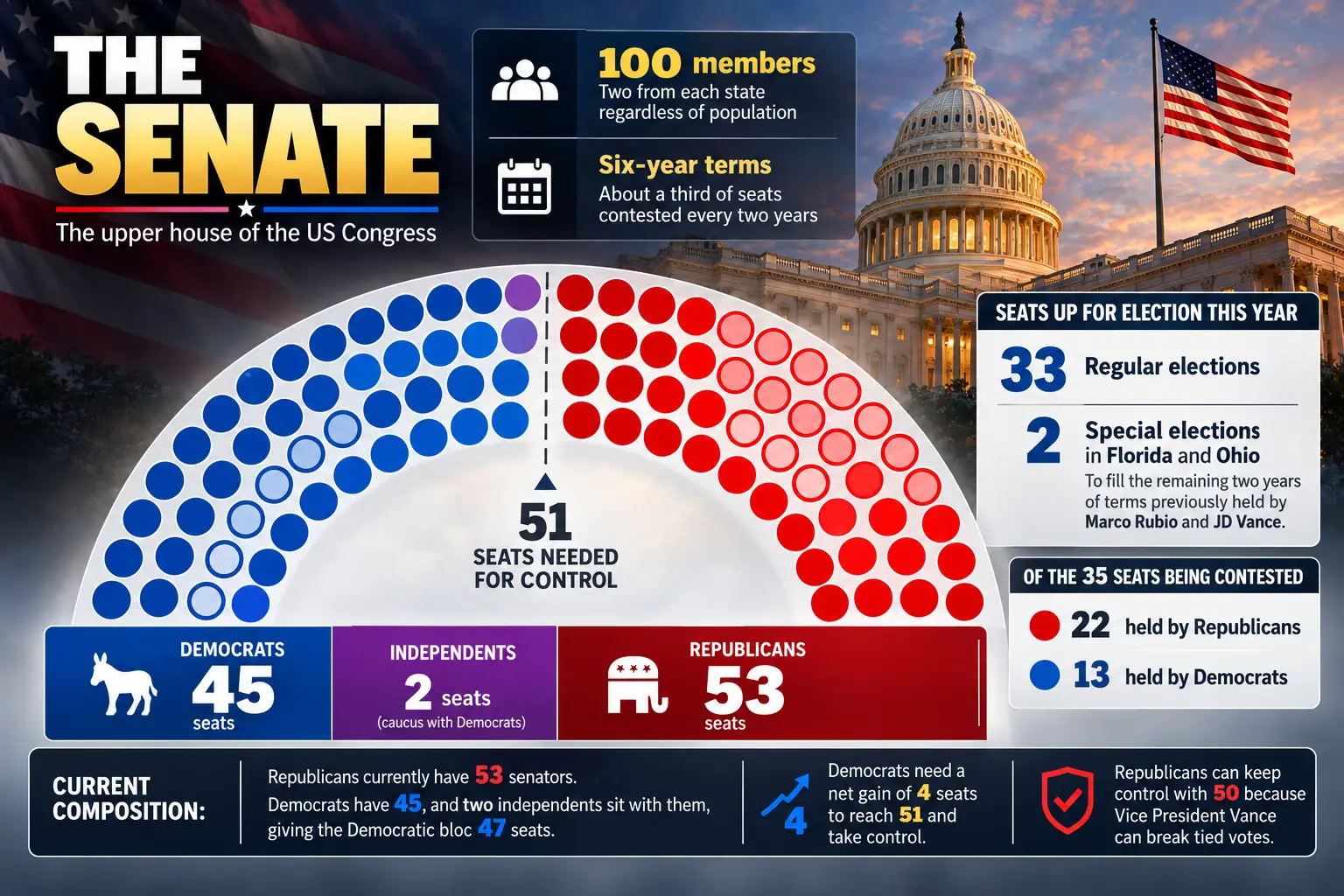
Republicans hold a 53-47 majority in the Senate. Democrats need a net gain of four seats to reach 51 and take control, since a 50-50 split would leave Republicans in charge through Vice President JD Vance’s tie-breaking vote.
Trending Stories


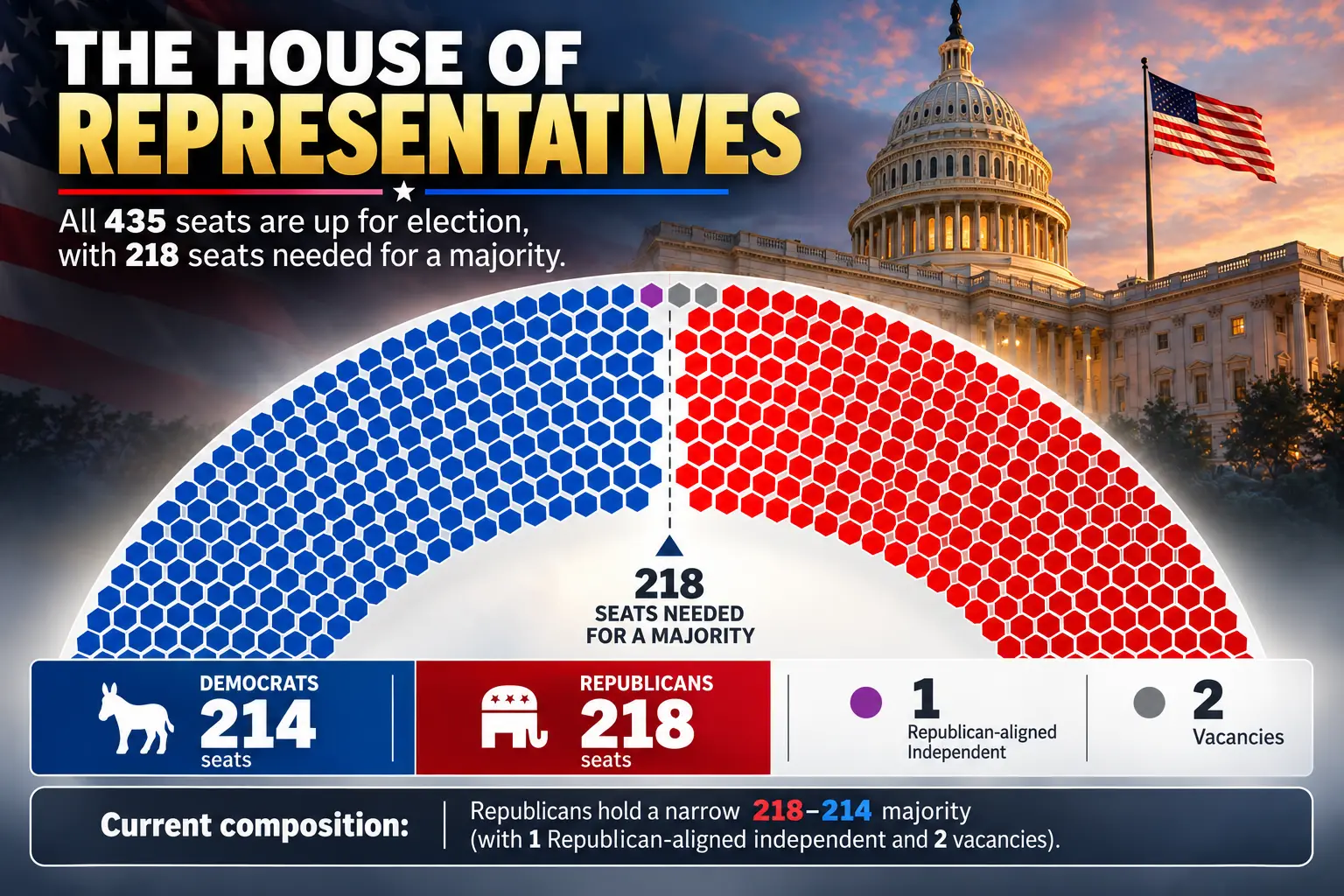
All 435 House seats are being contested. Democrats need to reach at least 218 seats to secure a majority in the next session, making a handful of closely fought districts particularly important.
Eight Senate races to watch
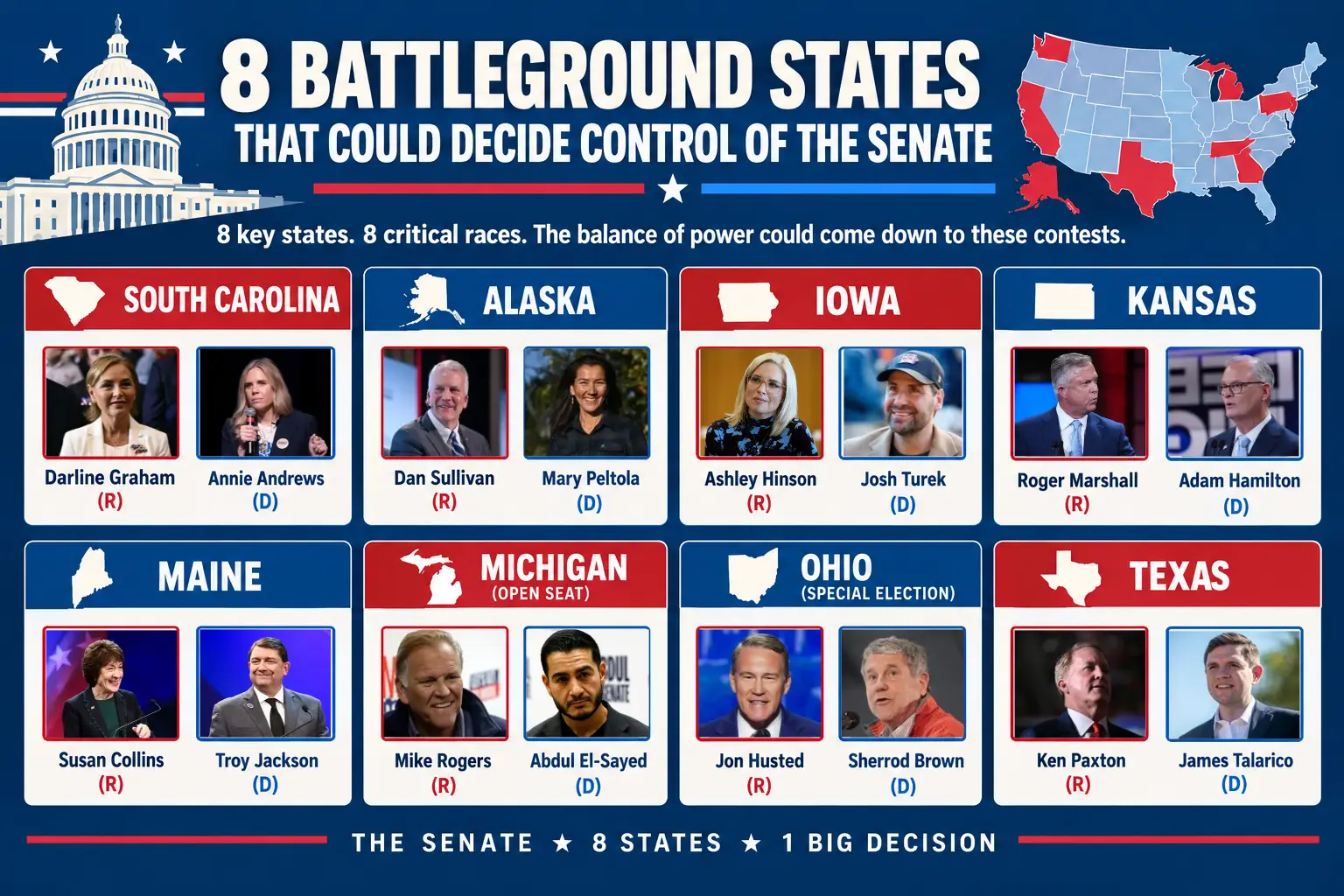
- South Carolina: The special election was triggered by the death of long-time Republican incumbent Lindsey Graham on July 11, 2026, after which Governor Henry McMaster appointed Graham's sister, Darline Graham, to temporarily fill the seat. She is facing Democratic candidate Dr Annie Andrews, and the winner will become the first woman elected to represent South Carolina in the US Senate.
- Texas: Democrat James Talarico faces Republican Ken Paxton, the state attorney general backed by Trump. Paxton’s controversies have drawn attention to a state that has long favoured Republicans, although he retains strong conservative support.
- Ohio: Former Democratic senator Sherrod Brown is seeking a return to the Senate against Republican Jon Husted, who was appointed to the seat after Vance became vice president. The contest is unfolding amid economic concerns.
- Maine: Republican Susan Collins faces Democrat Troy Jackson. Collins has repeatedly won in a state that tends to vote Democratic in presidential elections.
- Alaska: Democrat Mary Peltola is challenging Republican Senator Dan Sullivan. Peltola’s standing among voters has made the contest more competitive than Alaska’s Republican lean might suggest.
- Iowa: Republican Ashley Hinson and Democrat Josh Turek are competing for the seat being vacated by Senator Joni Ernst. Agricultural and energy costs have become prominent campaign issues.
- Kansas: Democrat Adam Hamilton is challenging Republican Roger Marshall. Trump has campaigned for Marshall amid signs of a tighter contest than Republicans might expect in a state that has not elected a Democratic senator since 1932.
- Michigan: Republican Mike Rogers is seeking to capture the seat being vacated by Democrat Gary Peters, facing Democrat Abdul El-Sayed. The contest represents an important pickup opportunity for Republicans.
Also read | Trump's $100,000 H-1B fee: Why neither Republicans nor Democrats want to make it a 2026 US Midterm issue
Ten House races that could shape the outcome
The House battle is centred on districts where small changes in turnout, campaign spending or voter sentiment could decide the winner.
- New York’s 17th district: Republican Mike Lawler faces Democrat Cait Conley in a district Kamala Harris won in 2024. Both campaigns had raised around $10 million through September, while Republican-aligned outside groups held a substantial spending advantage.
- Colorado’s 8th district: Republican Gabe Evans faces Democrat Manny Rutinel. Trump won the district by 1.8 percentage points in 2024, and outside spending from both sides has approached $12 million each.
- Texas’s 34th district: Democrat Vicente Gonzalez is running against Republican Eric Flores. Republican redistricting efforts have put several South Texas seats in play, while spending by outside groups has favoured Republicans in this contest.
- North Carolina’s 1st district: Democrat Don Davis is seeking re-election against Republican Laurie Buckhout after the district was redrawn to favour Republicans. Outside spending has reached about $30 million.
- Florida’s 25th district: Republicans redrew the state’s congressional map in an effort to gain seats. Democrat Jared Moskowitz is facing Republican Scott Singer in a contest where outside spending has helped narrow the financial gap.
- Maine’s 2nd district: Republican Paul LePage is challenging Democrat Matt Dunlap after incumbent Democrat Jared Golden decided not to seek re-election. The district backed Trump by nine points in 2024.
- Ohio’s 7th district: Republican Max Miller faces Democrat Brian Poindexter. Notably, domestic and child abuse allegations made by Miller’s former wife and a former girlfriend have drawn scrutiny amid the race; Miller has denied the allegations.
- Iowa’s 1st district: Republican Mariannette Miller-Meeks faces Democrat Christina Bohannan in a rematch. Cost-of-living concerns, including the price of diesel and fertiliser, are prominent in the contest.
- Washington’s 3rd district: Democrat Marie Gluesenkamp Perez is seeking re-election against Republican John Braun. The district narrowly backed Trump in 2024, and the race has drawn significant outside spending.
- Montana’s 1st district: Republican Aaron Flint faces Democrat Sam Forstag, a union leader and smokejumper. The district backed Trump by nearly 12 percentage points in 2024, but the supplied analysis cites recent polling showing a close contest.
Polls put Republicans under pressure
A Reuters/Ipsos poll completed on October 26 found Trump’s approval rating at 32 per cent, one point higher than the previous reading but still close to the lowest levels of his presidency. Democrats led Republicans 47 per cent to 36 per cent among registered voters on the generic congressional ballot. After accounting for undecided voters’ preferences, the Democratic lead narrowed to nine points.
The poll also found that 73 per cent of respondents believed the cost of living was moving in the wrong direction. Economic concerns, including inflation and gasoline prices following US military strikes on Iran, have become central to the campaign.
National polling, however, cannot determine the outcome of individual Senate or House races. Local candidates, turnout, district boundaries and campaign resources will all matter.
US midterms 2026: A record advertising battle
The 2026 election cycle is expected to set a record for political advertising. AdImpact projected in June that spending would reach $11.6 billion, exceeding the $8.9 billion spent during the 2022 midterms and the $11.2 billion recorded in the 2024 presidential cycle.
The spending is concentrated in competitive races, where campaigns and outside groups are trying to reach voters through television, streaming and digital platforms. The money does not guarantee victory, but it reflects the importance both parties attach to the handful of contests that could determine control of Congress.
For Republicans, the challenge is to defend narrow majorities amid voter concern about the economy and Trump’s standing. Democrats are seeking to turn that dissatisfaction into gains across both chambers, but their route to Senate control remains more demanding than their path in the House.
The result on November 3 will decide whether Trump enters the final two years of his term with Congress largely aligned with his administration or faces a legislature controlled, in whole or in part, by the opposition.

