

Ever since it came into being in 1947, Pakistan has struggled with the question of balancing civilian rule with the military.
Its politics has been time and again overhauled by coups, leaving behind deep-rooted consequences on government, civil rights, and national identity. It has experienced three massive coups—one in 1958, another in 1977, and a third in 1999—all of which changed the course of the history.
The first coup (1958–1969): The rise of Ayub Khan

Pakistan's first experience with military intervention was in 1958 when political unrest and administrative collapse came to a head.
The then Governor-General Iskander Mirza declared martial law and named General Ayub Khan, Commander-in-Chief of the Pakistan Army at the time, Chief Martial Law Administrator. But this partnership did not last. Thirteen days later, Ayub Khan revolted against Mirza, overthrew him, and took on the presidency himself, banishing Mirza to England.
Ayub Khan created a very centralised presidential structure and governed for more than a decade. Though his rule witnessed industrialisation and development of infrastructure, it also witnessed mounting authoritarianism, repression of opposition, and widening gaps between the nation's two wings—West Pakistan and East Pakistan (now Bangladesh).
Trending Stories
)
Claude Opus 5.5 is here: Anthropic claims it can finish a 680,000-line code migration in less than a day
)
WION Iconic Tourism Summit: Is India's travel boom outrunning its airports, airlines and hotels?
)
Xi-Trump meeting: China’s human rights red line and past protests explained
)
El Niño 2026 heats up to become strongest in 1,000 years
)
China to test supersonic jet that moves at Mach 2, double the speed of sound
)
Australian PM Anthony Albanese calls OpenAI AI incident 'unacceptable' after restricted data access
)
'AI got into my speech': Prince Harry jokes after teleprompter failure at event in New York
)
Afghan woman cyclist who disguised herself as a boy to escape Taliban, wins Asian Games medal
)
'What kind of confession is this?': Pakistan PM Shehbaz Sharif’s 'terrorists would be roaming New York' remark goes viral, raises alarm online. Watch
)
French court upholds decision to send PSG and Morocco footballer Hakimi to rape trial
)
WION Iconic Tourism Summit and Awards 2026: Key voices to discuss India’s tourism future
)
Eight USS Abraham Lincoln sailors attempted suicide, Acting Navy Secretary says
)
NBA player Steven Adams shares hilarious GTA VI theory
)
Trump-Xi Summit: Trade, Taiwan and the red lines shaping US-China talks | Race To Power
)
Would you date an AI? South Korea’s My AI Partner: Strange Love sparks buzz on relationship and intimacy
)
US citizen injured in Illinois after ICE agents mistook him for fugitive, hospitalised
)
WATCH | China President Xi Jinping lands in US as Trump greets him ahead of high-stakes summit
)
EC appointment law: Why is the 2023 act controversial, and what happens next? WION explains
)
Scientists detect first radio signals directly from faraway planet
)
WION Iconic Tourism Summit: How local tourism MSMEs must upskill for AI integration
)
IIT Bombay CCTV footage emerges: Sahil Wakode seen looking at phone in examination hall
)
WION Iconic Tourism Summit: 'Hanuman Ansh' Director on blockbuster success
&im=FitAndFill=(700,400))
Trump welcomes Xi Jinping in rare airport gesture: Photos from Chinese President's arrival in US
)
2,000-foot tube, laser tests and more: China builds towns to expand nuclear arsenal, satellite images show
)
Italy hit by floods in the north, drought in the south
&im=FitAndFill=(700,400))
New OTT releases this week (September 21-27, 2026): Shaque: Trust No One, Hunkkaar, Don’t Be Shy- 5 new titles coming to Netflix, Prime Video and more
)
'There will be elections': Venezuela's interim leader Delcy Rodriguez makes big announcement at UN
)
IIT Bombay student suicide case: CCTV from the exam hall hours before suicide
)
Israeli envoy to US Yechiel Leiter’s son critically injured in West Bank ramming attack
)
US judge questions Trump’s decision to ban CNN, MS NOW and Politico from White House
)
'Putin is patient zero': Zelensky slams Russian president at UNGA, accuses him of using fighters from 47 countries
)
Trump’s Board of Peace unveils $2.45bn Gaza plan,66 projects: But where’s the money?
)
'Arrogant parasites': Milei blasts UN over Falklands dispute, warns Argentina will ‘take matters into our own hands’
)
Cyclone Arnab: Landfall expected before midnight tomorrow as IMD issues orange alerts across six states
&im=FitAndFill=(700,400))
National Film Awards 2026: Kartik Aaryan, Mammootty, Yami Gautam, Randeep Hooda and other key winners
)
9 killed, several injured as tourist bus catches fire on Yamuna Expressway
)
WION Iconic Tourism Summit 2026: Union Minister Shekhawat on 'experiential travel', peace diplomacy
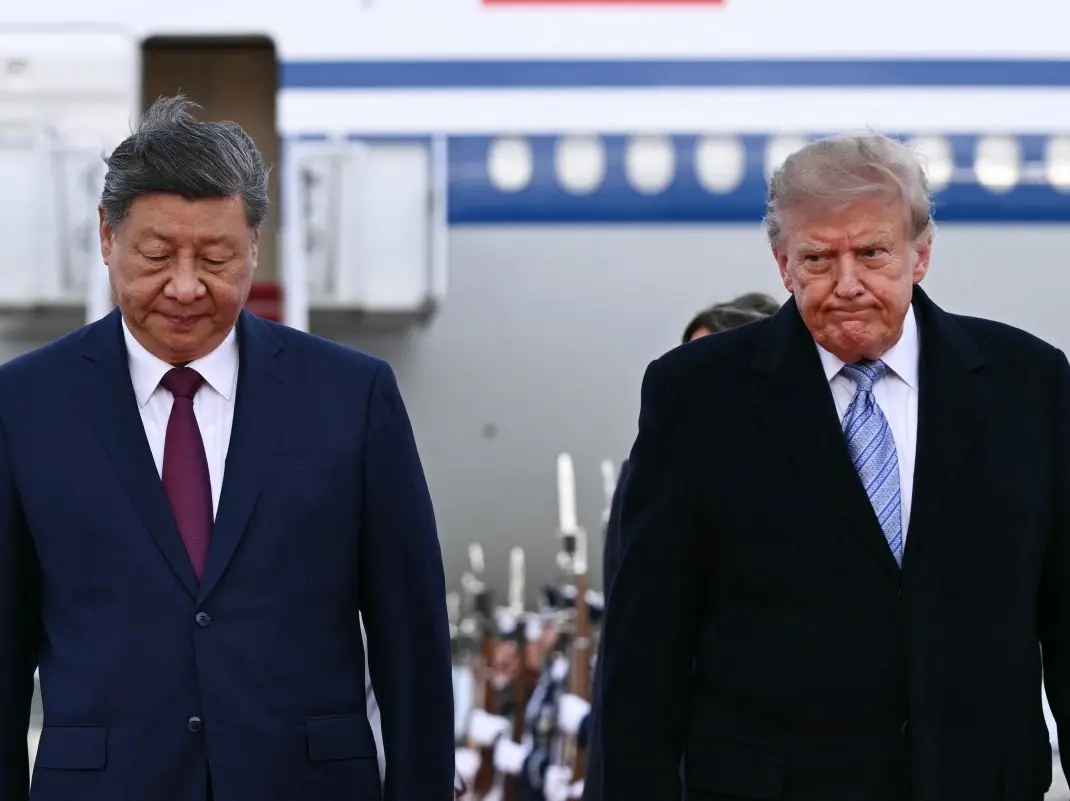)
'Partners rather than rivals': Xi Jinping's first message after landing in US for Trump summit
Growing discontent in East Pakistan increased as the people felt politically marginalised and economically neglected. Ayub Khan, rather than continuing with a constitutional change of power, asked General Yahya Khan, his successor as head of the army, to seize power using the military's "supra-constitutional" authority.
Yahya Khan declared martial law on March 25, 1969, and took over.
In an attempt to stabilise the country, Yahya Khan conducted national elections in 1970, regarded as the most open in Pakistan's history. Nevertheless, the outcome revealed underlying regional cleavages.
Sheikh Mujibur Rahman's Awami League, powerful in East Pakistan, secured a resounding majority. Nevertheless, Yahya Khan and Zulfikar Ali Bhutto's Pakistan Peoples Party (PPP) refusal to transfer power to the Awami League left the country in political gridlock.
Martial law was ended in 1972, and Zulfikar Ali Bhutto took over, eventually becoming Prime Minister in 1973 under a fresh constitution which reinstated Pakistan as a democratic republic.
The second coup (1977–1988): Zia-ul-Haq's reign
Following a short spell of democratic governance, Pakistan was again placed under the control of the army in 1977.
Bhutto's PPP had emerged victorious in the general elections, but the opposition Pakistan National Alliance (PNA), a coalition of right-wing and religious groups, leveled allegations of huge rigging by the government. The country was plagued by violent protest and civil unrest.
In the midst of the turmoil, the army chief General Zia-ul-Haq orchestrated a bloodless coup on July 5, 1977, ousting Bhutto, suspending the constitution, and declaring martial law.
Zia vowed to conduct new elections within 90 days, but these were indefinitely delayed. Bhutto was subsequently tried and in controversial circumstances executed in 1979. During Zia's rule, the foreign policy of Pakistan shifted towards the United States, particularly in the aftermath of the Soviet invasion of Afghanistan.
In 1985, Zia conducted non-party general elections and made Muhammad Khan Junejo as Prime Minister. But Zia never lost significant power and deposed Junejo's government in 1988. Ironically, Zia himself was killed in a fatal plane crash later that year, ending his rule in a dramatic fashion, leaving the nation at political crossroads once more.
The third coup (1999–2008): Pervez Musharraf
The third and latest army coup in Pakistan took place in 1999, in the midst of the Kargil war with India.
Prime Minister Nawaz Sharif, who had become increasingly uncomfortable with the actions of the army and General Pervez Musharraf's increasing dominance, tried to remove him and deny him a return from an official foreign visit.
In response, the military staged a coup on October 14, 1999, overthrowing Sharif and imposing martial law. Musharraf's coup was subsequently legitimised by the Supreme Court of Pakistan under the "doctrine of necessity," a judicial precedent normally employed to uphold military coups.
In 2001, Musharraf declared himself as the President, consolidating both civil and military powers. His tenure coincided with the US-led War on Terror, following the 9/11 attacks. Musharraf aligned Pakistan with Washington, receiving billions in aid but also drawing the country into a complex web of regional militancy and global diplomacy.
Even though Musharraf permitted general elections in 2002, these were criticised as being rigged.
By 2007, Musharraf's popularity had collapsed because of authoritarian measures, such as the removal of Chief Justice Iftikhar Chaudhry and a crackdown on lawyers and civil society.
Under pressure from mass demonstrations and growing political opposition, Musharraf resigned in 2008 under threat of impeachment. He was replaced by Benazir Bhutto's widower, Asif Ali Zardari, who had just escaped being assassinated himself a few months earlier.
A fragile democracy
Each of Pakistan's three coups was not only a military takeover but a seismic shift in the country's political path. The repeated intervention by the military has weakened Pakistan's democratic institutions and made them fragile.

