
&imwidth=800&imheight=600&format=webp&quality=medium "'Meta AI is a low-quality rip-off': Why Mark Zuckerberg should resign after Instagram debacle")
Mark Zuckerberg is failing again. This time, the consequences are not just financial, they are destroying the livelihoods of millions of real people who built their lives on Instagram. Across the world, authentic creators, small business owners, and everyday users are watching their accounts get suspended, restricted, or permanently deleted without warning, without appeal, and without explanation. Meanwhile, a swarm of AI-generated bots, hollow accounts posting synthetic content, are not only surviving Meta's moderation system but are actively being rewarded with coveted blue tick verification badges. This is not a glitch. This is Meta's strategy.
The Instagram Identity Crisis
In the past six months alone, Instagram has disabled thousands of genuine accounts in India citing vague Community Standards violations, accounts with years of original content, real followers, and legitimate income streams. Creators who built audiences of hundreds of thousands have woken up to find their digital businesses erased overnight. At the same time, Meta has been aggressively pushing its AI-generated content tools and quietly allowing AI bot accounts to flourish on the platform. The implicit message from Meta's algorithm is chilling: a bot that never complains, never asks for monetisation, and never pushes back is more valuable to them than a human being.

Meta AI: A Rip-Off Nobody Asked For
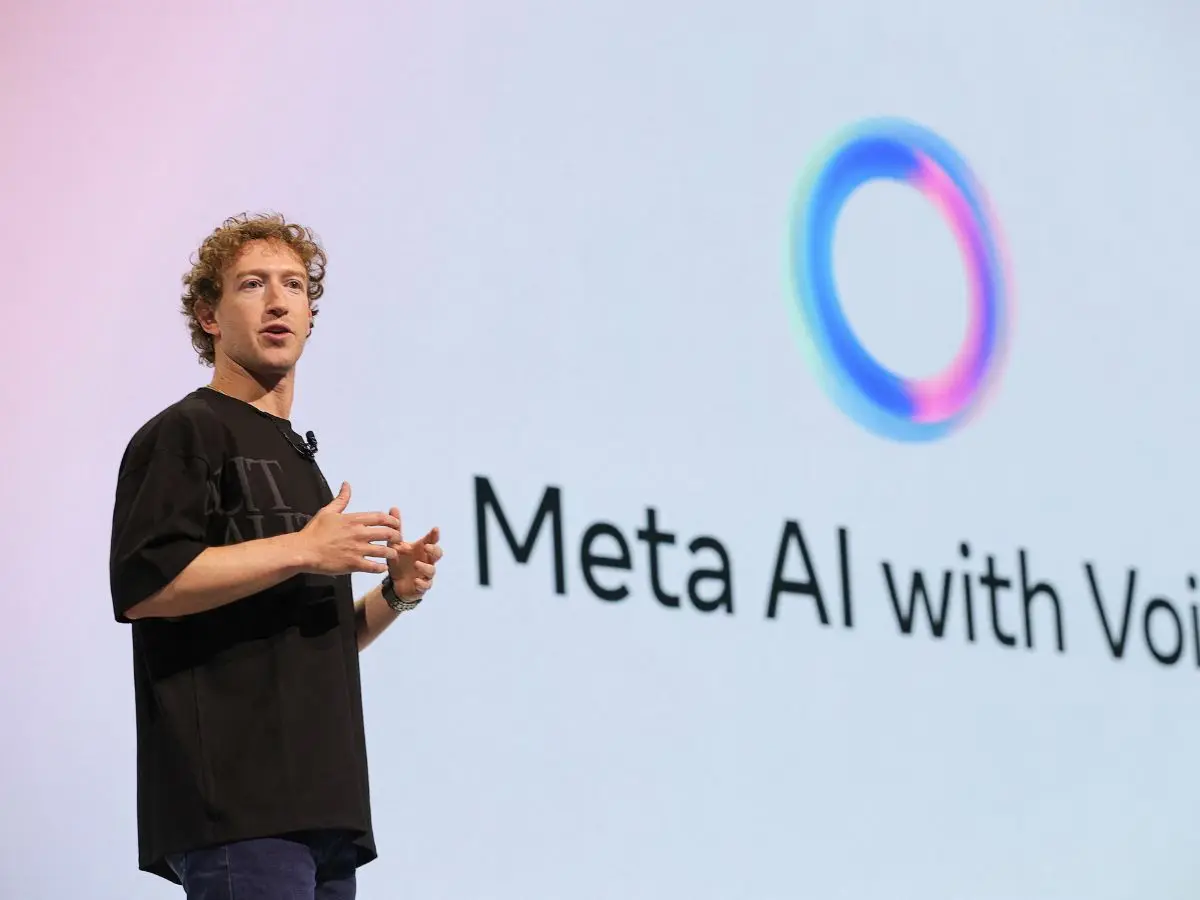
Into this chaotic landscape, Zuckerberg has dropped Meta AI and the reaction from users and industry experts has been uniformly brutal. Described by commentators as a low-quality imitation of ChatGPT and Gemini, Meta AI is slow, frequently inaccurate, and deeply invasive. It has been embedded without consent into WhatsApp conversations, Instagram DMs, and Facebook feeds, appearing uninvited in private chats and injecting itself into searches users never intended for an AI to answer.
The product quality is not the only problem. Meta AI's data practices are alarming. Every interaction with the tool potentially feeds into Meta's AI training infrastructure, the same infrastructure that regulators in the EU have already moved to restrict. In a country like India, where the Digital Personal Data Protection Act is still finding its feet, millions of users are being onboarded onto Meta's AI ecosystem with zero understanding of what data they are surrendering.
Trending Stories
)
Did India risk its US trade deal despite softer stance at BRICS?
)
Pakistan puts Pak Rs 70 lakh bounty on UN terrorist Masood Azhar; move draws skepticism in Delhi
)
First naval drone battle? Ukraine says Sargan 3000 sank Russian unmanned boat
)
Practical Magic 2 breaks Spidey spell over North American box office
)
'Huge destructive power': North Korea calls its latest missile launches 'live-fire drill' even as US dismisses 'immediate threat'
)
‘Let’s go’: Newly declassified videos show dramatic rescue of US Air Force officers downed in Iran
)
Ganesh Chaturthi 2026: Devotees throng the iconic Lalbaugcha Raja pandal in Mumbai
)
Delhi’s balancing act: BRICS serves as a stage for West Asia diplomacy
&im=FitAndFill=(700,400))
Why European Meteor missiles use ramjet engines compared to standard US solid rockets
)
Iran, India agree to deepen humanitarian and political ties, President Pezeshkian says
)
‘Want to reset ties with India, have engagement based on mutual interests,’ says Bangladesh minister
)
Trump says Canada eager to reach a deal, it could come ‘fairly soon’ if Ottawa treats US farmers better
)
Turkish Airlines plane flies through a storm three times, triggering severe turbulence
&im=FitAndFill=(700,400))
Why Chinese PL-15 air-to-air missiles use dual-pulse motors compared to European interceptors
)
Orlando Bloom addresses Pirates of the Caribbean comeback and reunion with Johnny Depp
)
China thinned Himalayan troop presence in 2025, India defence report says; terms border situation 'stable'
)
Russia proposes to build 360 kmph Ivolga FG trains in India: What happened on sidelines of BRICS
)
800 million years old - Scientists discover 'fingerprints' of supercontinent Gondwana in ancient rocks
)
Israeli minister calls to strip Gaza film directors of citizenship
)
Natural caffeine sources gain popularity; matcha & botanicals offer calm energy
)
China discovers vast gold and silver 'mine' in the Pacific with unheard-of deposits
)
Russian drone hits Warsaw-bound train near Polish border, Zelensky accuses Moscow of ‘deliberate’ targeting
)
Plane carrying prominent figure crashes at Libya’s Misrata airport: Report
)
Veteran Bollywood actress Nafisa Ali shares health update as Stage 4 cancer progresses, starts targeted therapy
&im=FitAndFill=(700,400))
New OTT releases this week (September 14-20, 2026): Lust Stories 3, Waiting Hai, Irumudi- 5 new titles coming on Netflix, Prime Video and more
)
Liam Neeson sparks romance rumours after holding hands with Stella Stocker at TIFF 2026
)
Saudi Arabia discovers 110 million tonnes of Uranium-rich ore in Madinah region
)
Indian importers urge Bangladesh to lift export ban on 'Hilsa' fish ahead of Durga Puja
)
Video of Pakistani lawmaker struggling to read English tribute to Jinnah goes viral - WATCH
)
Did China give Iran intel before US base strike that killed 3 troops? Trump says, 'You’re right...'
)
Crude oil prices jump more than $107 per barrel following Houthi attacks on Saudi
)
Women's Asia Cup 2026: India denied trophy once again despite winning the title
)
Humans may lose control of AI: Anthropic CEO calls for slowdown, Altman, Musk back him
Zuckerberg's Two-Decade Track Record of Failure
The uncomfortable truth that Meta's board and investors must now confront is that Mark Zuckerberg has an extraordinary record of destroying every major product line he has touched beyond his original Facebook clone. Facebook's organic reach was killed to force paid advertising. Instagram's chronological feed was replaced by an engagement-baiting algorithm that now actively harms mental health. WhatsApp's end-to-end encryption promise has been steadily eroded. The metaverse, a 46 billion dollar hallucination, is a global joke. And now Meta AI, launched as Zuckerberg's bid to stay relevant in the generative AI race, is being deployed not to help users but to replace them.
The Cost on Real People
Behind every deleted Instagram account is a real economic loss. Small businesses in Tier 2 and Tier 3 Indian cities that used Instagram as their primary sales channel are being wiped out by algorithmic decisions they cannot contest. Influencers who spent years building communities are being silenced. The digital economy that Instagram promised to democratise is being systematically handed over to synthetic accounts that serve Meta's data-harvesting objectives far more efficiently than inconvenient human users.
It is time for Meta's board to ask the hard question: at what point does visionary leadership become delusional mismanagement? Mark Zuckerberg has failed at search, failed at mobile, failed at hardware, failed at the metaverse, and is now failing at AI while simultaneously destroying the one product, Instagram, that was still genuinely beloved. The answer, for the good of the millions of users whose digital lives depend on this platform, may simply be that it is time for new leadership.
