&imwidth=800&imheight=600&format=webp&quality=medium "Worst tsunamis of the world ever recorded by height and death tolls, listed")
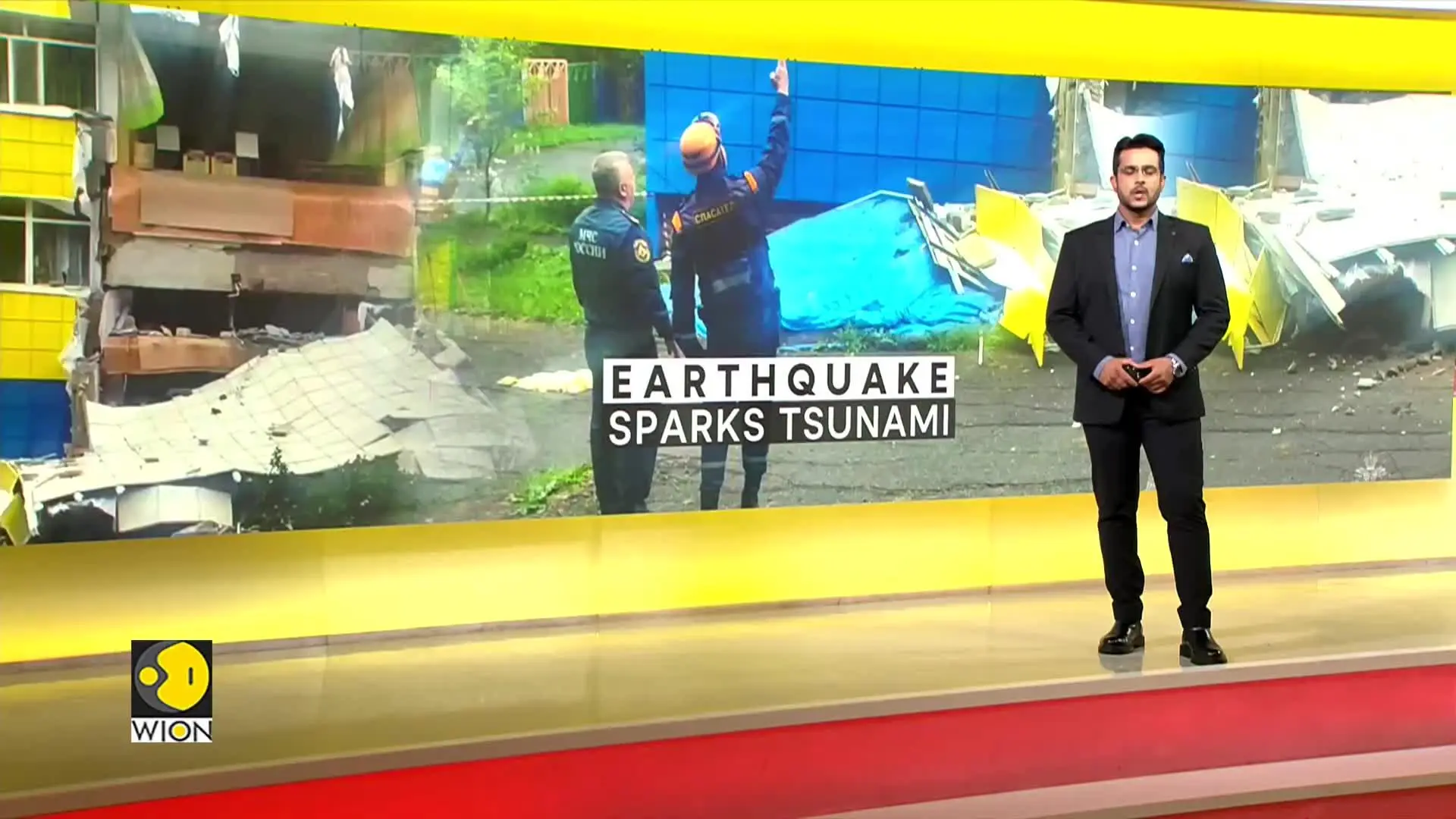
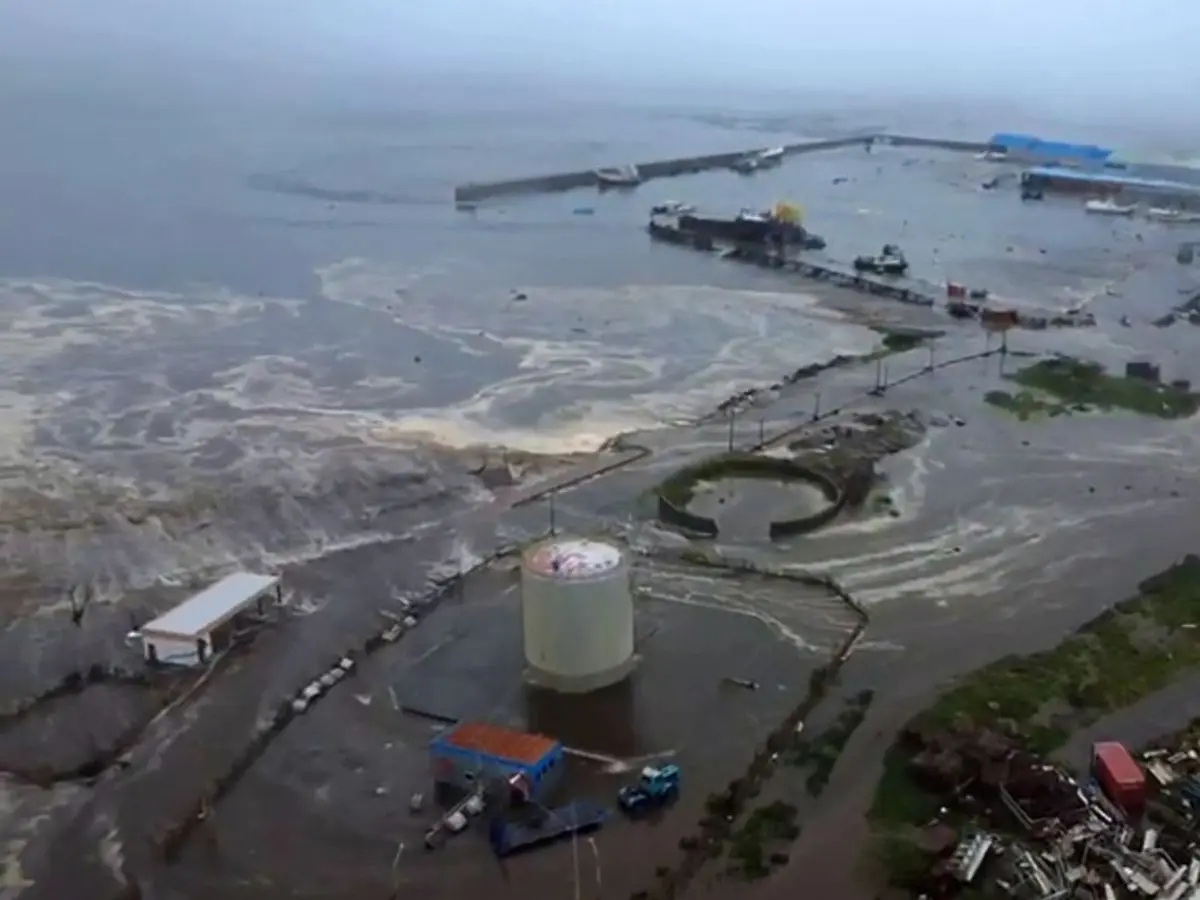
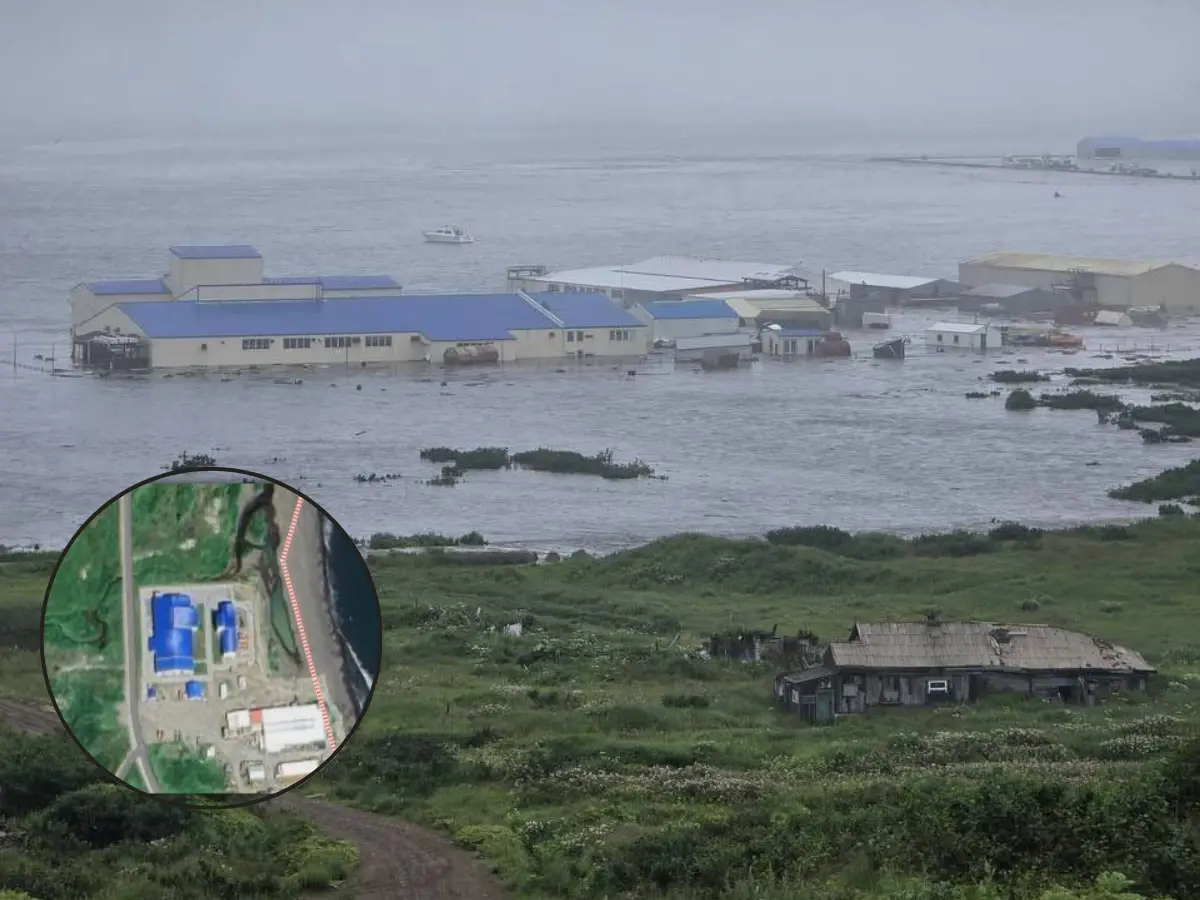
Tsunamis, the massive displacement of water caused by earthquakes, landslides, volcanic eruptions or man-made causes, are some of the most destructive natural disasters in the world. As the world grapples with yet another tsunami event following an 8.8 magnitude earthquake in Russia on Wednesday (July 20), here is a look at some of the biggest tsunamis based on wave height and death toll.
Tsunami classification based on wave heights
These destructive waves are generally classified as megatsunamis of wave heights above 100 metres, large tsunamis of 30–100 metres and moderate tsunamis of 20–30 metres. Wave heights alone, however, may not translate into destruction. Whether tsunamis hit populated coastal areas will have to be taken into account.

Tsunami wave height is not an indication of destruction
While megatsunamis reach mind-boggling heights, they cause relatively fewer deaths as they often occur in remote or sparsely populated areas. The most lethal tsunamis in recorded history, on the other hand, had more modest wave heights but occurred near dense coastal populations with little or no warning. The 2004 Indian Ocean tsunami remains the most devastating in terms of human loss, while the 1958 Lituya Bay tsunami had the highest wave height since records began.
There may have been even more destructive tsunamis in the past, particularly in the prehistoric period, before recordings started. The list below avoids such events.
Trending Stories
)
Reacher star Alan Ritchson opens up about alleged blackmail, suicide attempt during difficult period
)
S Jaishankar, former Army chief among high-profile names issued Delhi SIR notices
)
'Were you here to sell chickpeas?': Wasim Akram criticises Babar Azam's captaincy
)
Sikh bus driver assaulted, bus stolen and rammed into cars in England; video surfaces
&im=FitAndFill=(700,400))
Meet top 5 Indian batters with fastest T20I centuries
)
9 women found dead near Johannesburg: South Africans rally, demand 'enough' to femicide
&im=FitAndFill=(700,400))
How many F-35s does Britain, Japan and Israel have?
)
‘End of my career...’: NSA Doval recalls tense Sikkim mission when China captured Indian intelligence team
)
Trump defends AI amid growing alarm, announces new 'AI force' and promises an 'AI czar'
)
The Verdict | When precision fails: US commits war crime in Minab school strike, UN finds
)
‘Will go to any extent’: Pakistan vows to defend Saudi Arabia amid Houthi attacks
)
Russia holds first parliamentary elections since the beginning of the Ukraine war
&im=FitAndFill=(700,400))
Before Extraordinary Minami Minami, these popular K-dramas got Japanese versions
66 years of the Indus Waters Treaty: How India and Pakistan settled a bitter river dispute
)
US-Iran war: Tehran draws red lines — seven demands before any peace talks
)
Raphinha hat-trick powers Barcelona to 3-1 win over Sevilla in La Liga
)
Aravana prasadam shortage at Sabarimala temple in Kerala triggers protests, TDB questioned
)
China may have gained access to US's classified F-35 jets; parts meant for repairs diverted to Hong Kong, sparking Pentagon inquiry
)
US-Iran war: Tehran sets seven conditions to re-engage in talks with US
)
Gaza under attack: Health chief's son killed in IDF strikes
)
Russia's deadly Ukraine strikes kill 2 in Sumy, hit Dnipro mall
)
Report: Iran rebuilding Taleghan 2, nuclear site tied to past weapons research, hit twice by Israel
)
Trump announces ‘AI Force’ as debate grows over AI risks and regulation
)
AI actress Tilly Norwood glitches mid-interview, switches from English to Chinese | Watch
)
EXCLUSIVE | Singer Hanita Bhambri on her Toxic debut, working with Vishal Mishra and more
)
Iran sets 7 conditions to end war with US: What are Tehran’s demands?
&im=FitAndFill=(700,400))
‘Not the US or China’: These are the countries leading the world in arable land
)
Arvind Kejriwal, family members, Delhi CM Rekha Gupta get SIR notices
)
Ed Sheeran addresses Macklemore's removal, Gaza conflict during Philadelphia concert: 'I cannot hide how I feel'
)
Man breaks open wall hiding hundreds of books since 15 years
)
Harry Brook targets long reign at top of T20I rankings after Sri Lanka sweep
)
Several petrol pumps, other businesses to refuse UPI payments above Rs 2,000 from Oct 16: Is it legal?
)
Kampala-Ankara rift deepens: Uganda suspends military ties, seeks Fred Lumbuye's extradition
)
Russia-Europe tensions: Polish PM warns Russian attacks could test NATO's unity
)
Trump bans CNN, MS NOW and Politico from White House over ‘FAKE NEWS’
)
Saudi vs Houthis: Houthis claim missiles & drones used in attack on key Saudi sites
)
Mark Carney mimics Trump in hilarious moment over C$70 billion clean-energy investment; room erupts in laughter
)
West Indies Squad for India Series: Hetmyer included for T20Is, Holder rested
)
Nigeria: Protesters take to the streets, police fire shots
)
Megatsunamis - wave height above 100 metres
Megatsunamis are exceptionally large waves, caused by landslides or volcanic collapses rather than tectonic plate movements. Although some reached unimaginable heights, most occurred in remote areas, sparing large populations.
Lituya Bay, Alaska, USA (1958)
This tsunami was triggered by a landslide following a magnitude 7.8 earthquake. This was the tallest wave ever recorded at 524 metres or 1,719 feet. The wave destroyed everything in its path along the bay, but only two deaths were reported, due to the remote location.
Spirit Lake, Mount St Helens, USA (1980)
A landslide during the eruption of Mount St Helens caused a megatsunami in Spirit Lake, with waves reaching 260 metres or 850 feet. Despite its immense size, the event resulted in no deaths due to the uninhabited area surrounding the lake.
Vajont Dam Disaster, Italy (1963)
One of the most tragic man-made environmental disasters, this megatsunami was caused by a landslide into a reservoir behind the Vajont Dam. The impact created a wave 250 meters or 820 feet high, resulting in the toppling down of the dam. The tsunami flooded several towns, and is estimated to have killed around 2,000 people.
Taan Fiord, Alaska, USA (2015)
A massive landslide caused by glacial retreat in a remote Alaskan fjord generated a wave reaching 193 metres high. It was not a populated area and no casualties were reported.
Karrat Fjord, Greenland (2017)
This megatsunami was triggered by a landslide into the fjord, producing waves of around 100 metres high. At least 11 buildings in the village of Nuugaatsiaq were destroyed. Only four people were killed, as the area of impact was sparsely populated.
Ambon Island, Indonesia (1674)
An earthquake near the Hitu Peninsula generated a tsunami with waves as high as 100 metres, killing more than 2,000 people and devastating coastal communities.
Large tsunamis - wave height of 30–100 metres
Most of these large tsunamis resulted from undersea earthquakes and affected populated coastal areas. Even though their height is smaller than megatsunamis, they caused more human destruction, having hit in populated areas.
Indian Ocean tsunami (2004)
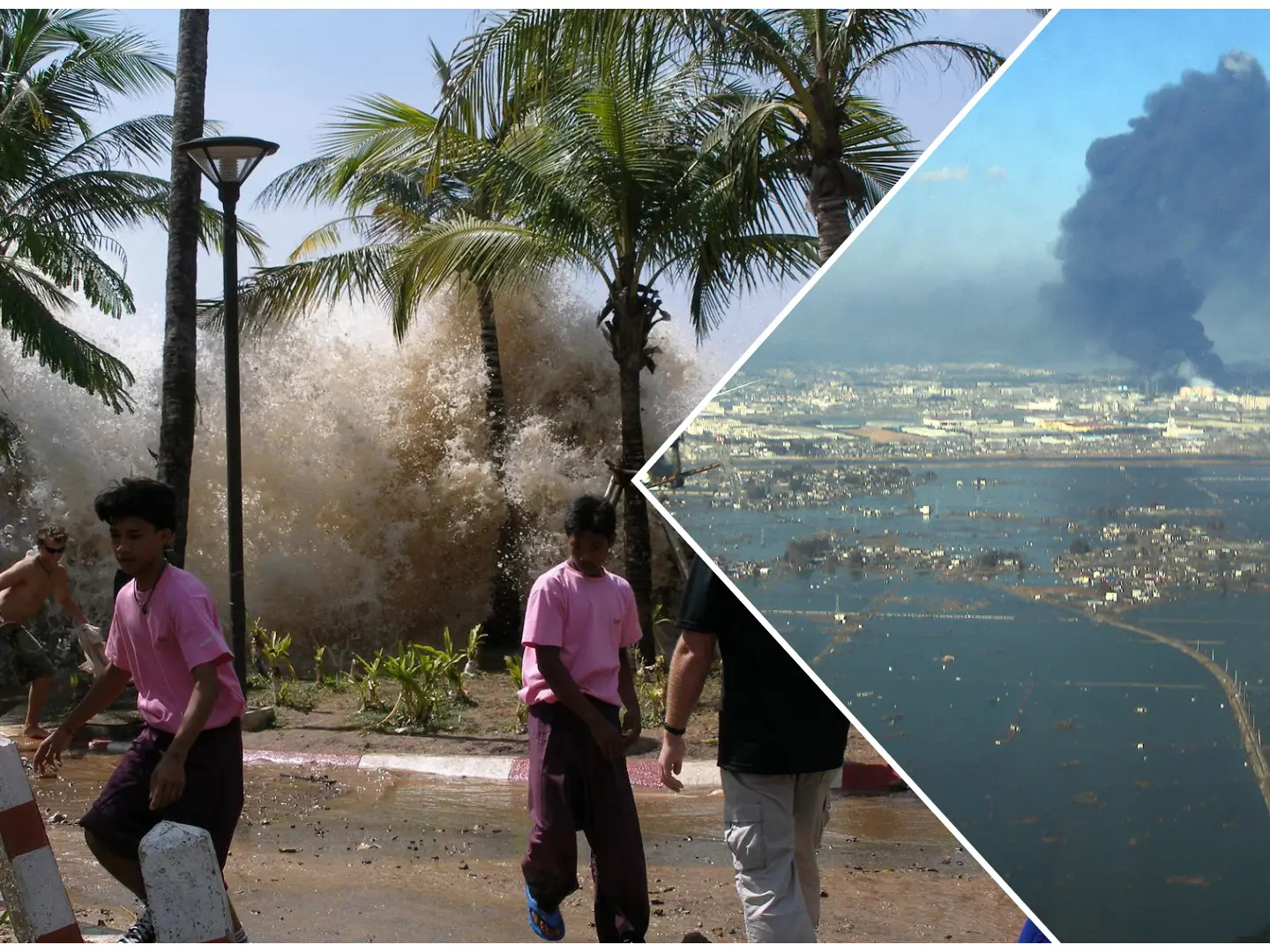
This was the deadliest tsunami in recorded history in terms of human casualties. It was triggered by a massive, magnitude 9.1 undersea earthquake off the coast of Sumatra in Indonesia. The waves reached up to 51 metres and swept across 14 countries. At the end of it, nearly 230,000 people were killed across continents, all the way from Asia to Africa.
Krakatau volcano eruption and tsunami, Indonesia (1883)
The tsunami of 1883 was a result of the Krakatau volcano eruption. Waves of up to 150 feet were recorded, and an estimated 36,000 people were killed. The volcanic ash that filled the atmosphere led to long-lasting effects on the climate.
Sanriku tsunami, Japan (1896)
A magnitude 7.6 earthquake led to a tsunami with heights of 125 feet hitting Japan's northeastern coast. The disaster killed around 22,000 people and wiped out entire coastal villages.
Tohoku Tsunami, Japan (2011)
This was yet another destructive tsunami, triggered by a magnitude 9.0 earthquake off Japan’s east coast. The waves were as high as 130 feet. At the end of the devastation, some 20,000 people were reported dead. It also led to the Fukushima nuclear power reactor accident and radiation. The 2011 tsunami caused an estimated $309 billion in damage, making it one of the costliest disasters in history.
Lisbon, Portugal (1755)
This is one of the earliest well-documented tsunamis of Europe. Caused by a massive earthquake across Portugal, Spain, and Morocco, the tsunami had waves of up to 100 feet. The death toll is uncertain, with estimates ranging from 10,000 to 100,000.
Moderate tsunamis - wave height 20–30 metres
These tsunamis are of lesser height, but were deadly as they occurred near coastal populations.
Arica Earthquake and tsunami, Peru/Chile (1868)
This tsunami was caused by a magnitude 8.5 earthquake near Arica. The waves, as high as 70 feet, moved across the Pacific, affecting the coasts of Hawaii, New Zealand, and Australia. It is estimated to have killed between 25,000 and 70,000 people.
Valdivia earthquake and tsunami, Chile (1960)
This tsunami came from the strongest earthquake since recordings began. The quake had a whopping magnitude 9.5 and the subsequent tsunami killed 1,655 people. The waves reached 80 feet, causing damage across the Pacific, including in Japan and Hawaii.