

&imwidth=800&imheight=600&format=webp&quality=medium "Khamenei's top aide Larijani rules out negotiations with US after Trump says 'I have agreed to talk' — What's next for Iran")
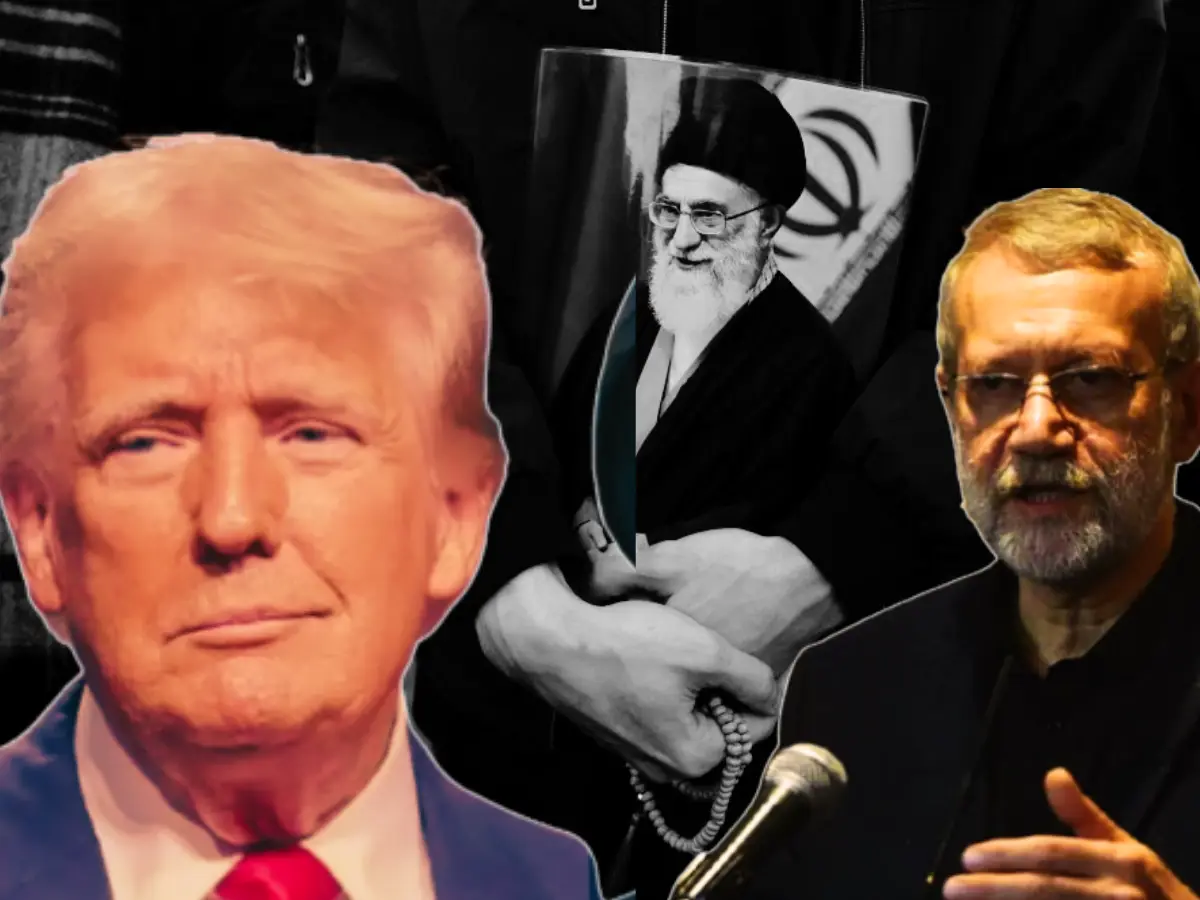
Amid ongoing conflict between Iran, the United States and Israel, Ali Larijani, the Secretary of the Supreme National Security Council of Iran, in a statement on Monday (Mar 2) has said that his country won't negotiate with America. His response comes over a report by Wall Street Journal claiming that Larijani's initiatives to resume talks has been sent to Washington through intermediaries from Oman. However, Larijani dismissed the claims, while slamming US President Donald Trump. He said that US president has pushed the region into chaos with his "delusional fantasies." He claimed that Trump transformed his "America First" slogan into "Israel First" and sacrificed American soldiers for “Israel's power-hungry ambitions.”

The statement by Ali Larijani is important at the current juncture as Iranian Foreign Minister Abbas Araghchi in an interview with Al Jazeera said that Iran “has always been open to diplomacy.” "This is the second time that we negotiated with Americans, and they decided to attack us right in the middle of the negotiation," Araqchi said while criticising the timing of the strikes. Moreover, US President Trump also hinted at resumption of talks by saying he was prepared for negotiations. However, he also said that operation would continue.
Also Read: 'I will be talking to them': Trump says Iran's new leaders want to talk after killing of Khamenei
What we know about Israel-US war with Iran?
Trending Stories
&imwidth=180&imheight=135&format=webp&quality=medium)
Brendan Taylor overtakes Andy Flower to become Zimbabwe’s leading ODI run-scorer
&imwidth=180&imheight=135&format=webp&quality=medium)
Researchers name newly discovered Andean plant after Argentina legend Lionel Messi
&imwidth=180&imheight=135&format=webp&quality=medium)
Lawrence Bishnoi gang claims responsibility for firing at Tiger Shroff over ties to Salman Khan
&imwidth=180&imheight=135&format=webp&quality=medium)
Flying car race: Alef Aeronautics welcomes Tesla Roadster '11 years' later, but are the two models the same?
&imwidth=180&imheight=135&format=webp&quality=medium)
KATSEYE performs at Victoria’s Secret show, teases Sophia Laforteza’s return
&imwidth=180&imheight=135&format=webp&quality=medium)
Shastri backs Shami comeback; lauds Bhuvi and warns Bumrah on format workload ahead of World Cup
&imwidth=180&imheight=135&format=webp&quality=medium)
Saudi Arabia asks skyscraper employees to work from home amid Houthi threats
&imwidth=180&imheight=135&format=webp&quality=medium)
Tiger Shroff shows injuries after Juhu firing incident; Eknath Shinde says Mumbai won’t tolerate gang wars
&imwidth=180&imheight=135&format=webp&quality=medium)
NFl 2026/27 - Saints vs Steelers to go ahead in Paris next week despite protest
&imwidth=180&imheight=135&format=webp&quality=medium)
4 killed, 19 critically injured in grass fire at Canada's largest military base
&imwidth=180&imheight=135&format=webp&quality=medium)
Nobel laureate Machado, who dedicated prize to Trump, confirmed as Venezuela opposition leader
&imwidth=180&imheight=135&format=webp&quality=medium)
After Kennedy Center and reflecting pool disputes, Trump turns to Washington golf course plan amid legal battle
&imwidth=180&imheight=135&format=webp&quality=medium)
Why France looks the most fragile in the G7 amid protests and budget deadlock
&imwidth=180&imheight=135&format=webp&quality=medium)
China responds to Trump's Press Secretary Katie Zacharia after toilet remark: 'Visit China more often'
&imwidth=180&imheight=135&format=webp&quality=medium)
Cattle feed found in biscuits of Indian company, FSSAI sends legal notice
&imwidth=180&imheight=135&format=webp&quality=medium)
Anthropic’s public benefit plan: What its 5% share commitment means for AI’s future
&imwidth=180&imheight=135&format=webp&quality=medium)
Girl 'dead' for 8 hours wakes up at her own funeral, dad insists she wasn't breathing
&imwidth=180&imheight=135&format=webp&quality=medium)
MI5 is opening an AI threat centre, and OpenAI just told MPs the worst isn't over
&imwidth=180&imheight=135&format=webp&quality=medium)
Elon Musk features on Lucknow's 'anti-India' Ravan poster alongside Rahul Gandhi, Akhilesh
&im=FitAndFill=(700,400)&imwidth=180&imheight=135&format=webp&quality=medium)
New OTT releases this week (October 19-25, 2026): Gajab Raat to Chaar Yaar-8 titles to watch during Dussehra week on Netflix, Prime Video and more
&imwidth=180&imheight=135&format=webp&quality=medium)
Kylie Jenner makes Victoria’s Secret debut in $50 million diamond-encrusted design as Timothée Chalamet cheers
&imwidth=180&imheight=135&format=webp&quality=medium)
Putin wants joint meeting with Trump-Xi summit on Ukraine war, proposes talks alongside APEC: Report
&imwidth=180&imheight=135&format=webp&quality=medium)
No Ravindra Jadeja, Yashasvi Jaiswal in India’s 2027 ODI World Cup plans: Report
&imwidth=180&imheight=135&format=webp&quality=medium)
India moves to buy 10,000 more AI chips for a national compute pool open to startups
&imwidth=180&imheight=135&format=webp&quality=medium)
Tiger Shroff attacked by three gunmen in Mumbai, actor safe, two injured
&imwidth=180&imheight=135&format=webp&quality=medium)
Anirudh Ravichander-Kavya Maran wedding: Telangana CM reveals Chennai reception date
&im=FitAndFill=(700,400)&imwidth=180&imheight=135&format=webp&quality=medium)
Tesla Roadster engineering: The hidden hardware behind its flying demonstration
&imwidth=180&imheight=135&format=webp&quality=medium)
US to review Russia sanctions waiver within 60 days as Rubio cites India’s ‘substantial’ Russian energy imports
&imwidth=180&imheight=135&format=webp&quality=medium)
'Grassroots leagues help bridge the gap': India's ODI WC winner Suresh Raina lauds ISCL ahead of Season 2
&imwidth=180&imheight=135&format=webp&quality=medium)
'We feel like Mr India': Gujarat’s undercover SHE team guard garba nights at Navratri
&imwidth=180&imheight=135&format=webp&quality=medium)
Cattle-feed bran in biscuits, detergent in milk: FSSAI acts against 3 companies
&im=FitAndFill=(700,400)&imwidth=180&imheight=135&format=webp&quality=medium)
5 technologies that could make the Tesla Roadster one of the most unusual cars ever built
&imwidth=180&imheight=135&format=webp&quality=medium)
'It's a joy to see the makers bring it on such a grand scale': SS Rajamouli on Ramayana
&imwidth=180&imheight=135&format=webp&quality=medium)
Priest dies after crucifix falls on his head during livestreamed Mass in Ecuador | VIDEO
The United States and Israel bombed Iran on Feb 28, in an operation that was named Operation Lion's Roar by Israel and Operation Epic Fury by the US. The Western powers described the attack as “preemptive”. The attack came in midst of nuclear talks between Iran and the US. The attack also came eight months after Israel launched a 12-day war against Iran.
In retaliation, Iran launched missiles towards Israel and then attacked several US bases in Qatar, Kuwait, United Arab Emirates, Bahrain. On March 1, it was confirmed that Iran's Supreme Leader Ayatollah Ali Khamenei was killed in the attack by US and Israel. Iran retaliated with more force as several top leaders were killed in subsequent attacks. Iran said that US bases in neighbourhood are being seen as “American territory”, while Gulf nations warned Tehran against the attacks. As regional stability and peace vanished in thin air, Israel and the US said that attacks will continue for weeks.
The bombings are still continuing, with Iran's Axis of Resistance also having joined the fight. International community is reacting sharply with Russia, China and North Korea calling out America for its pre-emtive attack. US allies in Europe has extended help to America. Indian Prime Minister Narendra Modi has spoken to several leaders in the Gulf including Israel's Benjamin Netanyahu and urged peace. The UN has appealed for immediate ceasefire.

