

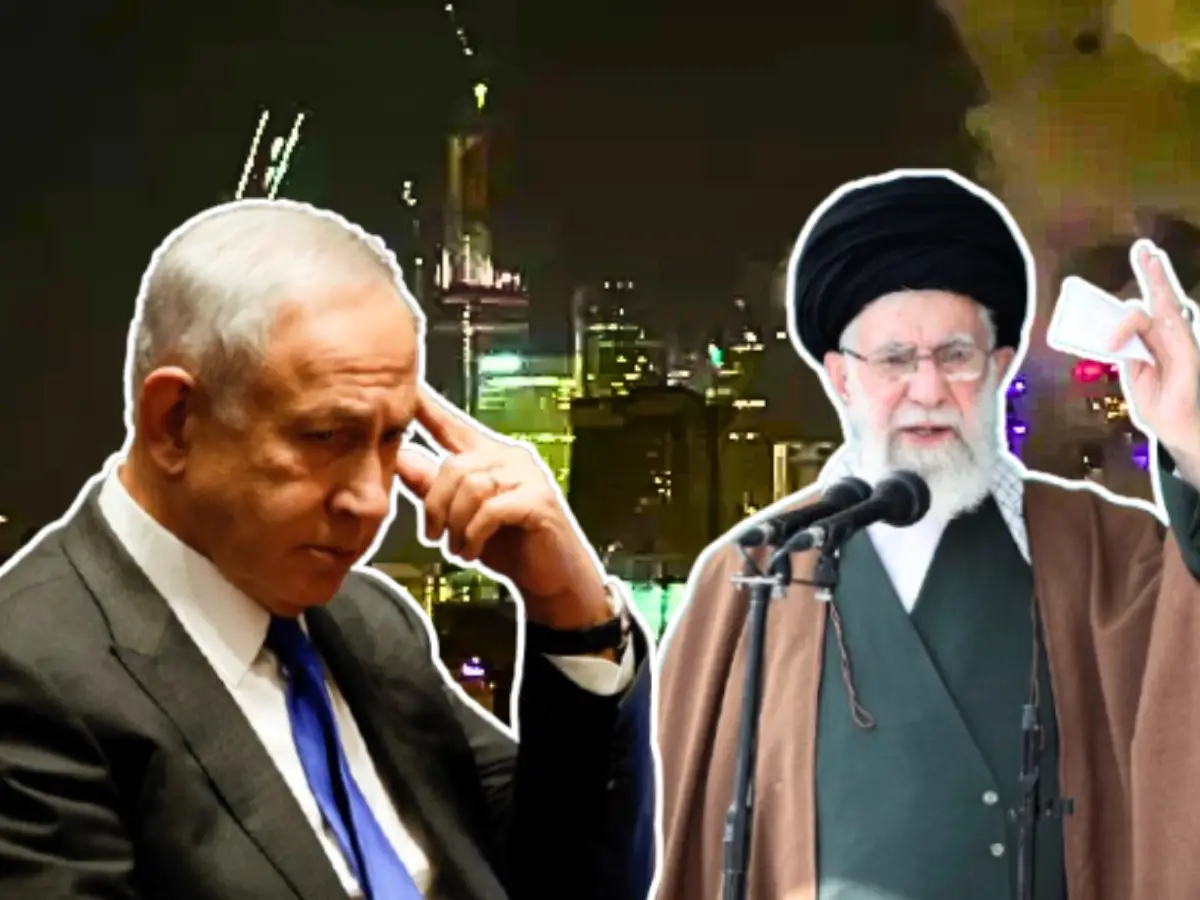
&imwidth=800&imheight=600&format=webp&quality=medium "Israel-Iran war: Will Tel Aviv lose the air war, or Tehran run out of missiles first?")
Iran is believed to possess the largest and most varied ballistic missile stockpile in the Middle East. Since its Supreme Leader vowed to open “the gates of hell”, Tehran has been launching waves of missiles and drones toward Israel in response to Operation Rising Lion.
Some of these projectiles have pierced Israel’s advanced air defence systems.
Israel’s ongoing Operation Rising Lion has taken out several high-ranking Iranian military officials and caused damage to sensitive nuclear infrastructure.
Israel’s stated goal is to dismantle Iran’s nuclear and ballistic missile capabilities, both of which have been under development for decades.
Also read: Is Israel's tech-war threatening Iran? Here's why Tehran is banning officials from usingmobilephones
Iran reportedly had around 3,000 ballistic missiles before the latest strikes, according to US intelligence estimates.
Trending Stories
US military warns of Iran’s growing threat
The head of US Central Command, Kenneth McKenzie, recently said Iran’s expanding and increasingly sophisticated missile arsenal poses “a complex deterrence challenge” when combined with its nuclear ambitions.
Iran has also been developing hypersonic missiles and short-range rockets, most of which are locally made. These weapons make up the core of Iran’s regional military strategy.
What are ballistic missiles and why are they hard to stop?
Ballistic missiles are rocket-propelled in their initial phase, then follow a free-falling, high-speed trajectory toward their target. Unlike drones, they move at steep angles and high speeds, making them difficult to intercept.
Which missiles has Iran used against Israel?
To strike Israeli targets, Iran needs missiles with ranges over 1,000km. In past attacks, Tehran is believed to have used medium-range missiles like the Emad, Ghadr-1, and Fattah-1, the latter being Iran’s first hypersonic missile.
Iran also used Kheibar Shekan missiles during its April and October 2024 attacks on Israel, which feature satellite navigation and in-flight manoeuvrability for greater precision. Just last month, Iran unveiled the Qassem Basir missile, designed to evade Western air defences like the US-made Patriot system.
Can Israel destroy Iran’s nuclear sites?
Israel’s military reportedly targeted Iran’s Natanz nuclear complex, south of Tehran, in its recent strikes. The UN’s nuclear watchdog, the International Atomic Energy Agency, confirmed the site had been hit.
While Israel aims to delay Iran’s nuclear progress, its lack of high-powered bunker-busting bombs may limit its success. Analysts say they would need a 30,000-pound American bomb, but Israel currently only has 5,000-pound munitions.
Tehran maintains its nuclear programme is civilian in nature, though the UN has reported violations of the non-proliferation treaty.
Is the conflict close to ending?
With Israel assassinating senior Iranian military and nuclear figures and Tehran vowing even stronger retaliation, there is no indication that the conflict will de-escalate soon. Iran has warned that its next strikes could be “heavier and more extensive” if hostilities continue.
