India–EU FTA concluded: Markets open, tariffs cut, services in trade, auto & tech expanded; Check who gains & what changes

&imwidth=600&imheight=450&format=webp&quality=medium "India–EU FTA concluded: Markets open, tariffs cut, services in trade, auto & tech expanded; Check who gains & what changes")
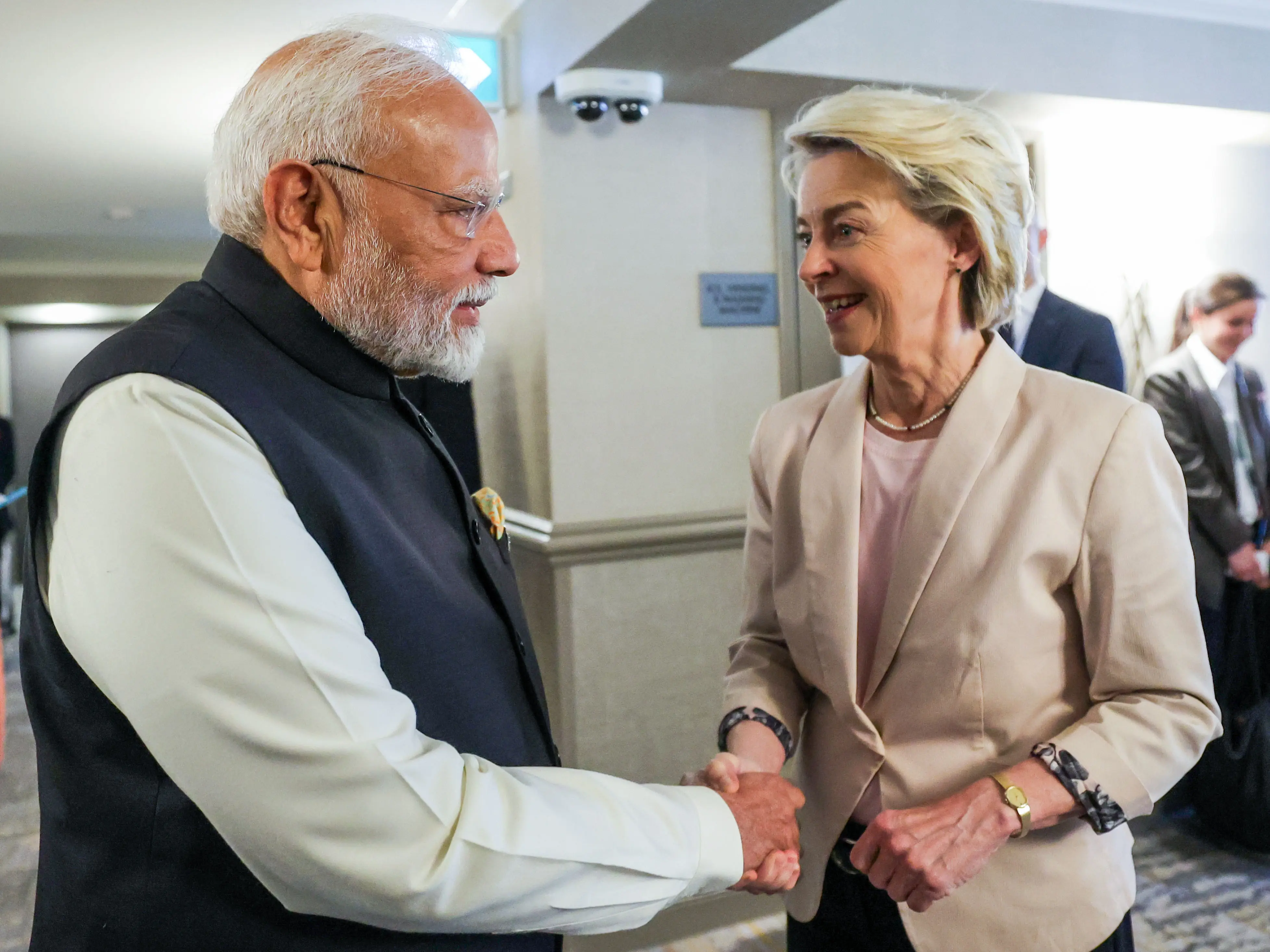
Prime Minister Narendra Modi and European Commission President Ursula von der Leyen. Photograph: (ANI)
The FTA concluded with the commitment by India and the European Union to open markets, predictability, and inclusive growth. It comes after years of sustained dialogue and cooperation between India and the EU, which demonstrate the political will and shared vision.
Prime Minister Narendra Modi and European Commission President Ursula von der Leyen concluded the India–European Union Free Trade Agreement (India–EU FTA) at the 16th India–EU Summit on Tuesday. The announcement marks a historic development in India–EU economic relations and trade engagement with important global partners.
The FTA concluded with the commitment by India and the European Union to open markets, predictability, and inclusive growth. It comes after years of sustained dialogue and cooperation between India and the EU, which demonstrate the political will and shared vision to deliver a balanced, modern, and rules-based economic and trade partnership.
In a press release, the Ministry of Commerce and Industry stated that the India-EU trade pact includes trade in goods, services, trade remedies, rules of origin, customs and trade facilitation, along with the emerging areas such as SMEs and digital trade, amongst others.
The India–EU FTA delivers a major push to labour-intensive sectors, including textiles, apparel, leather, footwear, marine products, gems and jewellery, handicrafts, engineering goods and automobiles, cutting tariffs of up to 10% to zero on nearly $33 billion worth of exports once the pact takes effect.
In automobiles, a carefully structured, quota-based liberalisation will enable EU carmakers to introduce higher-end models in India, while creating scope for Make in India manufacturing and future exports. Indian buyers stand to gain from advanced technology and stronger competition, even as reciprocal access opens doors for India-made vehicles in the EU market.
The agreement is set to significantly uplift agriculture and processed foods by ensuring fairer conditions for farmers and agri-businesses. Beyond tariff cuts, it addresses non-tariff barriers through deeper regulatory cooperation, improved transparency, smoother customs processes, and streamlined SPS and technical standards.
Trending Stories
)
)
)
)
)
)
)
&im=FitAndFill=(700,400))
)
)
)
)
)
)
&im=FitAndFill=(700,400))
)
)
)
)
)
&im=FitAndFill=(700,400))
)
)
)
)
)
)
)
)
)
)
)
)
)
)
)
)
)
Under CBAM-related commitments, the deal secures forward-looking MFN assurances, technical cooperation on carbon pricing and verification, and financial and targeted support to help reduce emissions and meet evolving carbon norms.
With services forming the fastest-growing segment of both economies, the FTA enhances certainty of access, non-discriminatory treatment, digital trade, and mobility—strengthening prospects for India’s services exports.
Trade talks include sectors like IT, AI & financial services
The FTA locks in broader, commercially meaningful commitments from the EU in sectors where India holds strong advantages, such as IT and IT-enabled services, professional services, education, financial services, tourism, construction, and other business activities.
Guaranteed and predictable access to 144 EU subsectors—including IT/ITeS, professional, business and education services—will strengthen Indian service providers’ ability to deliver competitive, world-class offerings to European consumers. In return, EU access to 102 Indian subsectors is expected to attract high-tech services and investment into India, creating a win-win framework.
On mobility, the pact establishes a clear and facilitative system for short-term, temporary and business travel in both directions, allowing professionals to move between the two markets to deliver services. Both sides have committed to mobility for intra-corporate transferees and business visitors, along with entry and work rights for their dependents.
Additionally, the EU has opened 37 sectors for contractual service suppliers and 17 for independent professionals, including areas of key interest to India such as professional, IT-related, R&D and education services. Now, the FTA promotes cooperation to advance innovation and global-level electronic payments in financial services, while providing India with increased market access across multiple major EU member states. These provisions are likely to deepen financial integration and support the growth of financial services trade.
These commitments reinforce India’s position as a global hub for talent, innovation, and sustainable economic growth, along with the unlocking of high-value employment opportunities. The FTA is set to deepen cooperation in strategic fields such as Artificial Intelligence, clean technologies, and semiconductors, supporting India's technological advancement. It is also expected to significantly expand trade, improve export competitiveness, and embed Indian companies more deeply into the European and global value chains.

