Fires grip California tourist spots ahead of holiday weekend

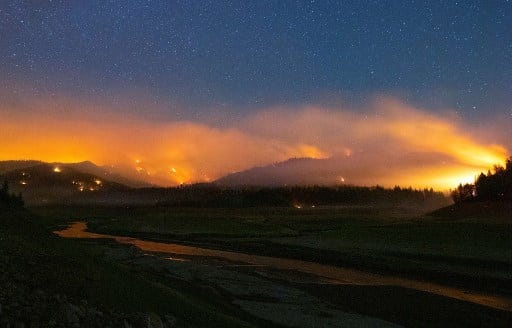
Flames surround Shasta lake
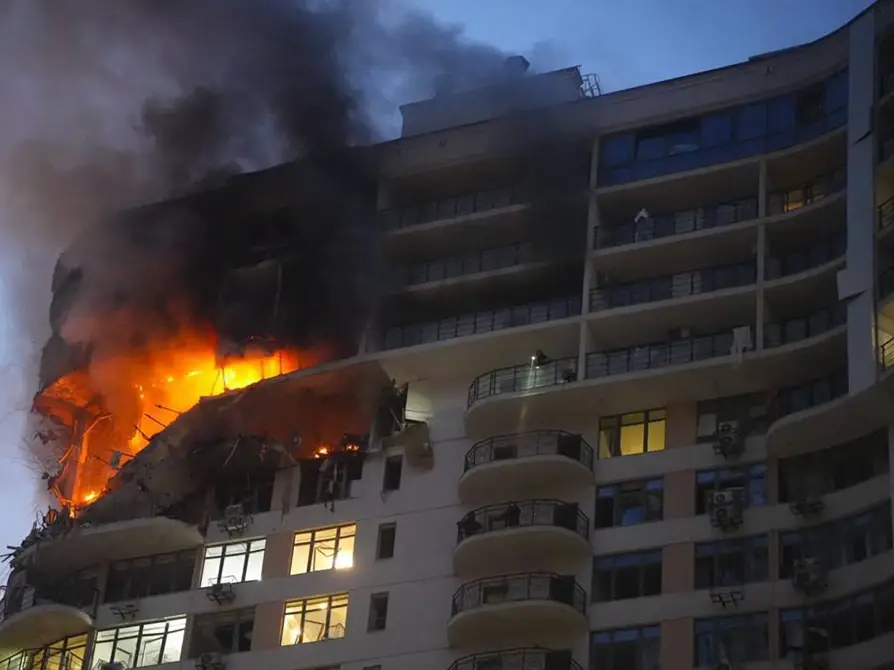
Hundreds offirefighterson Friday scrambled to contain three wildfires indrought-hit northern California that have scorched nearly 40,000 acres, including a popular tourist lake preparing to welcome hordes of visitors for the July 4 holiday weekend.
Evacuation orders were in place along stretches of Shasta Lake -- a camping and boating hotspot 100 miles (160 kilometres) south of the Oregon border -- as soaring temperatures and high winds spur blazes at a relatively early stage in the region's fire season.
Around 40 structures were destroyed, including at least half a dozen homes near the town of Lakehead, an AFP photographer said.

Also Read |US looks into having 3 Central Asian states take in at-risk Afghans: Sources
"We were fully booked, but right now you can't get in even if you want to," said Cecil Hengst, the owner of the LakeheadCampground and RV Park, forced to temporarily close by evacuation orders.
"This (fire) got really close... it's a bad one," said Hengst, 63, who has been in the area for 12 years.
)
Liam Neeson sparks romance rumours after holding hands with Stella Stocker at TIFF 2026
&im=FitAndFill=(700,400))
Meet top 5 batters fastest to 3000 runs in T20Is
)
‘Partners, not rivals’: Xi outlines four point plan for stronger India-China ties
&im=FitAndFill=(700,400))
From Rinku Singh to Mayank Yadav, 5 players dropped from India’s squad for Afghanistan T20Is
)
Delhi’s balancing act: BRICS serves as a stage for West Asia diplomacy
)
Russia proposes to build 360 kmph Ivolga FG trains in India: What happened on sidelines of BRICS
)
First naval drone battle? Ukraine says Sargan 3000 sank Russian unmanned boat
)
'He is popular...': Malaysian PM Anwar Ibrahim's praise for PM Modi during bilateral meeting | WATCH
&im=FitAndFill=(700,400))
Why Chinese PL-15 air-to-air missiles use dual-pulse motors compared to European interceptors
)
'Huge destructive power': North Korea calls its latest missile launches 'live-fire drill' even as US dismisses 'immediate threat'
)
BRICS Summit 2026: PM Modi, Xi reach key consensus on ties, China to assume BRICS chairmanship in 2027
)
BRICS Summit: New Delhi declaration adopted with full consensus, big diplomatic win for India
)
China thinned Himalayan troop presence in 2025, India defence report says; terms border situation 'stable'
)
Iran, India agree to deepen humanitarian and political ties, President Pezeshkian says
)
NATO under Russian threat? Drone strikes just 2 km from Poland, narrow escape for former UK PM, CIA chief
)
‘Want to reset ties with India, have engagement based on mutual interests,’ says Bangladesh minister
&im=FitAndFill=(700,400))
New OTT releases this week (September 14-20, 2026): Lust Stories 3, Waiting Hai, Irumudi- 5 new titles coming on Netflix, Prime Video and more
)
US diplomat accused of possessing child abuse images secretly flown out of UK by US Marines
)
800 million years old - Scientists discover 'fingerprints' of supercontinent Gondwana in ancient rocks
)
Indian importers urge Bangladesh to lift export ban on 'Hilsa' fish ahead of Durga Puja
)
NEET-UG to move to computer-based test soon, NTA DG says ‘CBT is the future’
)
9-year-old Chennai prodigy clears Cambridge IGCSE grade 10 exams
)
Who is the smiling man beside Modi, Putin and Xi at BRICS Summit 2026?
)
Humans may lose control of AI: Anthropic CEO calls for slowdown, Altman, Musk back him
)
Baba Vanga's first prophecy for 2027 is out, and straight out of science fiction
)
PM Modi and China's Xi offered to help resolve Russia-Ukraine war: Kremlin
)
Did India risk its US trade deal despite softer stance at BRICS?
)
Russian drone hits Warsaw-bound train near Polish border, Zelensky accuses Moscow of ‘deliberate’ targeting
&im=FitAndFill=(700,400))
Why European Meteor missiles use ramjet engines compared to standard US solid rockets
)
Practical Magic 2 breaks Spidey spell over North American box office
)
Did China give Iran intel before US base strike that killed 3 troops? Trump says, 'You’re right...'
)
Turkish Airlines plane flies through a storm three times, triggering severe turbulence
)
War is making Russia stronger? How Ukraine is shaping Moscow’s next generation of weapons
)
Trump says Canada eager to reach a deal, it could come ‘fairly soon’ if Ottawa treats US farmers better
)
Akram, Afridi, Mushtaq tear into PCB after Pakistan’s Test series collapse in UK
"Everything's so dry with the drought. We have had very little rain, our lake levels are so low right now for this time of year. It's perfect conditions for fires right now."
Authorities said the Salt Fire threatening the region was sparked by a vehicle travelling on the Interstate-5 -- a major highway that runs from Canada to Mexico, which was briefly closed to traffic Thursday as flames encroached.
Further north, the larger Lava and Tennant fires continued to spread in mainly remote forested areas, sending up dense grey smoke plumes that blanketed much of the region.
The Lava Fire was sparked by lightning last week, and more than 500 further lightning strikes were recorded in California over the past 24 hours, threatening to prompt new blazes.
Dozens of fires are raging in western North America, from Canada to California, after a deadly heatwave that has largely begun to ease in recent days.
More high temperatures are forecast in northern California in the coming week.
California has experienced some 600 more wildfires this year than at the same time in 2020 -- the worst year in modern history when the state saw more than four million acres scorched.