&imwidth=800&imheight=600&format=webp&quality=medium "Frozen threat above as 400+ climbers remain stuck in Everest base camp")
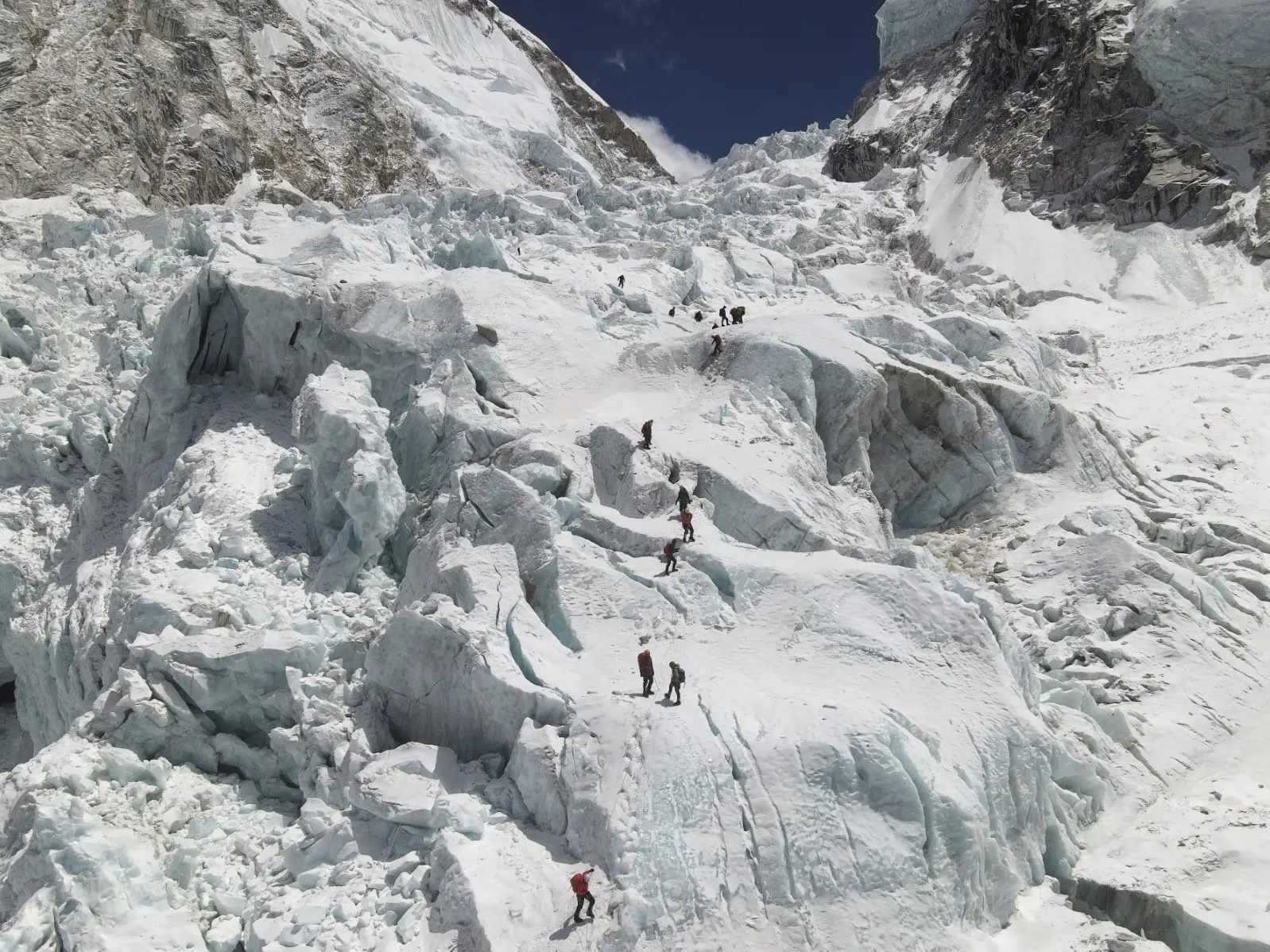
A massive ice block roughly the size of a 10-story building has shut off the route just above the Mount Everest base camp and forced approximately 410 climbers and local guides to delay their acclimatisation rotations or ferry gear to the upper camps. The giant ice block, also called a serac, was discovered by seasoned local guides or Sherpas on April 10, and they declared it was dangerous and could collapse at any time onto the route.
How did the ice block form?
The ice block was formed due to the fast-moving glaciers. It was a natural byproduct of the Khumbu Glacier's violent descent down the mountain. Imagine a river of ice descending very slowly down a steep hill. Since ice is solid and brittle, unlike water, it shatters and breaks as it curves along the rocks. Now, some of these ice blocks have already fallen, and one giant 30 metre tall ice block is hanging from the cliff just above the passage. Now, as the glacier moves, it will continue to become unstable

Where is the ice blocking the Mount Everest route?
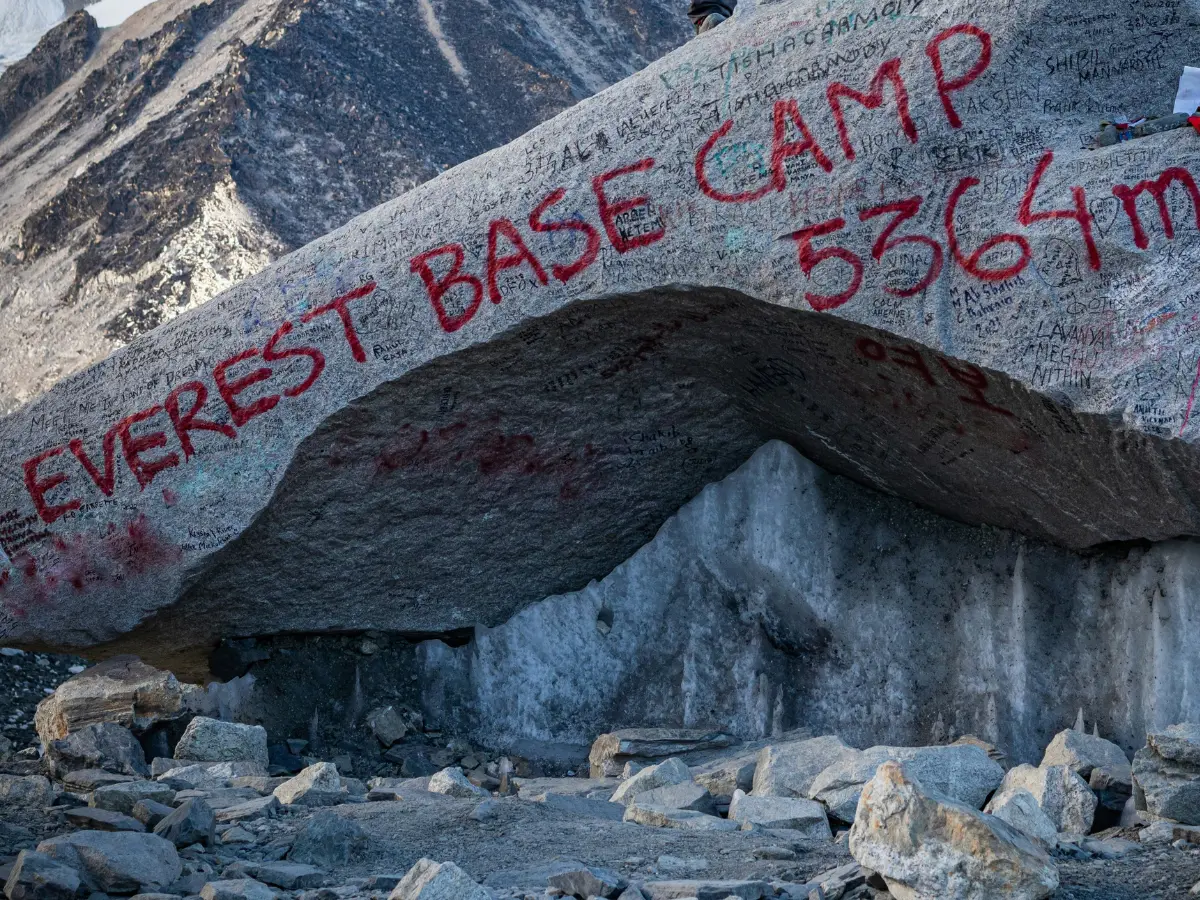
Everest spans across the border region of Nepal and China. Most climbers try to make the ascent on the Nepalese side. The serac is located in the Khumbu Icefall on the southern approach to Mount Everest in Nepal. Specifically, it sits at an elevation of approximately 5,300 to 5,500 metres. Most reports place it between the Everest Base Camp 5,364m and Camp One 6,065m. Hanging directly over the critical section and one of the most unstable parts of the climb, it is often called the “suicide passage”.
Trending Stories
)
The Early Spring is proof not everyone can talk about their real feelings, and it is perfectly OK
)
UN votes to ‘correct the map’ as India backs fairer world view
)
Nigerian Navy discovers 99,000 litres of suspected stolen, illegally refined products as it intensifies anti-crude oil theft operations
)
Who is Aditi Paudel? 17-year-old becomes Japan's first literacy ambassador
)
Bengaluru: Officials find 40 kg expired chilli at chairman's club
)
Jaishankar rejects trade link to ending Ukraine war
)
Israeli strikes on Lebanon kill three, injure 23 despite truce
)
Alpine glacier was covered with sheep wool sheets to prevent melting. It worked
)
South Korea mulls deploying military assets to Strait of Hormuz
)
World's fifth-largest economy, British army can't afford to train
)
Breaking | Vance takes the podium: First White House briefing since Leavitt's exit
)
Taiwan raises 'concerns' over China's missile test
)
BRICS 2026: $1 trillion sovereign capital set to converge in Delhi for first iBRICS Summit
)
What is Iran's Pickaxe Mountain that Trump has again threatened to bomb?
)
UN votes to correct world map that visually shrank Africa for 450 years
)
Former NewJeans member Danielle launches YouTube channel, hints at new solo journey
)
Bangladesh batter Towhid Hridoy creates history with 350 not out in South Africa
)
Brendan Fraser’s transformation fuels The Mummy 4 excitement as fans welcome back Rick O’Connell
&im=FitAndFill=(700,400))
Krishna Janmashtami 2026: From Dhaniya Panjiri to Makhana Kheer- 5 best sweet dishes perfect for celebrating Lord Krishna’s birth
)
Donald Trump plans to travel to Ireland on Qatari-donated jet amid security concerns
)
Nazi-looted art to return to Jewish heirs
)
Eight killed in Kerala’s Thrissur after car rams into lorry parked on highway
&im=FitAndFill=(700,400))
Why Russian fighter jets use bulky, low-pressure tyres compared to US jets
)
FBI-wanted fraud accused arrested in Jalandhar over $600,000 scam
&im=FitAndFill=(700,400))
Why US tanks weigh over 20 tons more than Russian tanks
&im=FitAndFill=(700,400))
New Friday OTT releases (September 4, 2026): GDN, Dhamaal 4, Jagamae Sangeetham- Watch 6 new movies and TV shows on Netflix, Prime Video and more
)
Killing the Himalayas slowly: Human urine is melting a glacier on Mount Everest
Why is it dangerous?
The block is unstable and could collapse at any moment, creating a deadly avalanche and burying mountainsides in tons of ice. Collapses in the Khumbu Icefall have killed many climbers, including more than a dozen sherpas in 2014. Everest climbing season runs from April to May, when the weather conditions are best for reaching the 29,032-foot summit. The delay is already weeks behind the typical mid-April schedule and is creating a bottleneck in the narrow weather window and a limbo in the Basecamp, pushing many expeditions to the risk of cancellation. "Expeditions are all being delayed because of the impasse," Garrett Madison of U.S.-based Madison Mountaineering told Reuters from base camp. Mountain climbing is a major source of income in Nepal, as it is home to eight of the world's highest peaks.