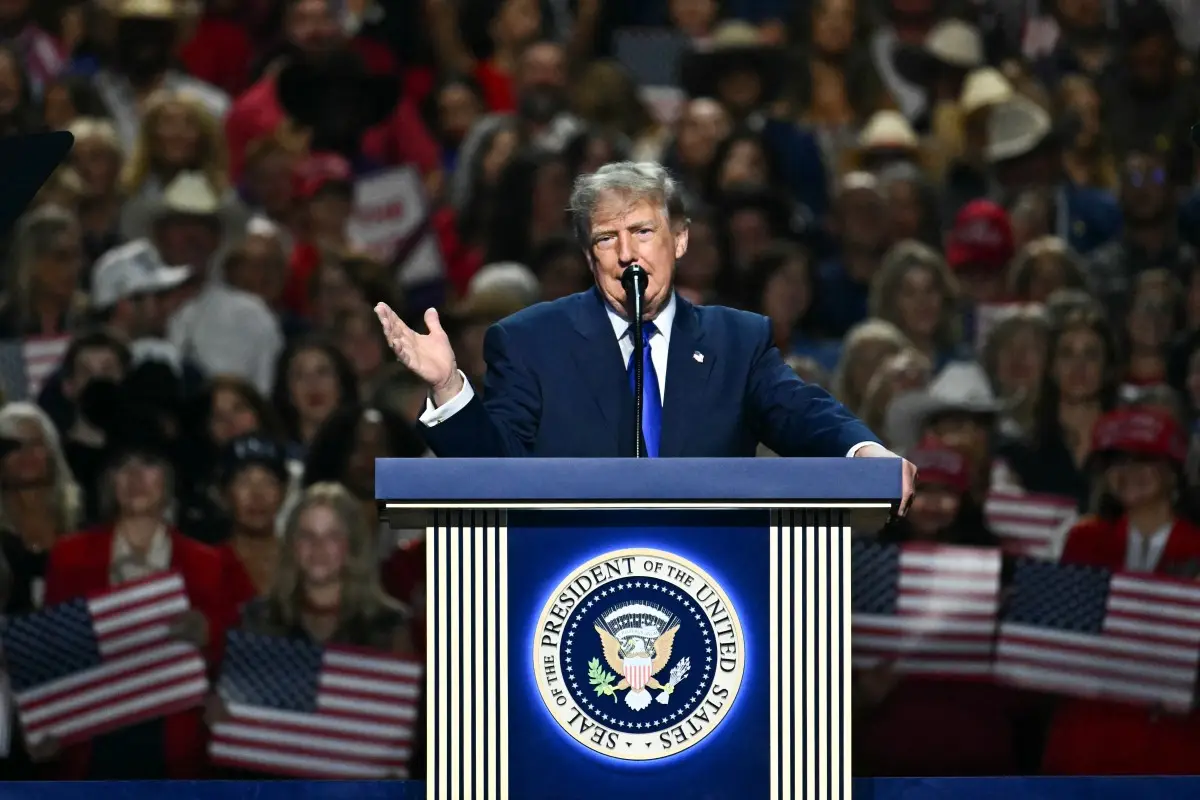
Is Europe’s shift to the far right monolithic and spontaneous?

&imwidth=600&imheight=450&format=webp&quality=medium "Is Europe’s shift to the far right monolithic and spontaneous?")
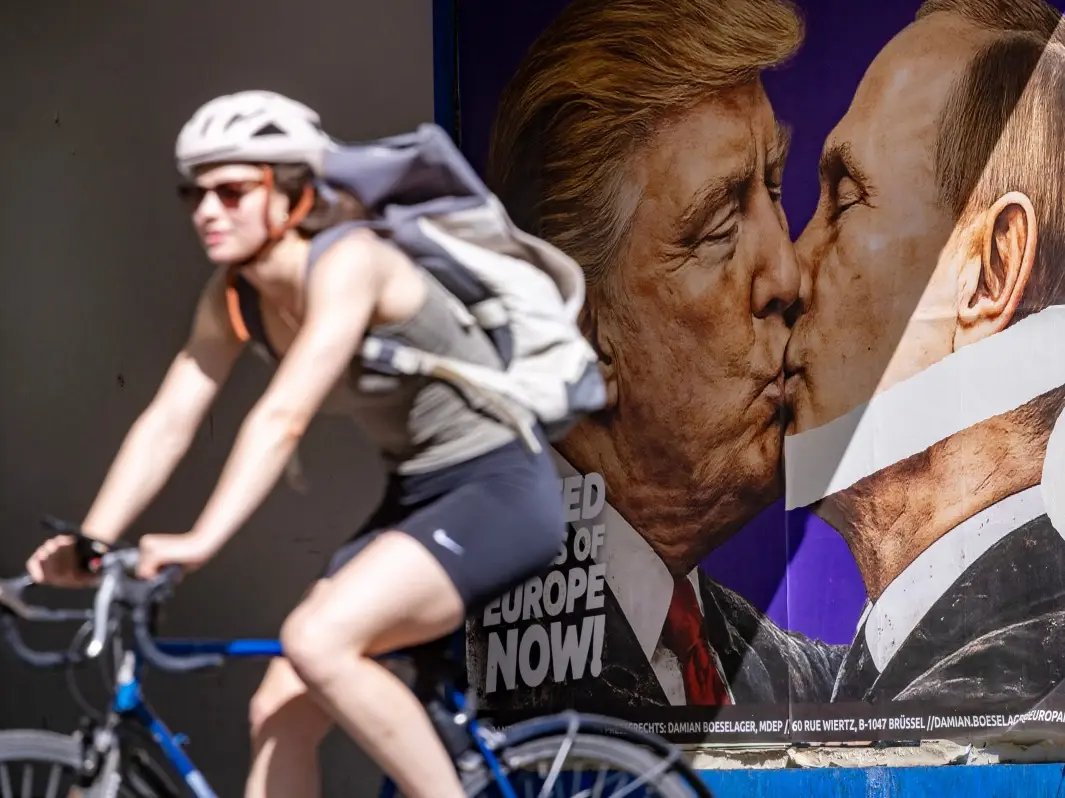
A woman cycles past a poster calling for United States of Europe depicting US President Donald Trump and Russian President Vladimir Putin kissing Photograph: (AFP)
Europe’s far right has grown steadily over two decades, but the trend remains uneven as economic anxiety, identity politics and US and Russian influence reshape politics.
In the European Parliament, the Centre Right party holds the majority with 188 seats, followed by the centrist left at 136. Recently, the stark headline-making victory was in Saxony-Anhalt, East Germany, where the far-right AfD won a landslide victory. It's been building for two decades, not a sudden 2024-26 spike. The far right's EU Parliament seat share rose steadily from 8.7 per cent in 2004 to 18 per cent by 2019. Now, two far-right groups, Patriot for Europe and the European Conservatives, saw a surge in numbers to 84 and 78 seats.
On the other hand, the rise has not been uniform. The far- right suffered a defeat in Hungary. Péter Magyar’s newly unified, pro-EU centre-right Tisza Party resoundingly ended 16 years of far-right autocratic rule of Viktor Orbán. Earlier, in February and March, French local elections saw centrist and left forces win in Paris, Marseille, and Lyon. In Slovenia’s parliamentary election in March, liberal Prime Minister Robert Golob’s Freedom Movement won against right-wing former Prime Minister Janez Jansa’s Slovenia Democratic Party.
Part of this change can be traced to the flow of foreign capital in Europe which have tried to shape political outcomes.
Russian Capital flow
There have been several documented cases of Russia funding and amplifying far-right and disinformation campaigns in several EU states, aiming to fracture EU unity on Ukraine sanctions. European intelligence busted a Kremlin-directed operation code-named Voice of Europe. This Prague-based media front was used to systematically funnel hidden cash to far-right and populist politicians in Germany, France, and Belgium. A joint British-Moldovan intelligence operation exposed a $104 million cryptocurrency fund used by the Kremlin to sway key elections away from pro-EU factions. Even Marie Le Pen's National Rally accepted millions in loans from Russian banks in 2014 after French banks refused to finance them; it was only fully paid off in 2023. There was also evidence of a disinformation campaign run by a Russian-backed intelligence network to sabotage Le Pen's political opponents. Europe based Carnegie claims that Russia pursues a systematic strategy of undermining elections and influencing public opinion in the West.
Trending Stories
&imwidth=280&imheight=210&format=webp&quality=medium)
&imwidth=280&imheight=210&format=webp&quality=medium)
&imwidth=280&imheight=210&format=webp&quality=medium)
&imwidth=280&imheight=210&format=webp&quality=medium)
&imwidth=280&imheight=210&format=webp&quality=medium)
&imwidth=280&imheight=210&format=webp&quality=medium)
&imwidth=280&imheight=210&format=webp&quality=medium)
&imwidth=280&imheight=210&format=webp&quality=medium)
&imwidth=280&imheight=210&format=webp&quality=medium)
&im=FitAndFill=(700,400)&imwidth=280&imheight=210&format=webp&quality=medium)
&imwidth=280&imheight=210&format=webp&quality=medium)
&imwidth=280&imheight=210&format=webp&quality=medium)
&imwidth=280&imheight=210&format=webp&quality=medium)
&imwidth=280&imheight=210&format=webp&quality=medium)
&imwidth=280&imheight=210&format=webp&quality=medium)
&imwidth=280&imheight=210&format=webp&quality=medium)
&imwidth=280&imheight=210&format=webp&quality=medium)
&imwidth=280&imheight=210&format=webp&quality=medium)
&imwidth=280&imheight=210&format=webp&quality=medium)
&imwidth=280&imheight=210&format=webp&quality=medium)
&imwidth=280&imheight=210&format=webp&quality=medium)
&imwidth=280&imheight=210&format=webp&quality=medium)
&imwidth=280&imheight=210&format=webp&quality=medium)
&imwidth=280&imheight=210&format=webp&quality=medium)
&imwidth=280&imheight=210&format=webp&quality=medium)
&imwidth=280&imheight=210&format=webp&quality=medium)
&imwidth=280&imheight=210&format=webp&quality=medium)
&imwidth=280&imheight=210&format=webp&quality=medium)
&imwidth=280&imheight=210&format=webp&quality=medium)
&imwidth=280&imheight=210&format=webp&quality=medium)
&imwidth=280&imheight=210&format=webp&quality=medium)
&imwidth=280&imheight=210&format=webp&quality=medium)
&imwidth=280&imheight=210&format=webp&quality=medium)
&imwidth=280&imheight=210&format=webp&quality=medium)
US Capital flow
The Trump administration is planning to send $4 million to support right-wing media and track migration-related "democratic backsliding" in Europe. However, this is not the first time; previously, in July and August, the Trump administration already granted around $10 million in funding through three State Department notices. The US State Department has quietly rolled out a package of at least $25 million explicitly earmarked for civil society groups working on conservative causes across Europe. The goal has moved away from the traditional US promotion of democracy and human rights.
The latest $4 million is allocated to two different categories: $3 million for political analysis and $1 million for independent journalism. The US, specifically the MAGA movement, thinks or portrays that Europe is on the verge of “civilisation erasure”, it was already mentioned in the US National Security Strategy in 2025 that it wants to prop up the right-wing ecosystem in Europe. The results are evident: Europe has seen visible growth in far-right leaders after decades.
Economic crisis and identity politics
Though it will be hasty generalisation to overlook the social dynamics in Europe. Demographic trends and a decline in fertility rates have pushed Europe towards a pro-immigration approach. However, inflation, stagnant wages, inequality, deindustrialisation, the housing crisis, and lack of acculturation have led to immigration anxiety within the white European population. The far-right conspiracy theorists frame it as the “Great Replacement theory”, a sort of reverse colonisation of the West by people from the East. People like Elon Musk and Steve Bannon are its cheerleaders.
The result is distrust in political institutions and a deeply polarised European society. Further short-term political strategies have also failed to address trade tensions with the US and China, war in Iran, and economic pressures, have also fed the populist sentiment, shifting the economic woes into a battle of identity.
There are observable influences of both US and Russian capital trying to sway the European population, amplifying the populist sentiment for their own interests. However, the trend is not unilateral; it is patchy. Hungarian political sociologist and author Gabor Scheiring described this as an “illiberal pendulum”. The far right surges, falters, and allows the centre to regain ground temporarily. The centre tries to govern on the pretext that it's not “far-right” without addressing demographic decline and economic inequality, and the momentum shifts again.