Commercial ships must not be targeted, India tells UN amid West Asia conflict

&imwidth=600&imheight=450&format=webp&quality=medium "Commercial ships must not be targeted, India tells UN amid West Asia conflict")
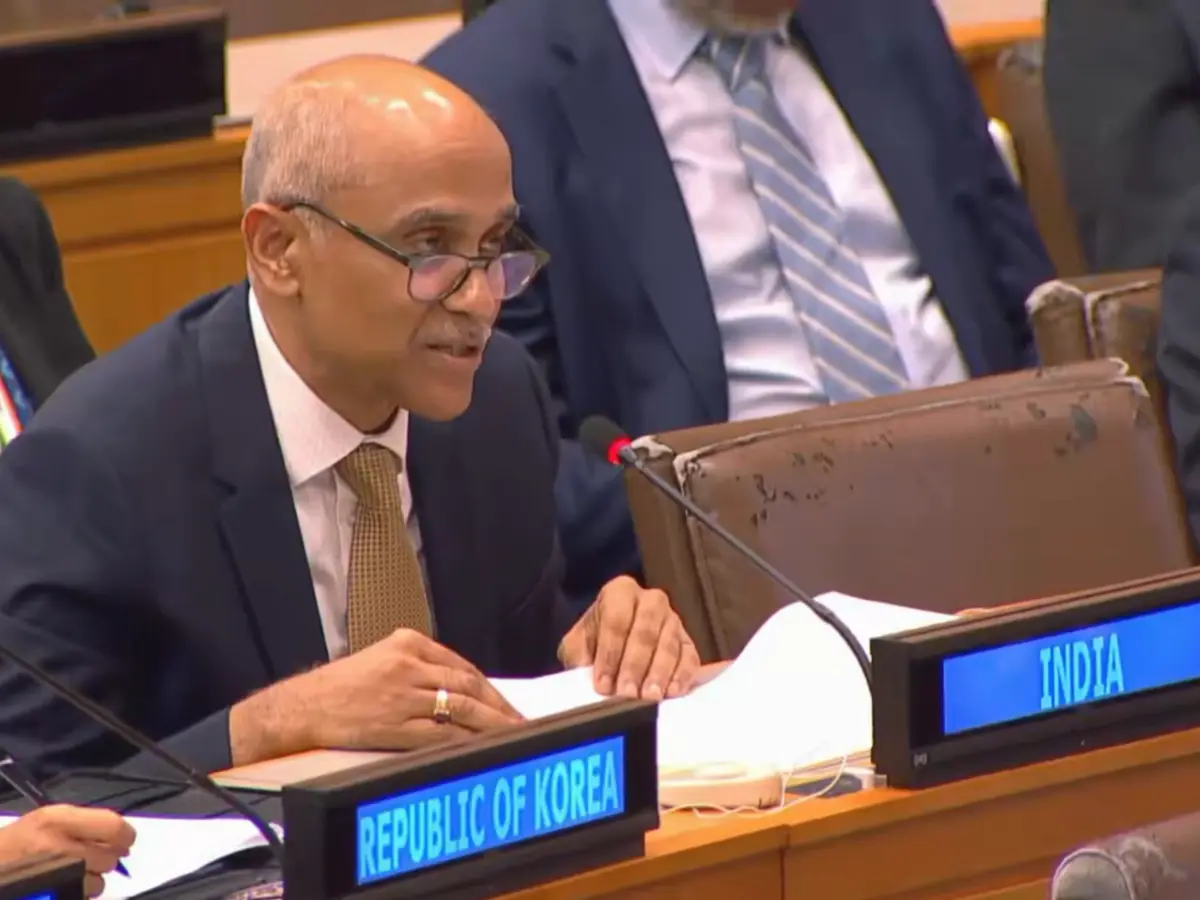
Ambassador Harish Parvathaneni speaks during Bahrain-hosted UN Security Council Arria-formula meeting on 17 September titled “Safe Seas, Shared Security: Protecting Freedom of Navigation in an Evolving Security Environment”. Photograph: (Screenshot/X video)
India has told the UN that commercial vessels must not become targets of geopolitical tensions as disruptions hit key sea lanes. New Delhi has also highlighted its own naval operations to keep vital energy and trade routes moving.
New Delhi: India’s ambassador to the United Nations has warned that commercial shipping must not become a target of geopolitical rivalry, as attacks and disruptions in the Red Sea, Gulf of Aden and Strait of Hormuz continue to threaten energy and food supplies worldwide.
Speaking at a Bahrain-hosted UN Security Council Arria-formula meeting on 17 September titled “Safe Seas, Shared Security: Protecting Freedom of Navigation in an Evolving Security Environment”, Ambassador Harish Parvathaneni said recent interruptions to major sea lanes had shown that maritime security was “vital to international peace, security and global prosperity”.
“Commercial vessels must not become targets of geopolitical tensions,” he said. “Navigational rights must not be subject to coercion, threats, unlawful restrictions or arbitrary interference.”
India, he added, supported a “free, open, secure and rules-based maritime domain” in which rights of navigation and overflight were fully respected under international law, including the UN Convention on the Law of the Sea.
The envoy argued that insecurity at one chokepoint quickly raised freight and insurance costs, diverted traffic to longer routes and hit developing countries hardest. The international community, he said, needed practical arrangements to keep essential commercial and humanitarian cargo moving during crises, rather than responding only after incidents.
He highlighted India’s own naval effort. As of 14 September, operations in the Gulf of Aden and Red Sea had escorted more than 449 merchant vessels carrying nearly 20.3 million metric tonnes of cargo and oil worth more than $8.4bn. After security deteriorated in West Asia, the Indian Navy launched Operation Urja Suraksha; by mid-March, 11 Indian Navy units were deployed in the western Arabian Sea to protect trade.
Parvathaneni also pressed for better coordination of existing mechanisms, with respect for coastal states’ sovereignty. India’s Information Fusion Centre – Indian Ocean Region (IFC-IOR) was now listed as a reporting centre in IMO Best Management Practices on maritime security, he said, and New Delhi wanted it added to IMO Maritime Safety Committee Resolution 324(89).
Seafarers, he stressed, “must remain at the centre of our collective efforts”. Their evacuation, medical care, crew changes and repatriation required clearer international contingency planning. He also flagged emerging risks from unmanned systems, cyberattacks and interference with navigation and communications.
Trending Stories
)
)
)
)
&im=FitAndFill=(700,400))
)
)
)
)
)
)
)
)
)
)
)
)
)
)
)
)
)
&im=FitAndFill=(700,400))
)
)
)
)
)
)
)
“The objective should not merely be to restore navigation after a crisis, but to build a maritime system capable of withstanding shocks before they cascade into wider economic and humanitarian crises,” he said.
