1,800 people move 396-ton Hirosaki Castle in Japan using ancient hikiya technique

&imwidth=600&imheight=450&format=webp&quality=medium "1,800 people move 396-ton Hirosaki Castle in Japan using ancient hikiya technique")
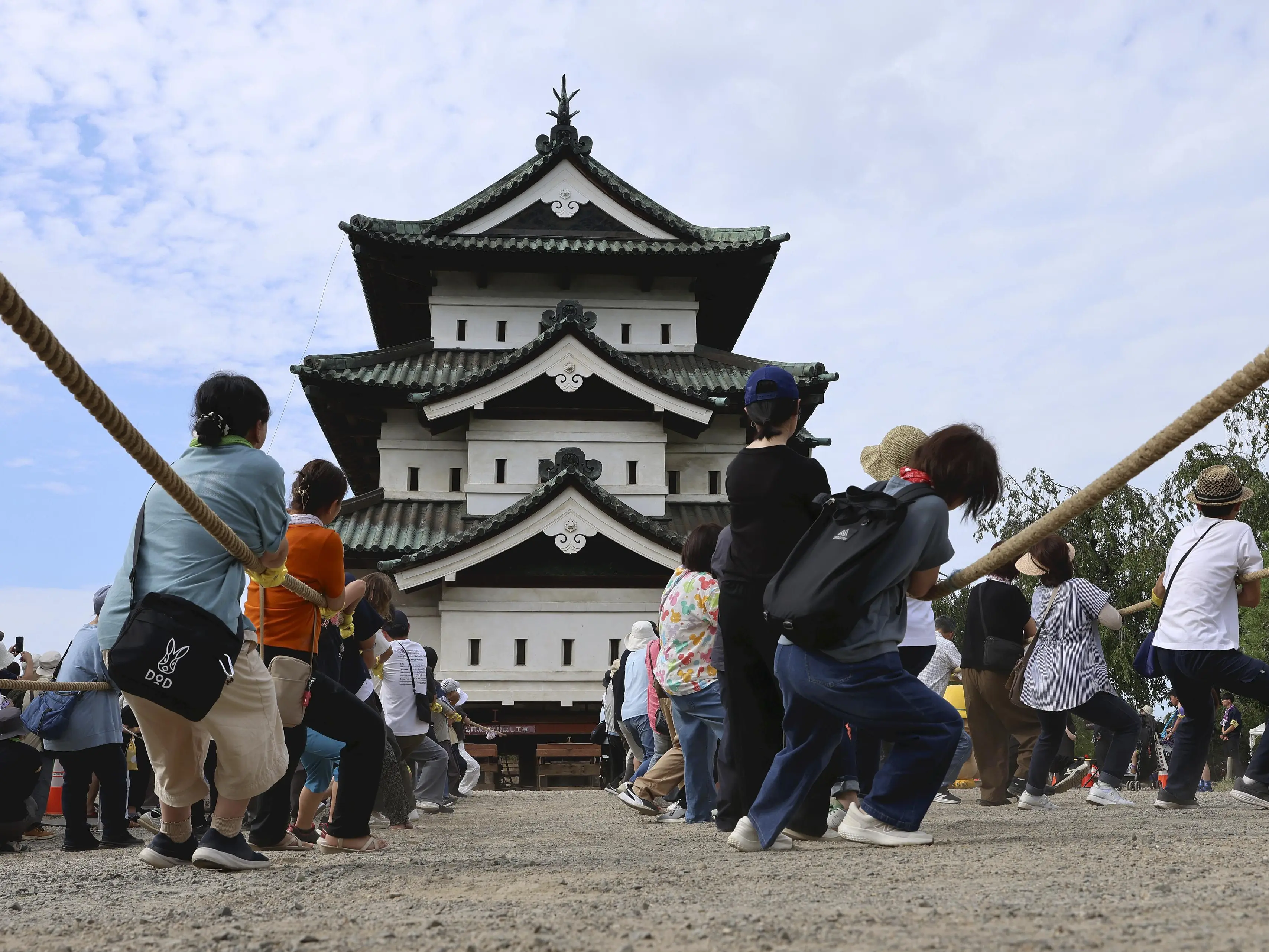
1,800 people move 396-ton Hirosaki Castle in Japan Photograph: (X| Japan News)
Around 1,800 people in Japan helped move the 396-ton Hirosaki Castle using the traditional hikiya technique as restoration work nears completion.
Around 1800 people in northern Japan came together to move a 396-ton castle damaged in an earthquake. The enormous castle had to be moved back to its original position after the repair work was completed. They used a technique known as hikiya to move Hirosaki Castle a little more than two metres closer to its original place.
“We had about 8,000 applications for the 1,800 slots over the last two days, roughly four times oversubscribed, so not everyone could participate,” said Kensuke Hayasaka, head of the parks and green spaces division at Hirosaki City. “Not only from the city, but from across Japan and overseas; a fair number from south-east Asia and from Europe and North America.”
How did 1800 Japanese move the castle?
To preserve the historic structure, they used the “hikiya” technique, where the buildings are put on rollers and moved rather than dismantled. The “building-relocation method had existed in Japan since ancient times.” The castle was first moved in 2015, roughly 78 metres away from its edge to allow workers to safely rebuild it. That was the first use of citizen-driven Hikiya. The rebuilding was completed in 2024 with all 2,185 stones restacked in their original positions.
After the task was completed, officials once again requested volunteers to pull the keep back to its original position. Rotating teams of 80 people heaved on 30-metre ropes as they chanted “so-re, so-re” as the keep on Armori Prefecture edged closer to its destination.
Trending Stories
&imwidth=280&imheight=210&format=webp&quality=medium)
&imwidth=280&imheight=210&format=webp&quality=medium)
&imwidth=280&imheight=210&format=webp&quality=medium)
&imwidth=280&imheight=210&format=webp&quality=medium)
&imwidth=280&imheight=210&format=webp&quality=medium)
&imwidth=280&imheight=210&format=webp&quality=medium)
&imwidth=280&imheight=210&format=webp&quality=medium)
&imwidth=280&imheight=210&format=webp&quality=medium)
&imwidth=280&imheight=210&format=webp&quality=medium)
&imwidth=280&imheight=210&format=webp&quality=medium)
&imwidth=280&imheight=210&format=webp&quality=medium)
&imwidth=280&imheight=210&format=webp&quality=medium)
&imwidth=280&imheight=210&format=webp&quality=medium)
&imwidth=280&imheight=210&format=webp&quality=medium)
&imwidth=280&imheight=210&format=webp&quality=medium)
&imwidth=280&imheight=210&format=webp&quality=medium)
&imwidth=280&imheight=210&format=webp&quality=medium)
&imwidth=280&imheight=210&format=webp&quality=medium)
&imwidth=280&imheight=210&format=webp&quality=medium)
&imwidth=280&imheight=210&format=webp&quality=medium)
&imwidth=280&imheight=210&format=webp&quality=medium)
&imwidth=280&imheight=210&format=webp&quality=medium)
&imwidth=280&imheight=210&format=webp&quality=medium)
&im=FitAndFill=(700,400)&imwidth=280&imheight=210&format=webp&quality=medium)
&imwidth=280&imheight=210&format=webp&quality=medium)
&imwidth=280&imheight=210&format=webp&quality=medium)
&imwidth=280&imheight=210&format=webp&quality=medium)
&imwidth=280&imheight=210&format=webp&quality=medium)
&imwidth=280&imheight=210&format=webp&quality=medium)
&imwidth=280&imheight=210&format=webp&quality=medium)
&imwidth=280&imheight=210&format=webp&quality=medium)
&imwidth=280&imheight=210&format=webp&quality=medium)
Pulling the keep will continue until the end of August, with about 4,100 people scheduled to move it a total of 5m. It is a rare display of symbolic community effort for an important cultural property. The remaining 73m will be carried out using machinery by the end of the year.
The keep at Hirosaki Castle is one of 12 such structures left in Japan. It was the seat of the Tsugaru clan; the castle was completed in 1611, but it was burned down in 1627 following a lightning strike that set fire to a gunpowder store. It was rebuilt in 1810 and is a major tourist attraction, drawing roughly 2 million visitors each year during cherry blossom season.