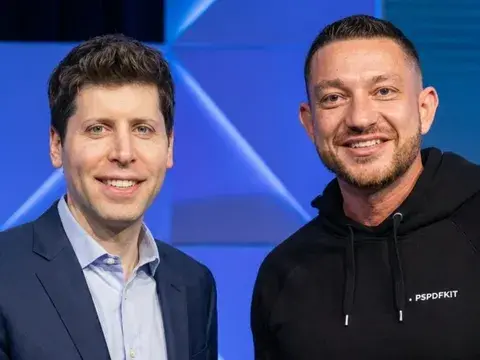
OpenClaw creator Peter Steinberger says AI agents will reward those who keep building and adapting

&imwidth=600&imheight=450&format=webp&quality=medium "OpenClaw creator Peter Steinberger says AI agents will reward those who keep building and adapting")
OpenClaw creator Peter Steinberger says AI agents will reward those who keep building and adapting
OpenClaw creator urged developers to slow down and experiment with AI, calling it a skill that improves with practice. Speaking on Builders podcast, he said OpenClaw began as personal exploration, not a master plan. His message: build what you need, stay curious and adapt as AI evolves.
The creator of viral AI agent OpenClaw has a simple message for developers experimenting with artificial intelligence: slow down, explore and enjoy the process.
Peter Steinberger, who recently joined OpenAI, shared his thoughts during a conversation with Romain Huet, OpenAI’s Head of Developer Experience, on the company’s new Builders Unscripted podcast.
His advice comes at a time when AI agents are gaining rapid popularity across industries.
How OpenClaw began: No master plan, just exploration
Steinberger admitted that OpenClaw did not begin with a detailed roadmap.
“I wish I could say I had a unified plan,” he said, adding that much of his early work was simple experimentation.
According to him, the idea emerged from personal needs. He initially built a tool that worked with WhatsApp, then paused the project, assuming larger AI labs would soon create similar systems.
However, by November, he realised no one had built what he wanted. That pushed him to create the first prototype of OpenClaw.
Trending Stories
)
)
)
)
)
)
)
)
)
)
)
)
)
)
)
&im=FitAndFill=(700,400))
)
)
)
)
&im=FitAndFill=(700,400))
)
)
)
)
)
)
)
)
)
)
)
)
)
)
He said the project truly gained momentum during a weekend trip to Marrakesh. With limited internet access, WhatsApp worked reliably, and his AI tool helped him find restaurants, check information and send messages. That practical use convinced him the idea had potential.
Modern AI models are solving problems differently
Steinberger explained that today’s AI models are far more capable at reasoning and problem-solving than earlier systems. Instead of writing detailed instructions line by line, developers can now rely on AI to generate solutions.
“They can come up with solutions themselves,” he noted, highlighting how AI coding tools are evolving quickly.
OpenClaw became popular as users began creating personal AI agents capable of handling tasks across digital tools. The project’s rapid growth eventually led to Steinberger being hired by OpenAI to work on personal agents.
Why AI building is a skill, not magic
One of his key messages is that working with AI requires practice.
He criticised the idea of “vibe coding” a term sometimes used to describe casually prompting AI to generate software suggesting it oversimplifies the learning curve.
“Learning AI is like learning guitar,” he said. “You’re not going to be good at it on the first day.”
Steinberger advised developers to treat AI prompting and building as a skill that improves over time. As with music, practice builds intuition. Over time, he developed a sense of how long prompts should take and how to refine them when they fail.
Advice for AI builders: Play, build and adapt
Steinberger encourages developers to approach AI with curiosity rather than fear.
His main advice includes:
Build something you personally want to use
Experiment without expecting perfection
Accept that early attempts may fail
Improve gradually through reflection
He also addressed growing concerns about AI replacing jobs. According to him, people who enjoy creating and solving problems will continue to find opportunities.
“If your identity is to build and solve problems, you will be in demand,” he said.
The bigger picture for AI developers
The rise of AI agents marks a shift in how software is built and used. Companies across the world are investing in automation tools that can operate across apps, analyse data and complete complex tasks.
However, Steinberger’s story shows that innovation often starts with personal experimentation rather than corporate strategy.
As AI tools become more powerful, the ability to explore, adapt and think creatively may matter more than traditional technical labels.
For aspiring developers, the message is clear: start building, stay curious and give yourself time to improve.
