
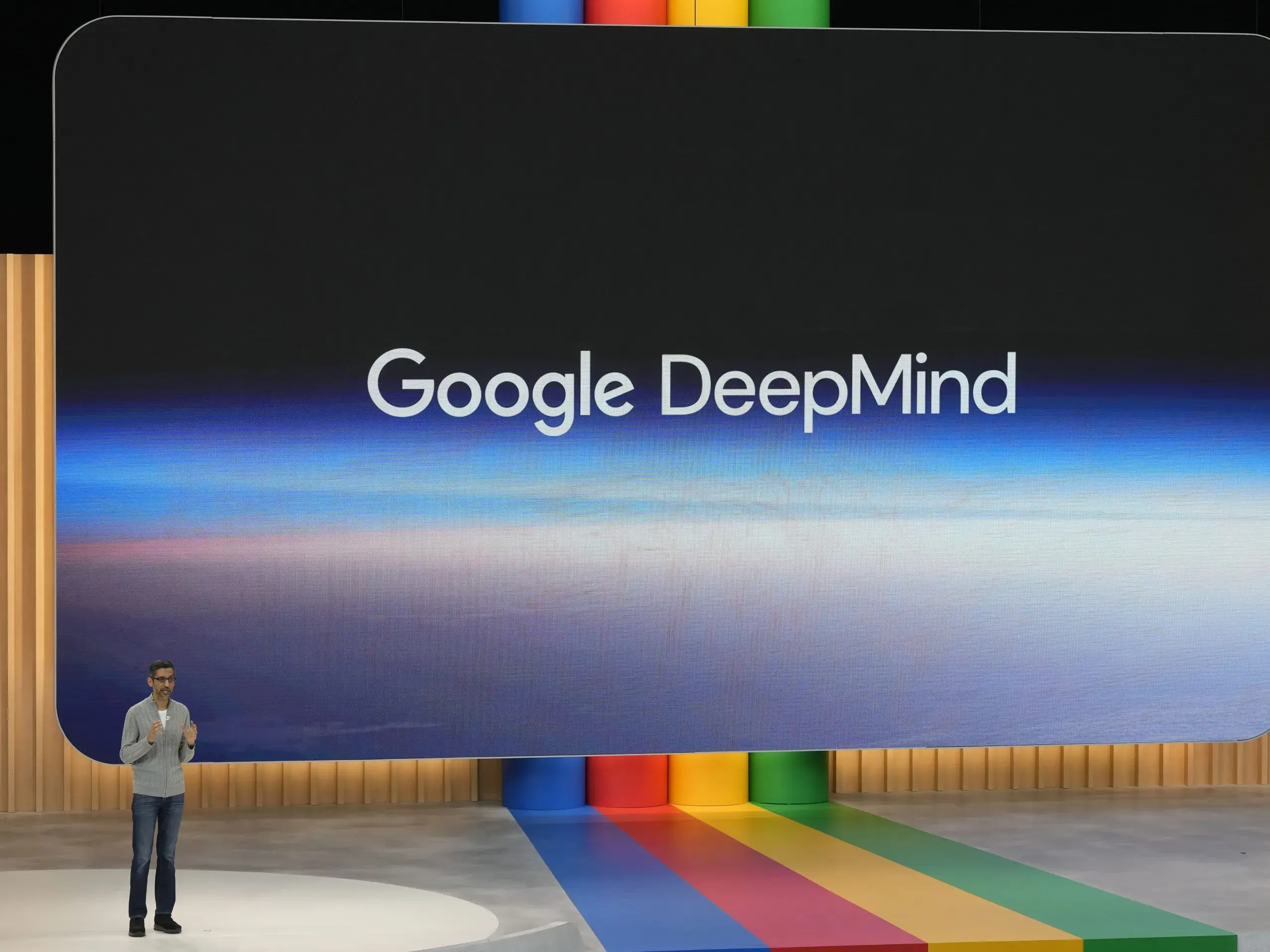
&imwidth=800&imheight=600&format=webp&quality=medium "Google DeepMind launches new institute to study how AGI could change society")
Google DeepMind has launched a new research institute focused on one of artificial intelligence’s biggest unanswered questions: what happens to society if artificial general intelligence, or AGI, becomes a reality?
The DeepMind Institute will bring together researchers from Google DeepMind and outside organisations to examine the potential effects of advanced AI on the economy, science and everyday life. The launch comes as the AI industry faces a growing debate over safety, regulation and how quickly frontier systems should advance. Google DeepMind says the institute is intended to encourage research and discussion rather than promote a single view of the future.
What will the DeepMind Institute study?

The institute will examine questions that go beyond building more capable AI models.
Its research areas include economic policy in an AGI-driven world, how AI systems explain their reasoning, access to advanced AI across different regions and the potential impact of AI on human wellbeing.
The initiative is being led by Shane Legg, Google DeepMind’s co-founder and chief AGI scientist, as managing editor. Google senior vice president James Manyika and DeepMind co-founder and chair Demis Hassabis are also involved in its leadership. Hassabis said he and Legg had discussed AGI’s possible impact on the economy, science and society for more than 20 years.
He said the new institute would expand that work through interdisciplinary research and help generate the discussion needed as AI develops.
DeepMind says researchers may disagree
Trending Stories
)
No Pandya as Auqib Nabi earns maiden ODI call-up; Mayank returns for WI T20Is| check full squads
)
Trump praises India’s Opium crackdown, hails anti-drug efforts
)
Sydney Sweeney defends provocative ad choice, the internet is still not impressed
)
Trump calls Canada-EU associate membership plan ‘laughable’ and threatens 'very serious tariffs'
)
Protests erupt over migrant housing plan in Piddington
)
Shahzad Bhatti Network declared terrorist organisation under UAPA: Govt order
)
US, China dominate global economy: Where does India rank among the world's biggest economies?
)
Europe wants a common playbook for security threats, seeks security beyond NATO
)
Bigg Boss 20: Mahhi Vij reveals she lost Yuva role to Kareena Kapoor; 'didn’t work out in my favour'
)
All Indian goods to get duty-free access to New Zealand
)
Hockey: Pakistan urges AHF to move Asian Champions Trophy out of India over security concerns
)
Lionel Messi for 2026 Ballon d’Or over Mbappe and Yamal, says Diego Simeone
)
Alex Saab, ally of Venezuela's Maduro, pleads guilty in US corruption case
)
Veteran actor Anant Nag honoured with Indian cinema’s highest award
)
800 million years old - Scientists discover 'fingerprints' of supercontinent Gondwana in ancient rocks
)
AUS vs SA: Steve Smith still gets 'little flashbacks' from sandpaper gate
)
Pakistan naval vessel returns to harbour with 'severe damage' after collision with Indian warship in Arabian Sea
)
Fed raises rates for first time in 3 years, Kevin Warsh defies Trump as inflation mounts
)
Katrina Kaif’s postpartum weight is not the problem; your gaze is
)
Daayra movie review: Kareena Kapoor, Prithviraj Sukumaran shine in Meghna Gulzar’s cop-versus-cop crime thriller
)
Saudi Vs Houthis: Yemeni military rebels clash with Houthis
)
US trade tariff: 100% tariff targets Russian buyers amid trade tensions
)
Pakistan: Imran Khan's sons Kasim & Sulaiman claim their father is 'tortured' in jail
&im=FitAndFill=(700,400))
New OTT releases this week (September 14-20, 2026): Lust Stories 3, Waiting Hai, Irumudi- 5 new titles coming on Netflix, Prime Video and more
)
Strapped to flight seat with duct tape: Passenger claims no memory of mid-air outburst
)
Trump's Iran war faces fresh House rebuke; 7 Republicans join Democrats in push to end conflict ahead of midterms
)
Trump gets new power to hit India, China with up to 100% tariffs as US Senate clears Russia sanctions bill
)
US Treasury rallies global financial institutions for Op Economic Outcast to isolate Iran
)
Saudi vs Houthis: Riyadh claims to have shot Houthi drone targeting Mecca
&im=FitAndFill=(700,400))
Suriya and Jyothika say ‘I do’ again after 20 years! See their dreamy wedding pics
)
Abhishek Sharma rises to No. 2 in T20Is; ENG’s Robinson 3rd after record Pakistan Tests
)
Extreme warming in Indian Ocean added 695 billion tons of ice to Antarctica ice sheet
)
BRICS success stuns White House, Trump targets India with 100% tariff | Gravitas
)
Meghan Markle's phone number leaked from children's WhatsApp group, couple switches Archie and Lilibet's school
)
The Early Spring season 2 is happening, but fans have one request - 'don't change the actors'
One notable feature of the institute is its acknowledgement that there may not be a single answer to how advanced AI should be developed or managed. In its introductory material, Hassabis, Manyika and Legg said Google, Google DeepMind and researchers elsewhere could reach different conclusions as evidence changes.
The aim, therefore, is not simply to predict the future. It is to study the possible consequences of AGI and give researchers, policymakers and the wider public more information about the choices ahead. Google DeepMind already describes AGI as a potential major transformation for society, while its research has explored possible pathways from human-level AGI towards more advanced forms of machine intelligence.
Why is this happening now?
The timing is significant.
Anthropic CEO Dario Amodei has recently called for the frontier AI industry to slow the pace at which model capabilities improve, arguing that safety work needs to keep up with rapidly advancing systems. Hassabis has supported greater cooperation around AI safety, while OpenAI CEO Sam Altman has also backed the idea of “pacing the frontier”. The debate has now spread beyond AI companies, with governments and policymakers discussing how advanced AI should be governed. Google DeepMind’s new institute does not amount to a decision to slow AGI development. Instead, it signals that one of the world’s leading AI labs wants a broader research effort examining what AGI could change and how society should prepare for it.
