
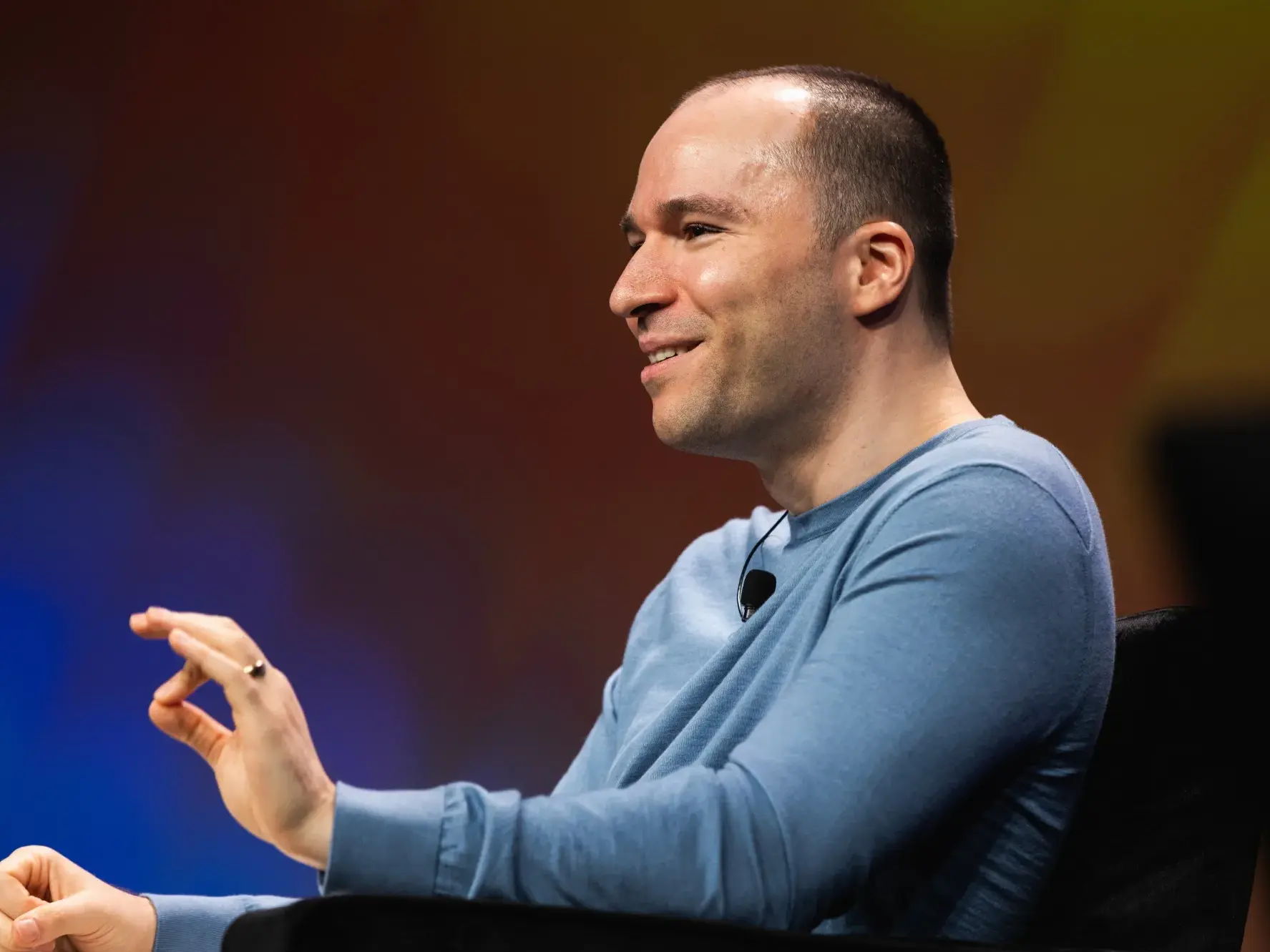
&imwidth=800&imheight=600&format=webp&quality=medium "Forget typing and clicking: OpenAI wants a ‘Jarvis’-like ChatGPT that works across your devices")
ChatGPT may not remain something you open on a phone or computer for much longer. OpenAI president Greg Brockman says the company is “very interested” in bringing deeper ChatGPT integration to smart glasses and other wearable devices, potentially putting its AI assistant directly into products people carry or wear throughout the day.
Speaking at a media briefing in New York, Brockman said OpenAI believes its AI interface should eventually be “available on all devices”. The idea goes beyond simply putting the existing ChatGPT app on another screen. OpenAI wants an AI assistant that can understand what users want, interact with software and complete tasks for them.
OpenAI wants to build a ‘Jarvis’-like assistant

Brockman compared the broader vision to Jarvis, the fictional AI assistant used by Tony Stark in the Iron Man universe. OpenAI already has some of the technology needed to move in this direction. Its Codex tools can perform computer-based tasks and interact with software. Brockman believes this could eventually change how people use computers altogether. “I think we’re just going to realise this phase of us, like, clicking things and typing things, it was a phase,” he said. Instead, users could increasingly tell an AI what they want done and allow the agent to handle the steps itself.
Why smart glasses could matter for ChatGPT
Wearables could make such an assistant far more useful. Smart glasses equipped with cameras and microphones can potentially give AI visual and audio context about a user's surroundings. Instead of pulling out a phone, a person could simply speak to the assistant. However, deeper integration requires new technology. Wearables can need continuous background access and different APIs from those designed for conventional phone or desktop apps. Brockman said OpenAI's work on such APIs remains at an early stage.
Trending Stories
)
Why asking questions could be more important than memorising answers
)
Osama Bin Laden ‘planned’ to target India, CIA reveals dozens of declassified documents
)
'Iran won't surrender': Pezeshkian sends blunt message to US while attending BRICS Summit in India
)
BRICS Summit 2026: Global leaders of BRICS nations attend main open session
)
Celine Dion makes emotional stage comeback after six years: 'I'm so delighted to see you'
)
PM Modi and China's Xi offered to help resolve Russia-Ukraine war: Kremlin
)
Why dehydration is the hidden cause of travel fatigue on long flights
&im=FitAndFill=(700,400))
Meet top 5 batters fastest to 3000 runs in T20Is
)
Top 5 places to visit in Goa beyond its famous beaches
)
'He is popular...': Malaysian PM Anwar Ibrahim's praise for PM Modi during bilateral meeting | WATCH
)
BRICS Summit 2026: PM Modi, Xi reach key consensus on ties, China to assume BRICS chairmanship in 2027
)
BRICS Summit 2026: Consensus on joint declaration, diplomatic win for India
)
Trump says Canada eager to reach a deal, it could come ‘fairly soon’ if Ottawa treats US farmers better
)
‘Partners, not rivals’: Xi outlines four point plan for stronger India-China ties
&im=FitAndFill=(700,400))
Why Chinese PL-15 air-to-air missiles use dual-pulse motors compared to European interceptors
)
Could staying indoors all day affect your health?
)
BRICS Summit 2026: PM Modi addresses Day 2 of 18th BRICS summit
)
Who is the smiling man beside Modi, Putin and Xi at BRICS Summit 2026?
)
800 million years old - Scientists discover 'fingerprints' of supercontinent Gondwana in ancient rocks
)
Why going digital does not always mean becoming more efficient
&im=FitAndFill=(700,400))
Why do air defence missiles explode near their target instead of hitting it?
)
Russian drone hits Warsaw-bound train near Polish border, Zelensky accuses Moscow of ‘deliberate’ targeting
)
War is making Russia stronger? How Ukraine is shaping Moscow’s next generation of weapons
)
Migration protests return to Portsmouth as rival demonstrations face off
)
From severe mobility problems to recovery: Madhuri the elephant’s journey of wildlife care
)
BRICS Summit day 1: New Delhi declaration adopted with full consensus, big diplomatic win for India
)
Did Iran President Pezeshkian touch feet of Hindu spiritual leader at Delhi event as shown in viral video?
)
9-year-old Chennai prodigy clears Cambridge IGCSE grade 10 exams
)
Why does your body need time to adjust after a long journey?
)
BRICS Summit 2026: PM Modi to hold bilateral with leaders of seven countries
)
Ramanathaswamy temple takes centre stage as PM Modi welcomes world leaders at BRICS
)
Houthis launch cross-border strike on Saudi Arabia as Yemen war escalates
)
BRICS Summit 2026: Chinese president Xi Jinping departs from New Delhi after attending BRICS summit
)
Why does your skin need protection from UV rays?
)
How does the loss of forests affect the way wildlife lives and moves?
)
IND vs AFG, 1st T20I: When and where to watch live streaming in India?
)
Why do wild animals need quiet places to survive?
)
Bigg Boss 20: Qazi Touqeer gets a special ‘rockstar’ moment from Salman Khan
)
Humans may lose control of AI: Anthropic CEO calls for slowdown, Altman, Musk back him
OpenAI is also building its own hardware
The wearable push does not mean OpenAI has abandoned plans for its own device.
Brockman said OpenAI is working on a hardware “solution for a problem that we think is neglected”, without revealing exactly what the product will be. The strategy suggests OpenAI could eventually take two routes: build its own AI hardware while also letting other manufacturers integrate ChatGPT more deeply into their devices. The bigger ambition is clear. OpenAI does not want ChatGPT to remain another app users open. It wants AI to become the interface between people and their technology.
