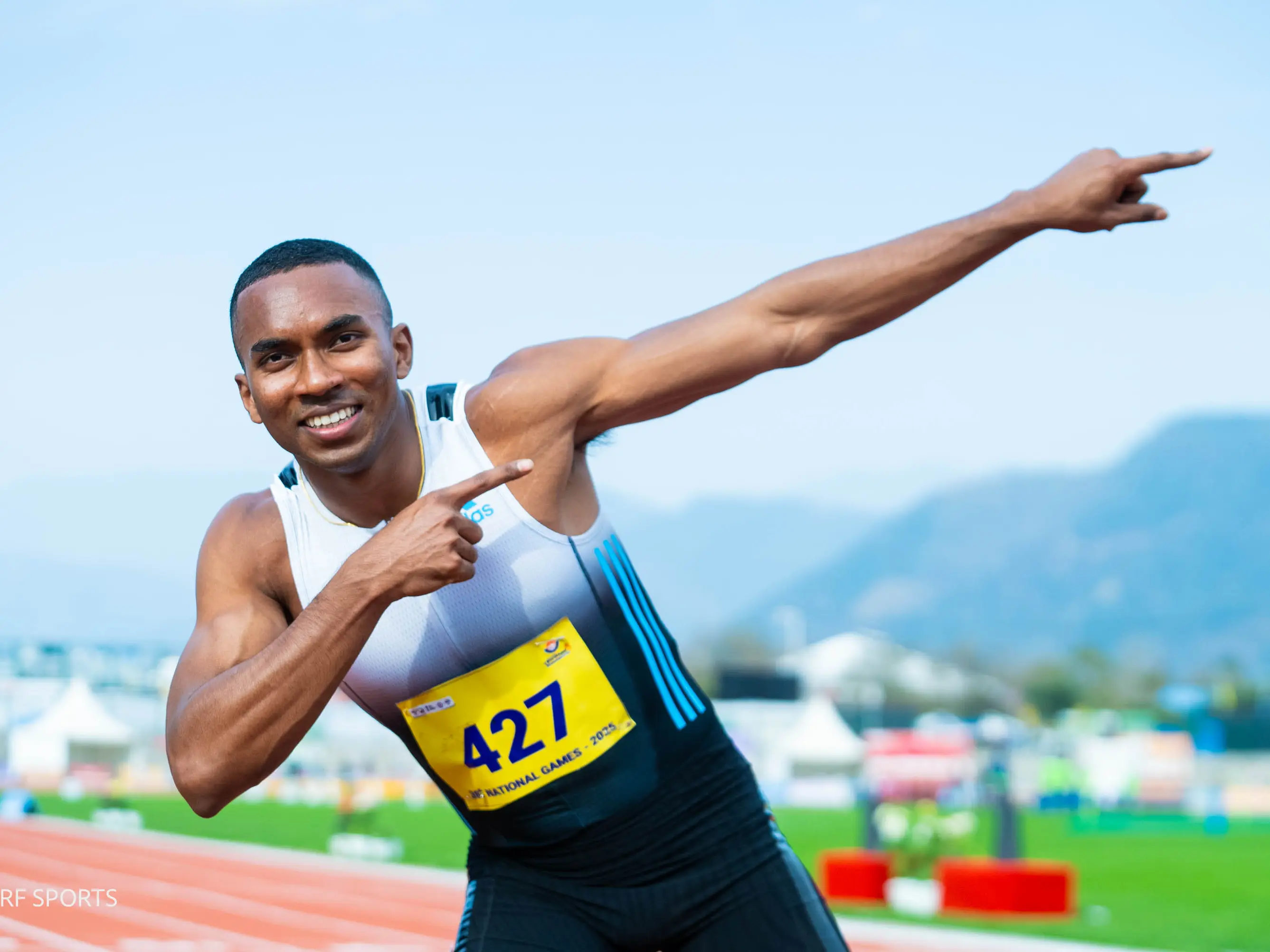
With 10.18seconds on the clock, Animesh Kujur is racing into Indian sports history

&imwidth=600&imheight=450&format=webp&quality=medium "With 10.18seconds on the clock, Animesh Kujur is racing into Indian sports history")
Animesh Kujur Photograph: (Reliance Foundation)
Recently, Animesh Kujur smashed the 100m National Record with 10.18seconds at the Dromia International Sprint and Relays Meeting - World Athletics Continental Tour Silver
He’s lean, sharp-jawed, and calm-eyed — the kind of athlete who doesn’t need to announce his arrival. Dressed in India’s blue with a hint of swagger, Animesh Kujur carries the relaxed confidence of a man who knows where he’s going — fast. His frame is aerodynamic, his demeanor grounded, and his focus, absolute. On first glance, he could be mistaken for a runway model; but step onto the track, and you’ll know — he was built to fly.
That’s exactly what he did in Greece, at the Dromia International Sprint and Relays Meeting. Lining up alongside European sprinters, Animesh took off out of the blocks and surged ahead — his 100 metres clocking in at 10.18 seconds, smashing the Indian national record. It wasn’t just a personal best. It was a shot across the global sprinting map — India was no longer just participating. It was arriving.
'It’s all about the process'
Ask Animesh about that moment in Greece, and his eyes light up — not with self-congratulation, but with resolve. “Coach said it will take time. Just wait, trust the process, and go with the flow,” he recalled. That’s been the mantra guiding his career — an unwavering faith in the system that has helped turn raw talent into a world-stage contender.
The man behind the curtain, his coach, Owen Martins, is equally measured. “Animesh wasn’t chasing records. He’s chasing his best. Medals and timings come as a byproduct,” he says. The coach vividly remembers the first time he saw Animesh: a “big lad” desperate to join the HPC (High Performance Centre), raw and restricted in movement, yet blazing fast when unleashed. “There’s a funny debate about who begged whom to join the program,” Owen laughs, “but what matters is that he came. And we saw something in him that told us — this guy could go far.”
The Monaco dream
Trending Stories
&imwidth=280&imheight=210&format=webp&quality=medium)
&im=FitAndFill=(700,400)&imwidth=280&imheight=210&format=webp&quality=medium)
&im=FitAndFill=(700,400)&imwidth=280&imheight=210&format=webp&quality=medium)
&imwidth=280&imheight=210&format=webp&quality=medium)
&imwidth=280&imheight=210&format=webp&quality=medium)
&imwidth=280&imheight=210&format=webp&quality=medium)
&imwidth=280&imheight=210&format=webp&quality=medium)
&imwidth=280&imheight=210&format=webp&quality=medium)
&imwidth=280&imheight=210&format=webp&quality=medium)
&imwidth=280&imheight=210&format=webp&quality=medium)
&imwidth=280&imheight=210&format=webp&quality=medium)
&imwidth=280&imheight=210&format=webp&quality=medium)
&imwidth=280&imheight=210&format=webp&quality=medium)
&imwidth=280&imheight=210&format=webp&quality=medium)
&imwidth=280&imheight=210&format=webp&quality=medium)
&imwidth=280&imheight=210&format=webp&quality=medium)
&imwidth=280&imheight=210&format=webp&quality=medium)
&imwidth=280&imheight=210&format=webp&quality=medium)
&imwidth=280&imheight=210&format=webp&quality=medium)
&imwidth=280&imheight=210&format=webp&quality=medium)
&imwidth=280&imheight=210&format=webp&quality=medium)
&im=FitAndFill=(700,400)&imwidth=280&imheight=210&format=webp&quality=medium)
&imwidth=280&imheight=210&format=webp&quality=medium)
&imwidth=280&imheight=210&format=webp&quality=medium)
&imwidth=280&imheight=210&format=webp&quality=medium)
&imwidth=280&imheight=210&format=webp&quality=medium)
&imwidth=280&imheight=210&format=webp&quality=medium)
&imwidth=280&imheight=210&format=webp&quality=medium)
&imwidth=280&imheight=210&format=webp&quality=medium)
&imwidth=280&imheight=210&format=webp&quality=medium)
&imwidth=280&imheight=210&format=webp&quality=medium)
&imwidth=280&imheight=210&format=webp&quality=medium)
&imwidth=280&imheight=210&format=webp&quality=medium)
Just weeks after his historic 100m sprint, Animesh was on the track again — this time at the Monaco Diamond League, rubbing shoulders with the world's best. "I expected more,” Animesh admitted candidly. “But racing with big athletes like Gout Gout and Noah Lyles — I learnt so much just by watching them.”
For a boy from India to not just race but belong on the same track as global icons was a milestone of its own. “Their warm-up routines, their discipline, their lifestyle — I took notes on everything,” he says. “That’s where I want to be.” Despite not meeting his personal best, Animesh clocked 20.55seconds in the 200m — on a day when swirling headwinds and a tricky lane setup slowed everyone down. “Only Amlan Borgohain has ever run faster in India,” Owen reminds us. “And we were disappointed — that tells you where the standards are going.”
The elusive sub-10
In Indian athletics, the 10-second barrier in the 100m is the final frontier — a mental, physical, and cultural wall no man has yet broken. Is Animesh close? “I was in shape to run under 10.10 at the National Games,” Animesh reveals. “But my start didn’t go well. Coach told me — trust the training, we’ll get there.”
The coach offers a cautious but hopeful perspective. “It’s a slow process. We don’t even train by running hundreds regularly. We break it down — starts, acceleration, transitions — and build it over months.” A better lane, faster surface, legal wind, and the right race — “It’s all about aligning those variables. Could be Animesh, could be someone else. But it will happen. And when it does, the Indian press can go mad.”
Training, travel and transformation
Since April, Animesh has been a nomad of elite athletics — racing across Asia and Europe, training in Geneva, competing in Athens, preparing for Germany. Each leg of the journey brings new insights. “My roommate in Switzerland is a South African athlete,” he says. “Just watching how professionals eat, sleep, warm up, chill — it’s a full education.”
From strength and conditioning sessions with a bobsleigh coach to curve transition drills and relay fine-tuning, Animesh’s days are anything but ordinary. “The 200m demands curve running, which is hard to train,” he explains. “Straight tracks are easier for that. But we’re adapting.”
With upcoming meets in Geneva, Germany, and the World University Games, the schedule doesn’t relent. Still, Animesh is upbeat. “This is what I wanted. To race in Europe. To run with faster athletes. To learn.”
What lies ahead
For Animesh Kujur, the year ahead is filled with possibility: a shot at the World Championships, and perhaps, the first Indian to run under 10 seconds. “We’re aiming for 20.16seconds in the 200m next,” Owen said. “He was running 20.5seconds last year — now he’s consistently near the national record. The jump is real.”
Training will soon shift to Essen and Bochum in Germany. There, Animesh, who is supported by Reliace Foundation, will link up with India’s 4x100m relay team and prepare for the final leg of a season that could redefine Indian sprinting. But amidst the hustle, it’s the mindset that stands out most — humble, grounded, focused. “I’m just trying to improve,” Animesh says, brushing aside the hype. “Everything else will come.”
Legacy in the making
It’s easy to get swept up in the numbers: 10.18 seconds, 20.36 seconds, minus-1.9 headwinds, lane 8 transitions. But Animesh’s story isn’t just statistical — it’s symbolic. He represents a new generation of Indian athletes who no longer see global stardom as a distant possibility, but as a reachable goal. He trains with the best, competes without fear, and speaks with maturity far beyond his years. And as he gears up for yet another international showdown, one thing is certain: Animesh Kujur isn’t just India’s fastest man today. He might be the first to sprint his way into immortality.

