India’s youngest squash storm: Meet 15-year-old Anika Dubey, the next big star ready to take on the world

&imwidth=600&imheight=450&format=webp&quality=medium "India’s youngest squash storm: Meet 15-year-old Anika Dubey, the next big star ready to take on the world")
Anika Dubey Photograph: (WION)
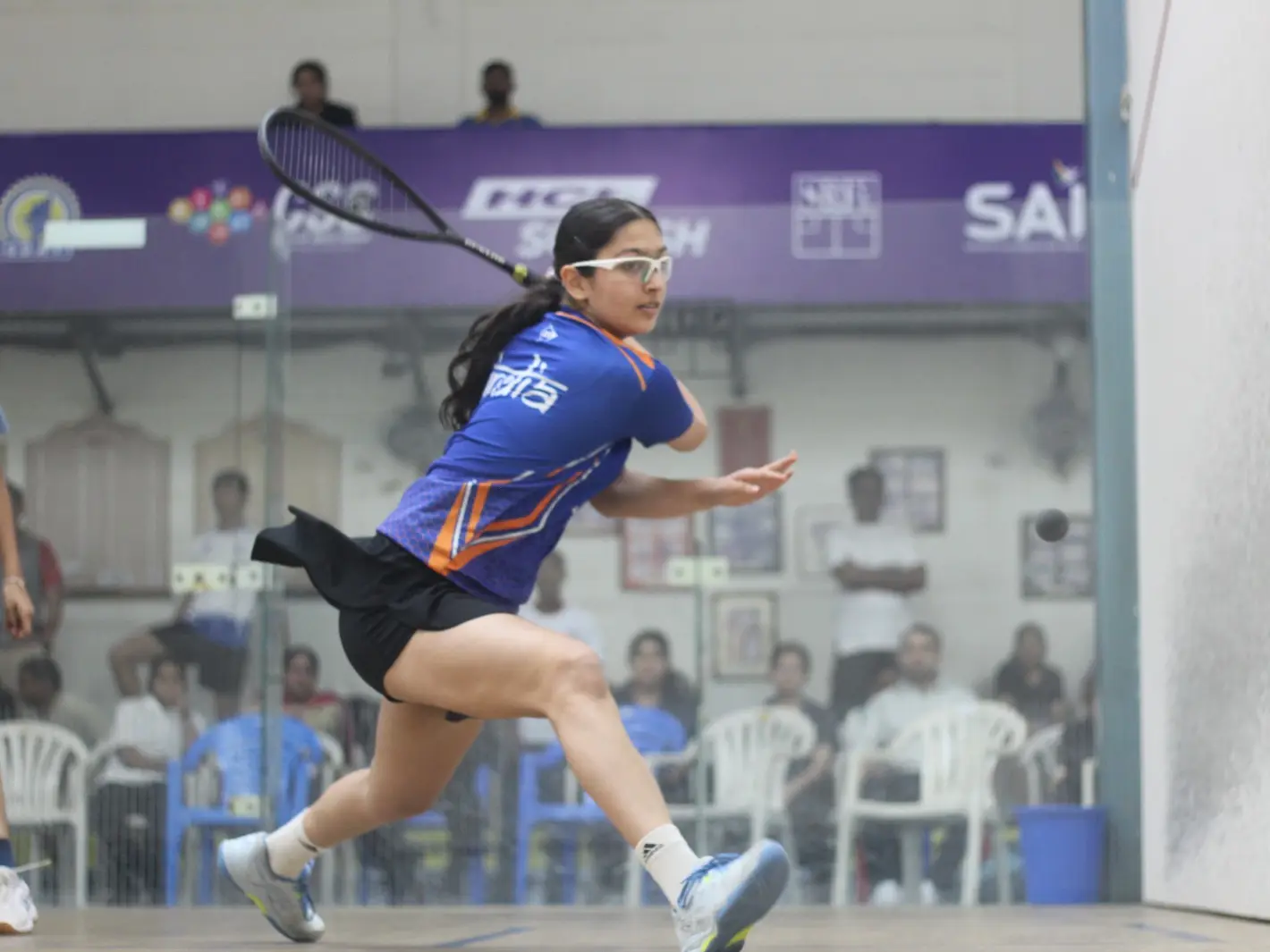
At just 15, Anika Dubey is taking on older, world-ranked players and winning. From society courts to national titles, she’s emerging as India’s next squash star
At 15, most teenagers worry about school, exams, or weekend plans. Anika Dubey thinks about all of that too, but only after she finishes a few hours of intense squash training, prepares for her next women’s professional tournament, and squeezes in time to chase her growing list of national titles. India’s newest squash prodigy, fresh off winning the Junior National U-19 Championship, speaks with the clarity of a seasoned athlete. There is no rush in her voice, no sense of rebellion against the heavy routine she has chosen. If anything, she sounds hungry, hungry to chase players older, taller, stronger, and more experienced than herself.
“I was a little nervous because they were all two to three years older,” Anika admits in an exclusive conversation with WION, recalling her run at the U-19 level. “But once I start playing, the nerves go away.” What she doesn’t say, but her performances do, is that she doesn’t just compete with older players; she beats them.
From society courts to national podiums
Anika’s squash journey began not in a high-performance academy but inside her housing society in Pune. “There was a squash court here, and a few players used to play well. I would watch them and wanted to try,” she says. What started as simple curiosity soon evolved into something sharper. At 11, she began taking the sport seriously. By 2021, she joined Chance2Sports Foundation under the guidance of coach Abhinav Sinha, the turning point that refined her raw game into an attacking, structured style.
“When I joined, my technique was really bad,” she says with refreshing honesty. “Abhinav sir helped me improve everything, technically, skillfully. I have become a lot better.” That “lot better” is an understatement. From a basic game full of “drives and crosses,” Anika has transformed herself into a player who volleys aggressively, takes time away from opponents, and dominates rallies with unexpected maturity. Her evolution shows in her consistency — four straight junior national titles, each more convincing than the last.
The medal that changed everything
Trending Stories
)
)
)
)
)
)
)
&im=FitAndFill=(700,400))
)
)
)
)
)
)
)
)
&im=FitAndFill=(700,400))
&im=FitAndFill=(700,400))
)
)
)
&im=FitAndFill=(700,400))
)
)
)
)
)
)
)
)
)
)
)
)
)
&im=FitAndFill=(700,400))
)
)
)
)
)
)
Last year, she won a bronze medal at the Asian Junior Individual Championships, a breakthrough she now calls the confidence catalyst. “I played the same girl in the semis this year that I played last year,” she recalls. “And this year I had a much better result. It made me feel I can win medals internationally too.” There is a spark in her tone when she speaks about Malaysian and Egyptian players, the two global powerhouses of squash. “I can actually compete with them,” she says, not as a dream but as a declaration.
The hardest part? Fitness. The motivation? Goals
If squash is a demanding sport, Anika doesn’t sugarcoat its tougher realities. “The most challenging part is fitness. I don’t think anybody likes doing fitness, but I especially don’t,” she laughs. Yet she never skips it. What makes her push through? “My goals,” she says. “When I think about the match I want to play next, or the shot I want to use, or the ranking I want to reach, it motivates me.” Her next few months are focused on the women’s professional circuit, especially PSA events in India. She has already begun testing herself against world-ranked players. Just recently, she took a game off a top-70 player from Ireland, a result most juniors would frame on their bedroom wall.
Balancing academic and dream
The toughest opponent Anika faces often isn’t on a squash court, it’s time. She has her Class 10 boards in February next year. “It’s tough to manage,” she admits. “I have zero time left for anything else.” Yet her routine continues: school in the morning, training in the evening, revision at night, tournaments squeezed in between. Her family’s support, she says, holds her world together. “When I told them I wanted to train harder and play internationally, they were very supportive. My parents manage everything so I don’t get overwhelmed.” Even her grandparents pitch in. “They helped me train and manage everything when I was younger.” Pressure? Only the healthy kind. “Yes, I should get good marks,” she smiles, “but it’s not a pressure thing.”
Role models and the road ahead
Among global stars, Amina Orfi, the Egyptian sensation, inspires her most. “She’s young, competing against older players, and reaching world no. 4. Her game is really dominating and attacking.” The resemblance in their styles is no coincidence. In the next four to five years, Anika sees herself playing many more women’s events, but beyond that, she doesn’t claim to know. And that honesty is refreshing. “With school going on, I’m not really sure,” she says. “I’m taking it step by step.”
The myth about squash
As for myths about squash? “People think it’s like tennis or badminton,” she laughs. “It’s nothing like that. The movement, technique, everything is different.” And for those confused about the indoor sport where players hit a ball to a wall while standing side by side? “It’s pretty hard to explain,” she shrugs, but she certainly knows how to play it. At 15, she has already changed the contours of Indian junior squash. The senior circuit awaits. The world awaits. And if her confidence is any indicator, Anika Dubey is not here to merely participate, she is here to belong.

