Why are some galaxies invisible? Astronomers identify 70 dark galaxy candidates with no visible stars using FAST

&imwidth=600&imheight=450&format=webp&quality=medium "Why are some galaxies invisible? Astronomers identify 70 dark galaxy candidates with no visible stars using FAST")
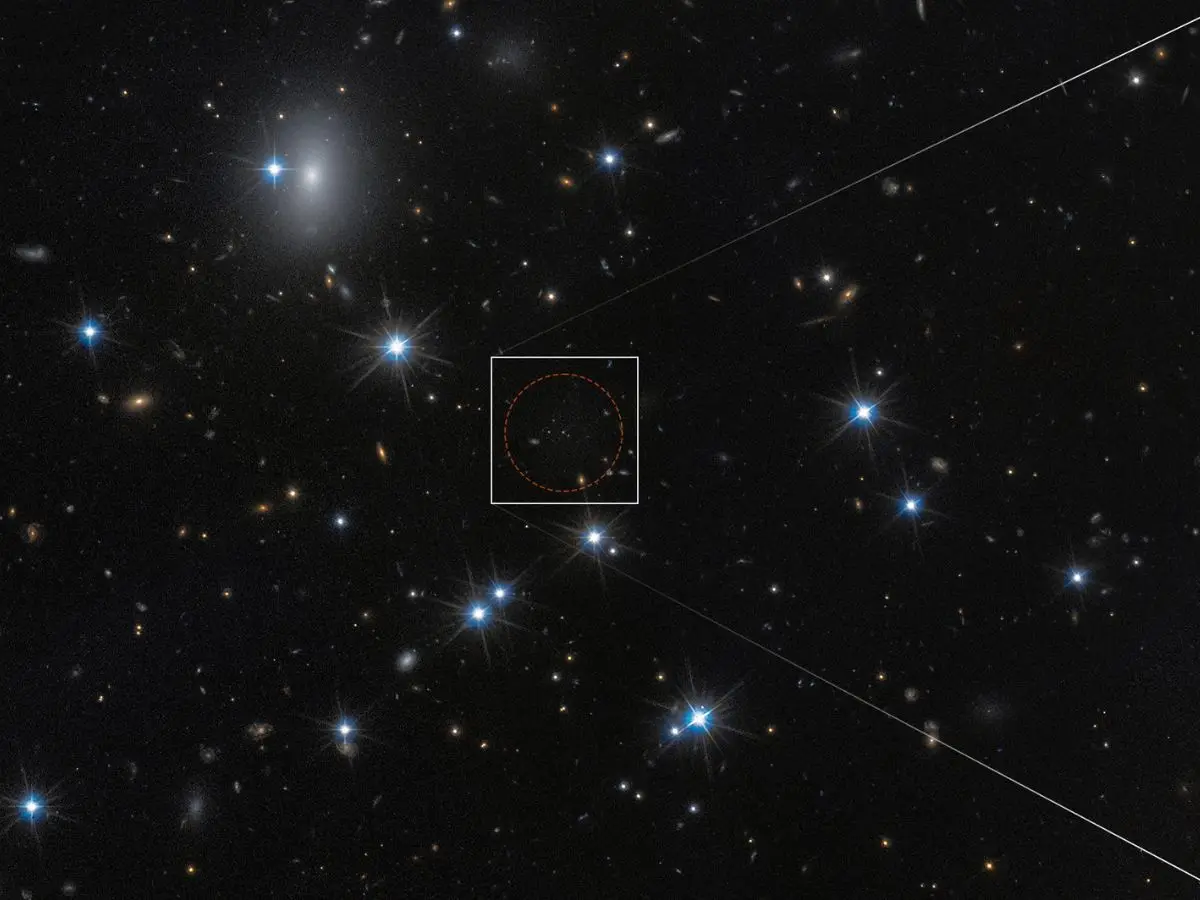
Astronomers detect 70 dark systems using FAST data Photograph: (NASA)
The existence of these elusive objects, known as dark galaxies, has long been predicted by the Lambda Cold Dark Matter model, which describes how matter in the universe forms structures.
Galaxies are typically defined by their stars, yet not all of them glow. Some are composed largely of gas and dark matter, with little or no starlight to reveal their presence. The existence of these elusive objects, known as dark galaxies, has long been predicted by the Lambda Cold Dark Matter model, which describes how matter in the universe forms structures. Now, astronomers have identified 70 strong candidates for such galaxies using early observations from the Five-hundred-meter Aperture Spherical Telescope (FAST), with findings submitted to the arXiv preprint server on April 16. This work provides one of the most substantial catalogues yet of these elusive cosmic structures.
What are dark galaxies
Most galaxies are visible across the universe due to the light from their stars. However, a rare category, low-surface-brightness galaxies, remains extremely faint. These systems contain very few stars and are largely dominated by dark matter, making them difficult to detect with conventional observations. NASA’s Hubble Space Telescope has identified CDG-2, a rare and nearly invisible ‘dark galaxy’ in the Perseus cluster, 300 million light-years away. Composed of roughly 99 per cent dark matter, it is one of the darkest known galaxies, identified by four faint globular clusters and a sparse, diffuse glow.
Why dark galaxies are expected to exist
Theoretical models suggest that the universe should contain far more small dark matter halos than the number of observed galaxies. Many of these halos may never have formed stars. Processes such as ultraviolet background radiation from early quasars and galaxies can heat gas, preventing it from cooling and collapsing into stars. In other cases, the halos may be too small to retain the cold gas required for star formation. The result is a population of “missing” galaxies, dark matter-dominated systems that emit no visible light, often described as ghost-like structures.
Trending Stories
)
)
)
)
)
)
)
)
)
)
)
)
)
)
)
&im=FitAndFill=(700,400))
)
)
)
&im=FitAndFill=(700,400))
)
)
)
)
)
)
)
)
)
)
)
)
)
)
Tracking hydrogen to reveal the unseen
According to sciencex.com, to identify these objects, researchers led by Marco Monaci analysed neutral hydrogen emissions detected by FAST. Hydrogen atoms emit a characteristic radio signal at a wavelength of 21 centimetres when their electrons change spin state. This signal serves as a reliable tracer of gas-rich systems, even when no stars are present. From 41,741 hydrogen sources in the FAST All Sky HI survey, the team narrowed their sample through distance limits and comparisons with optical catalogues. After several stages of filtering and visual inspection, they isolated 85 strong candidates, later refined to 70 after quality checks.
What the discoveries mean
These 70 objects are not yet confirmed dark galaxies but represent the most promising candidates to date. They may include both truly starless systems and 'almost dark' galaxies with stars too faint for current detection methods. Confirmation will require deeper optical imaging and higher-resolution radio observations. As the FAST survey expands, researchers expect the number of candidates to grow to around 200, offering a crucial pathway to understanding galaxy formation and the role of dark matter in shaping the universe.