Mars-like planet crashed into Earth billions of years ago. Now we know where it came from

&imwidth=600&imheight=450&format=webp&quality=medium "Mars-like planet crashed into Earth billions of years ago. Now we know where it came from")
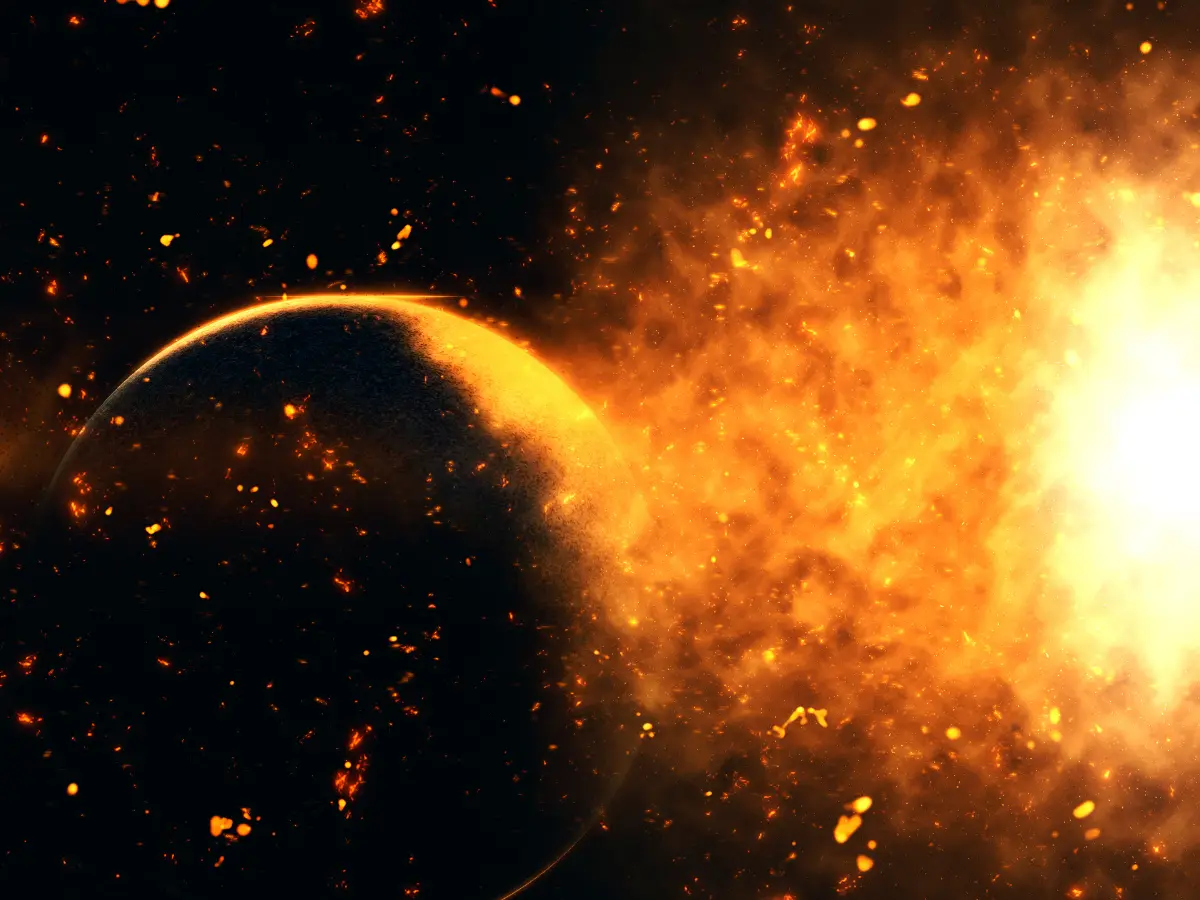
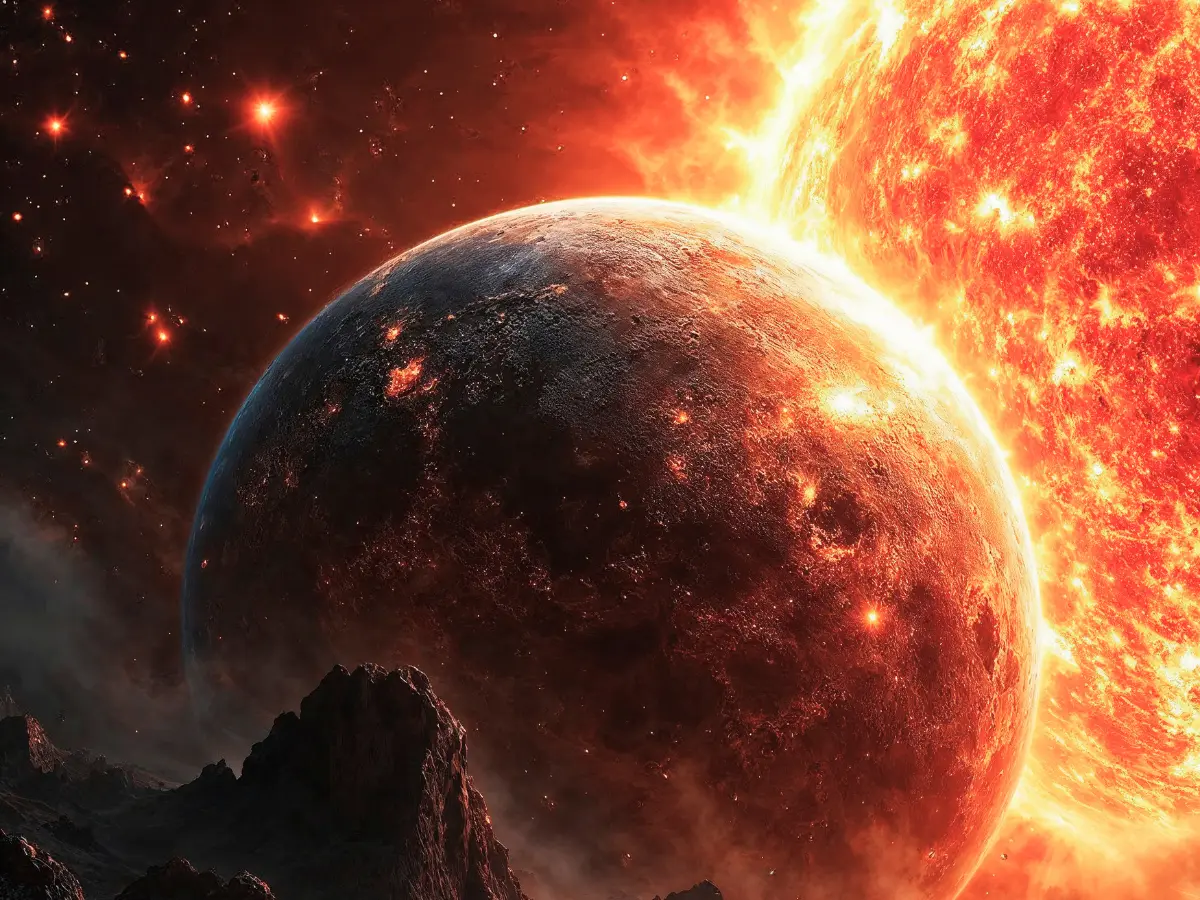
Earth Theia collision created the Moon. Where did this planet come from? Photograph: (Freepik)
Where did the planet the size of Mars that crashed into Earth billions of years ago come from? Theia has captured the imagination of artists and astronomers alike. There was chaos when it was present in the solar system, but only now do we know its true origins.
Scientists have determined the origin point of Theia, the planet believed to have collided with Earth around four and a half billion years ago. This collision released a huge amount of debris that later coalesced to form the Moon. Theia was destroyed, and its remnants are still embedded deep inside our planet. This impact was first theorised in the 1970s, with scientists suggesting that the Moon contains elements entirely from Theia. But later studies suggested that Earth and Moon are quite identical in their chemical composition. Using this information, a study published in Science on November 20, 2025, has now decoded where Theia came from. The researchers studied the ratio of iron in rocks from the Moon, Earth, and meteorites and found that this Mars-sized planet was born in the inner solar system and much closer to the Sun.
It then started moving outwards and crashed into Earth around 4.5 billion years ago. Isotopic fingerprints can reveal a lot about the birthplace of a cosmic object. Most studies on the formation of the Moon have found that it is made mostly of material from Theia. So ideally, Moon should be different from Earth in terms of chemical composition. But analyses of lunar rocks have shown that Earth and Moon have a very similar isotopic composition. Since there was never a clear distinction between Moon and Earth, scientists in the past had not been able to determine the formation region of Theia, the researchers wrote.
Also Read: When Theia smashed into Earth: The common DNA Moon and our planet share
Also Read: Earth had several tiny hidden moons billions of years ago, study suggests
Ancient Earth was different from today's Earth
Study co-author Thorsten Kleine, director of the Max Planck Institute for Solar System Research in Göttingen, Germany, said ancient Earth would have had molybdenum and iron in its core but not in the rocky mantle closer to the surface. Which means if Earth’s mantle has these elements today, then they likely came from Theia and could reveal the planet’s composition. So they looked at the iron in lunar samples, rocks on Earth, and the meteorites that came from those parts of the solar system that have different isotopic compositions and could be linked to the birth of Theia and Earth. Their findings once again showed that Earth and Moon are identical, and the same was true for non-carbonaceous meteorites, the ones that originate in the inner solar system.
Trending Stories
&im=FitAndFill=(700,400))
)
)
)
)
)
)
)
)
)
)
)
)
)
)
&im=FitAndFill=(700,400))
)
)
)
)
)
)
)
)
)
)
)
)
)
&im=FitAndFill=(700,400))
This was proof that Theia also came to life in the inner solar system. “We found that all of Theia and most of Earth’s other constituent materials originated from the inner Solar System,” the researchers wrote. “Our calculations suggest that Theia might have formed closer to the Sun than Earth did,” they added.