Did the dinosaurs suffer from respiratory issues? Researchers make breathtaking discovery

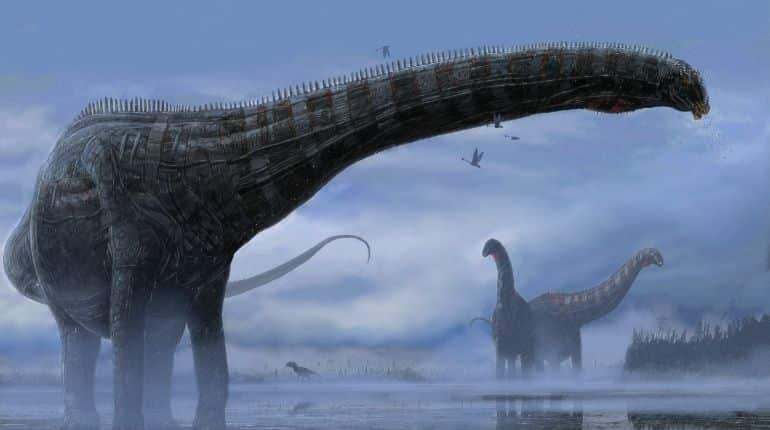
A dinosaur seems to have been suffering from respiratory infection (representative image).
The first evidence of respiratory infection in a dinosaur, which lived over 150 million years ago, has been found by the researchers.
The discovery was made by the palaeontologists when they examined the fossilised neck bones of a diplodocid.
Diplodocid is a huge and long-necked herbivore, which existed on Earth in the late Jurassic period.

Also Read:NASA releases pictures of Venus’s surface taken by Parker Solar Probe in new light
Dr Cary Woodruff, director, palaeontology, Great Plains Dinosaur Museum in Malta, Montana, noticed unusual broccoli-like growths in several neck bones of the dinosaur named Dolly. It happened when Woodruff was inspecting the remains of the dinosaur, which was unearthed over 30 years ago.
“I’ve looked at a lot of sauropod vertebrae and I’ve seen some weird things, but never anything like these structures,” Woodruff told the Guardian.
)
BRICS summit: India faces delicate Iran-UAE diplomatic test
)
From drones to KAAN fighters: Turkey outlines 229% surge in defence spending amid regional shifts
)
BRICS Summit 2026: 30+ countries seek BRICS membership
)
Years before 9/11, CIA warned Clinton, Bush of 'explosive-packed airplane attack': What newly released files reveal
)
Satellite images show construction surge at Iran’s Pickaxe nuclear site amid US war
)
Saudi Arabia shuts East-West oil pipeline, key Hormuz bypass, after attacks
)
Harry Potter TV show vs films: Gary Oldman explains why HBO’s reboot could be better
)
Karthik Subbaraj’s Dorothy gets a standing ovation at TIFF world premiere
)
9-year-old Chennai prodigy clears Cambridge IGCSE grade 10 exams
)
South Africa batter Jordan Hermann hits highest individual score on ODI debut
)
BRICS Summit 2026: South Africa says it will use the summit to advance its economic priorities
)
Houthis vs Saudi Arabia: East-west oil pipeline shut after drone attacks from Iraq
)
9/11 attack anniversary: The day that changed America forever
)
WION Expertspeak: Understanding India's BRICS presidency amid wars, trade tensions and global turmoil
&im=FitAndFill=(700,400))
New Friday OTT releases (September 11, 2026): The Revolutionaries, Vishwanath & Sons, Ghamasaan- 6 new titles coming on Netflix, Prime Video and more
)
Lady Gaga is a mom! Oscar-winning singer welcomes first child with fiance Michael Polansky
)
Satya Niketan horror: Who is responsible?
)
BRICS Summit 2026: PM Modi meets Malaysia, Ethiopia leaders; defence ties, trade in focus
)
Gravitas | Iran hammers US air power in West Asia after Navy badly hit
)
800 million years old - Scientists discover 'fingerprints' of supercontinent Gondwana in ancient rocks
)
Frustrated man demolishes his kitchen after thousands flock to see Mother Mary his wife spotted on the wall
)
BRICS Summit 2026: Top world leaders in New Delhi; West Asia war casts shadow on BRICS Summit
)
IND vs AFG, 1st T20I: When and where to watch live streaming in India?
)
Israel spent nearly $470,000 on PM's hair, makeup since 2019, data shows
)
BRICS Summit: China resumes Guangzhou-New Delhi flight, issues 'good-neighbourliness' remark ahead of Xi-Modi meet
)
Russia strikes Ukrainian cargo ships, steel plants after Kyiv's drone attack on Samara region
)
BRICS Summit 2026: Rivals in West Asia, partners in BRICS, UAE, Iran, and Saudi delegations in Delhi
)
North Korea fires missiles after US, South Korea and Japan military drills but America says 'does not pose immediate threat'
)
In first of its kind, Trump admin deports Afghan woman via Alien Terrorist Court
)
Delhi's top luxury hotels turn into high-security fortress hubs for BRICS 2026 delegations
)
Osama Bin Laden's son ALIVE? Al-Qaeda releases video 7 years after US declared him dead
)
After praising Modi, Pezeshkian meets Indian religious leaders, Hurriyat's Mirwaiz Umar Farooq
)
BRICS Summit 2026: Iran's Pezeshkian praises PM Modi at BRICS
Woodruff, who was stumped by the finding, put a call out on social media for anyone, who may know what it was.
Also Read:In evolution, humans’ noses have become less sensitive, finds study
In the immediate response, a number of scientists joined the investigation. They said the bony growths looked similar to protrusions, which can be caused by respiratory infections in birds of today’s era.
“I imagine that Dolly would have been very much like a sick person: coughing, sneezing, experiencing a fever and out of it. We’ve all had many of the same symptoms, and likely felt just as crummy as Dolly did. I don’t personally know of any fossil I’ve been able to sympathetically relate to more,” Woodruff said.
(With inputs from agencies)