Umbrellas used for treatment: Indian football exposed in stark reality of neglect and apathy

&imwidth=600&imheight=450&format=webp&quality=medium "Umbrellas used for treatment: Indian football exposed in stark reality of neglect and apathy")
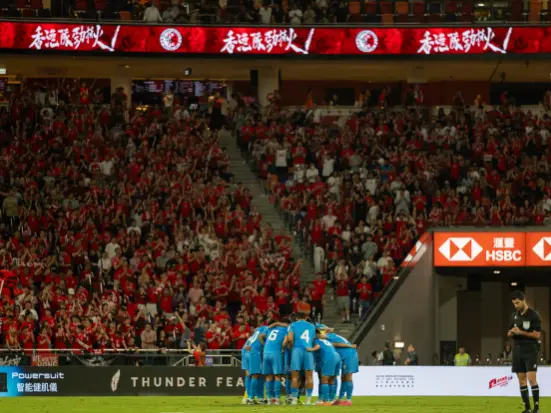
Last week, the All India Football Federation sacked head coach Manolo Marquez Photograph: (Instagram (@indianfootball))
Last week, the All India Football Federation sacked head coach Manolo Marquez after just 12 months in charge after a disastrous run of results. Marquez, succeeded Igor Stimac after India's failure to progress in the FIFA World Cup qualifiers
In a country that lives and breathes cricket, Indian football has long been the forgotten child — occasionally remembered, mostly ignored. But the recent developments, both tragic and telling, demand we ask a painful question: Does anyone really care about the state of football in India?
On July 7 (Monday), an image from the Calcutta Football League — Asia’s oldest football league, founded in 1898 — showing a player lying on the ground in agony, having suffered a serious leg fracture. There was no stretcher, no ambulance, no physiotherapist in sight. What did the officials do? They used umbrellas as makeshift splints to stabilise the injury. Umbrellas. It would be comical if it weren’t tragic. Because this is not a forgotten backwater of Indian sport.
This is Kolkata, the home of Indian football. A city that once packed 120,000 fans into the Salt Lake Stadium. A city whose footballing history is written in blood and passion. If a player is left to suffer like this in Kolkata, one can only imagine the condition of grassroots footballers in smaller cities and rural belts. And yet, this didn’t even create outrage. No headlines. No action from the All India Football Federation (AIFF). Just another footnote in the long and painful story of how India continues to fail its footballers.
Only last week, the AIFF sacked head coach Manolo Marquez after an year in charge after a horrible run of results. Marquez, who took over as the head coach of India in June 2024 had succeeded Igor Stimac after India failed to progress in the 2026 FIFA World Cup qualifiers. During his spell in charge, India won only one match which was a 3-0 win over the Maldives in a friendly in March.
Before Marquez, Igor Stimac, quit his post. A former Croatian World Cupper, took charge in 2019 with the promise of turning Indian football into a competitive force in Asia. He tried to build a structure, develop younger players, advocate for longer training camps, and introduce a more modern style of play. But instead of being backed, he was stonewalled. His requests for basic international friendlies went unanswered. He warned of a lack of match fitness, of poor coordination, of short-termism. No one listened.
And he’s not the only one. Over the years, multiple foreign coaches, technical directors, and consultants have come, tried to help, and left in frustration. Albert Roca. Wim Koevermans. Stephen Constantine. Each of them faced resistance not from the players, but from red tape, ego-driven leadership, and lack of alignment across stakeholders.
On the surface, Indian football seems to be doing well. The Indian Super League (ISL) is marketed like a carnival — with foreign players, celebrity owners, big TV deals, and glitzy production. But the gloss fades quickly when you look below.
The I-League, once India’s top division, has been relegated to a second-tier status. Many of its clubs have shut down or drastically downsized. Youth academies, barring a few elite ones, are underfunded, under-coached, and overrun by politics. The number of competitive matches Indian players play annually is among the lowest for any FIFA-affiliated country. There is no national reserve league. AIFF’s roadmap for 2047 looks like a wish list rather than a real plan.
Take a walk around most of India’s football grounds and you’ll see the decay: rusting goalposts, worn-out nets, overgrown grass, empty stands. Contrast that with the cricketing infrastructure in even a tier-2 city — modern dressing rooms, video analysis equipment, support staff, and above all, respect.
Trending Stories
)
)
&im=FitAndFill=(700,400))
)
)
)
&im=FitAndFill=(700,400))
)
&im=FitAndFill=(700,400))
)
)
)
)
)
)
)
)
)
)
&im=FitAndFill=(700,400))
&im=FitAndFill=(700,400))
&im=FitAndFill=(700,400))
)
)
Footballers are still treated like replaceable labour. Injury management is often DIY. A sprained ankle? Use hot water. A muscle pull? Just rest. A fracture? Umbrellas. And then there’s women’s football, which exists in an even more invisible dimension. Despite moments of brilliance, the women’s team is underfunded, poorly promoted, and barely televised.
What’s stopping Indian football?
India isn’t short of talent. What it lacks is a coherent, long-term vision, backed by serious investment in grassroots football, medical systems, coaching education, and league structure. Lack of professional clubs outside ISL: 90% of clubs don’t have scouting systems or youth pathways. No school or university football ecosystem: Contrast this with the US, Japan, where college football feeds the pro scene. Political interference and bureaucracy: Appointments made on allegiance, not merit. Decision-making is reactive, not strategic. Corporate disinterest at grassroots: Everyone wants to sponsor ISL, but no one wants to invest in U-17 leagues, refereeing, or training fields.
The way forward
To make football a viable profession in India, urgent structural reforms are essential. Players need to be protected — not just celebrated when they succeed, but supported throughout their careers. Footballers should not have to beg for dues or recover from broken legs under umbrellas in the absence of proper medical care. State leagues — the real backbone of Indian football — must be revived and reformed. This includes mandating the presence of trained medical staff at every match, employing qualified referees, and ensuring that every game is recorded and documented, so there’s transparency, review, and visibility for young talent.
But more than anything, Indian football needs to learn to treat its players with dignity. No dream should end with an injured footballer being treated with umbrellas instead of paramedics. No career should fade into obscurity because of unpaid dues or institutional apathy.
It’s time we stopped applauding the glitz of the Indian Super League and started fixing Indian football from the ground up. Until that happens, Indian football will continue to be what it tragically is today — a game of passion played by the powerless, watched by the indifferent, and governed by the incompetent.

