
&imwidth=800&imheight=600&format=webp&quality=medium "From Dumbarton Oaks to Nalanda: The Emerging Strain on the Post-War Order")
As geopolitical tensions sharpen and debates over United States actions toward Iran intensify, deeper questions are emerging about the durability of the post-war international order. Much of the current discourse remains focused on immediate actions and perceived violations of norms. What is often missing, however, is a broader historical perspective—an understanding of how this order was constructed, and the conditions under which it emerged.
The international system that is frequently invoked today did not arise organically. It was designed—deliberately and systematically—in the aftermath of catastrophic global conflict. To understand its current trajectory, it is necessary to revisit how it was conceived and the circumstances that enabled its creation.
Even before the Second World War, efforts had been made to construct a more stable global system. Woodrow Wilson’s proposal for a League of Nations following World War I was ultimately rejected by the United States Senate, widely dismissed at the time as idealistic. Yet it established an enduring intellectual premise: that international order could be consciously constructed, rather than left solely to shifting balances of power.

That premise re-emerged under far more favourable conditions during and after the Second World War. The Dumbarton Oaks Conference laid the foundations for the United Nations system, while the Bretton Woods Conference established the architecture for global finance. Together, these frameworks shaped not only security and economic relations, but over time trade, development, and governance norms across the international system.
The United States played a central role in this process. It provided strategic leadership, political momentum, and the institutional imagination required to translate post-war devastation into a functioning order. At the same time, it engaged selectively—remaining outside certain frameworks such as the International Criminal Court and the United Nations Convention on the Law of the Sea, even as it shaped many others.
This system was born out of trauma. The devastation of two world wars brought unprecedented levels of violence and destruction, transforming both the ethics and limits of conflict. A fragile consensus—“never again”—began to take shape. Concepts such as restraint, legitimacy, and moral authority entered the strategic lexicon, tempering the older doctrine of “might is right.” Yet ultimate authority remained concentrated in the hands of a small group of powerful states.
Trending Stories
)
Trump-Xi Summit: Trade, Taiwan and the red lines shaping US-China talks | Race To Power
)
US citizen injured in Illinois after ICE agents mistook him for fugitive, hospitalised
)
US judge questions Trump’s decision to ban CNN, MS NOW and Politico from White House
)
Afghan woman cyclist who disguised herself as a boy to escape Taliban, wins Asian Games medal
)
Italy hit by floods in the north, drought in the south
)
'There will be elections': Venezuela's interim leader Delcy Rodriguez makes big announcement at UN
)
Would you date an AI? South Korea’s My AI Partner: Strange Love sparks buzz on relationship and intimacy
)
'Arrogant parasites': Milei blasts UN over Falklands dispute, warns Argentina will ‘take matters into our own hands’
)
IIT Bombay CCTV footage emerges: Sahil Wakode seen looking at phone in examination hall
)
Cyclone Arnab: Landfall expected before midnight tomorrow as IMD issues orange alerts across six states
)
9 killed, several injured as tourist bus catches fire on Yamuna Expressway
)
NBA player Steven Adams shares hilarious GTA VI theory
)
WION Iconic Tourism Summit 2026: Union Minister Shekhawat on 'experiential travel', peace diplomacy
)
'AI got into my speech': Prince Harry jokes after teleprompter failure at event in New York
)
Scientists detect first radio signals directly from faraway planet
)
China to test supersonic jet that moves at Mach 2, double the speed of sound
)
WION Iconic Tourism Summit: 'Hanuman Ansh' Director on blockbuster success
)
'Partners rather than rivals': Xi Jinping's first message after landing in US for Trump summit
)
WION Iconic Tourism Summit: Is India's travel boom outrunning its airports, airlines and hotels?
)
IIT Bombay student suicide case: CCTV from the exam hall hours before suicide
)
2,000-foot tube, laser tests and more: China builds towns to expand nuclear arsenal, satellite images show
)
French court upholds decision to send PSG and Morocco footballer Hakimi to rape trial
)
WION Iconic Tourism Summit and Awards 2026: Key voices to discuss India’s tourism future
&im=FitAndFill=(700,400))
New OTT releases this week (September 21-27, 2026): Shaque: Trust No One, Hunkkaar, Don’t Be Shy- 5 new titles coming to Netflix, Prime Video and more
)
WATCH | China President Xi Jinping lands in US as Trump greets him ahead of high-stakes summit
)
Australian PM Anthony Albanese calls OpenAI AI incident 'unacceptable' after restricted data access
)
Claude Opus 5.5 is here: Anthropic claims it can finish a 680,000-line code migration in less than a day
)
'What kind of confession is this?': Pakistan PM Shehbaz Sharif’s 'terrorists would be roaming New York' remark goes viral, raises alarm online. Watch
)
WION Iconic Tourism Summit: How local tourism MSMEs must upskill for AI integration
)
Eight USS Abraham Lincoln sailors attempted suicide, Acting Navy Secretary says
)
Trump’s Board of Peace unveils $2.45bn Gaza plan,66 projects: But where’s the money?
)
EC appointment law: Why is the 2023 act controversial, and what happens next? WION explains
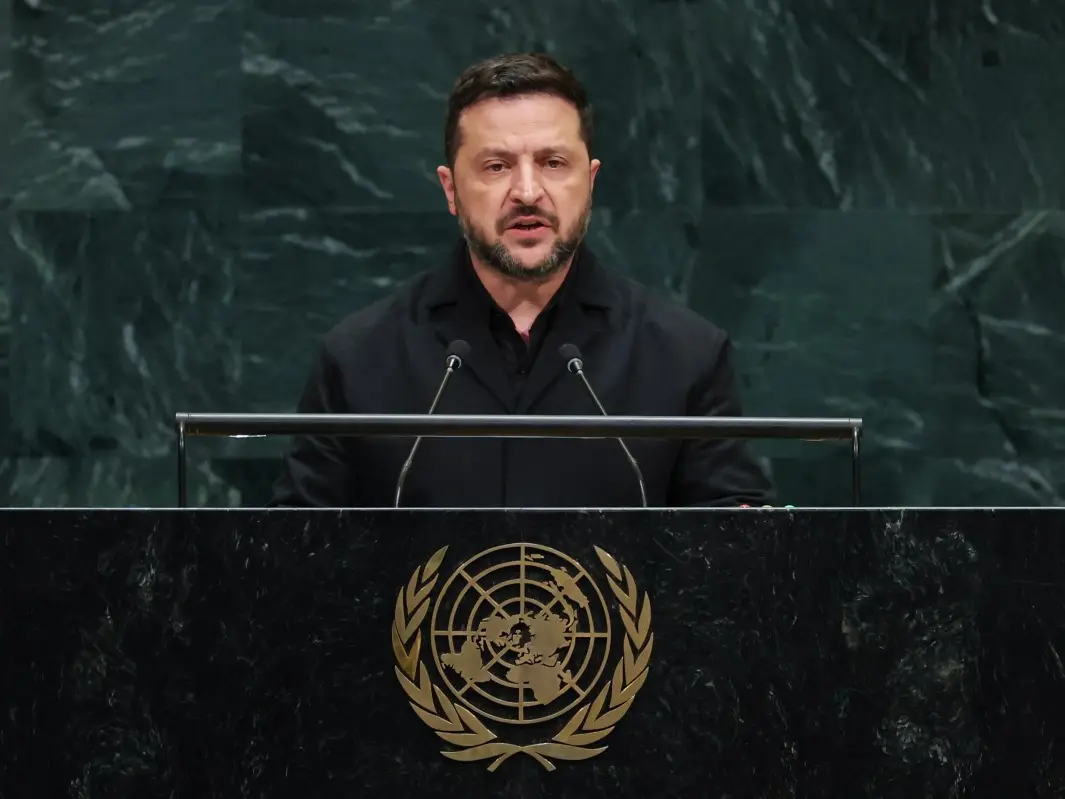)
'Putin is patient zero': Zelensky slams Russian president at UNGA, accuses him of using fighters from 47 countries
&im=FitAndFill=(700,400))
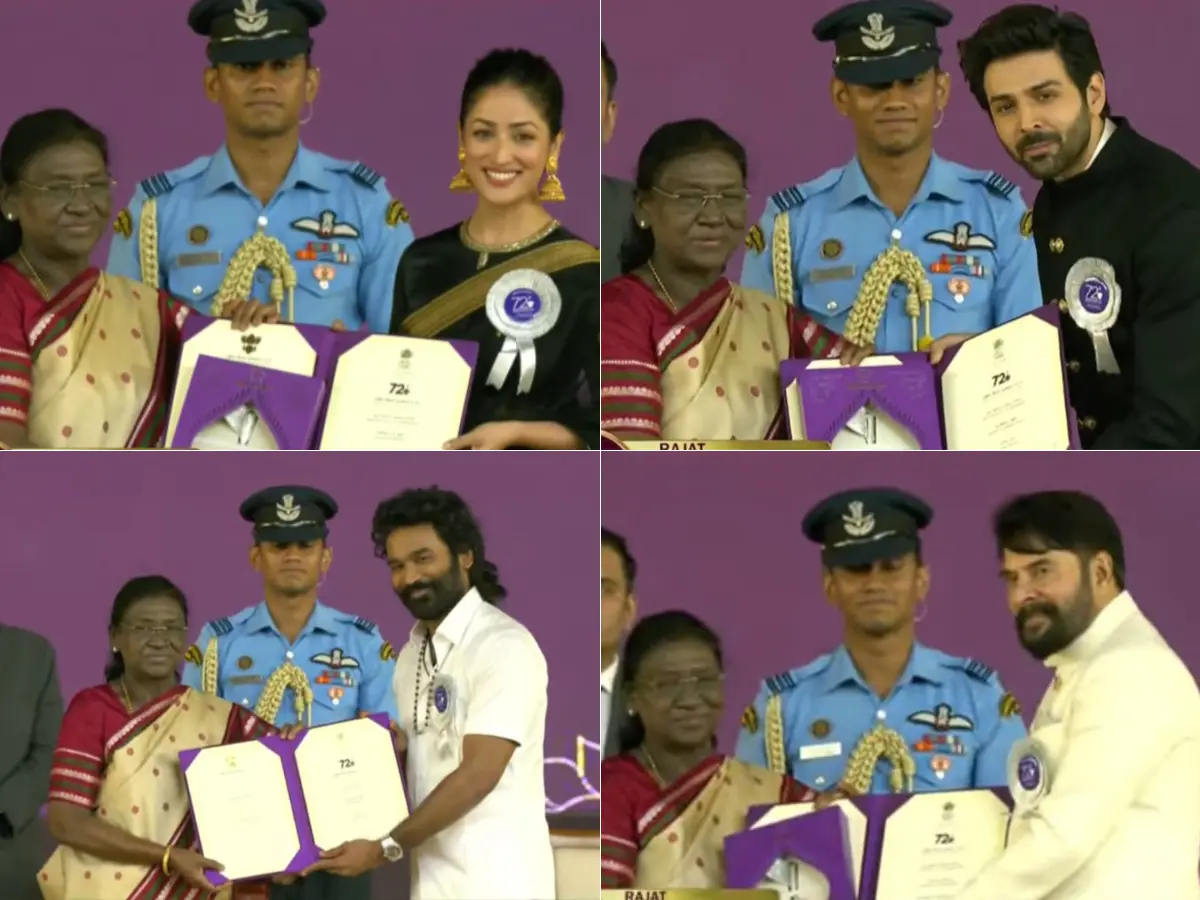
National Film Awards 2026: Kartik Aaryan, Mammootty, Yami Gautam, Randeep Hooda and other key winners
)
El Niño 2026 heats up to become strongest in 1,000 years
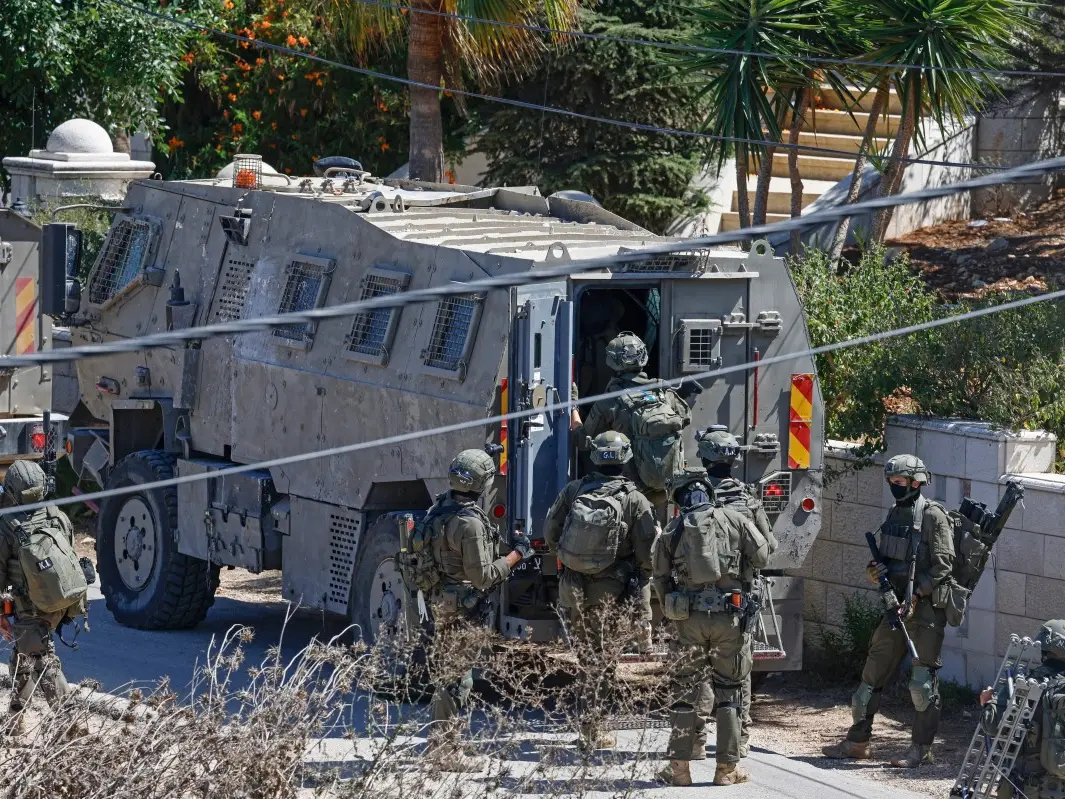)
Israeli envoy to US Yechiel Leiter’s son critically injured in West Bank ramming attack
&im=FitAndFill=(700,400))
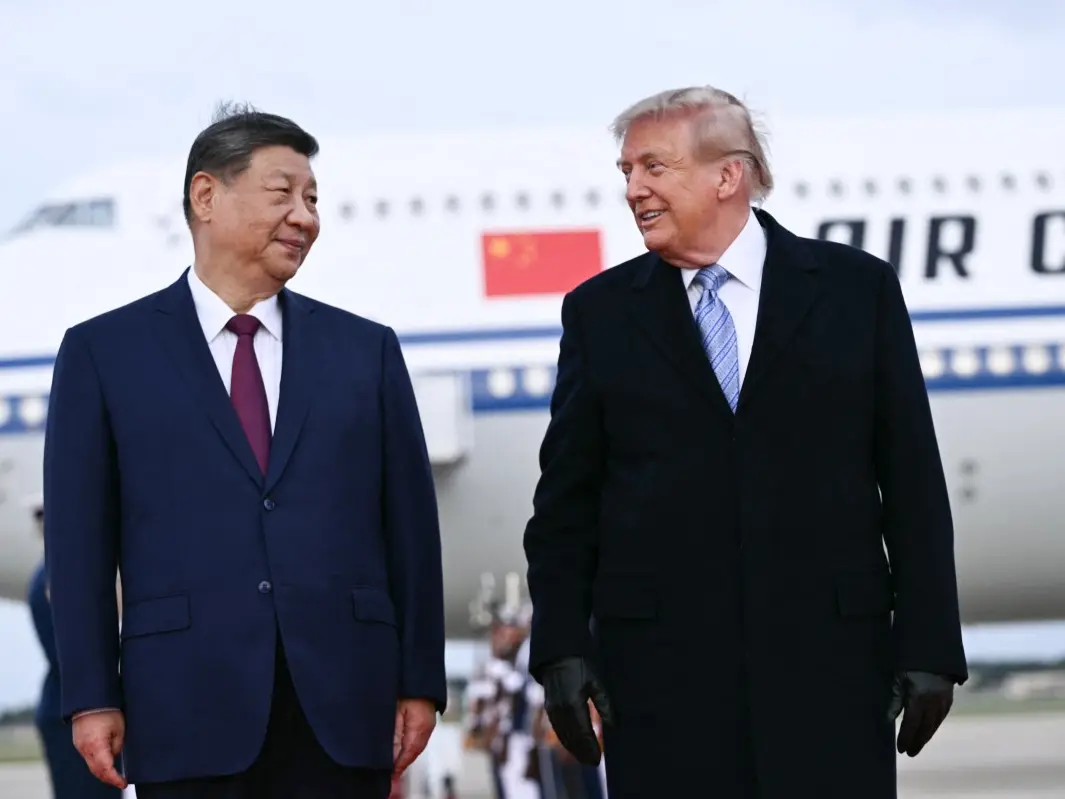
Trump welcomes Xi Jinping in rare airport gesture: Photos from Chinese President's arrival in US
)
Xi-Trump meeting: China’s human rights red line and past protests explained
Today, that order is visibly under strain.
The rise of China, the re-emergence of India, and the renewed assertiveness of Russia, together with the growing influence of regional and middle powers, are reshaping the global balance. At the same time, technological disruption—from artificial intelligence to cyber capabilities—and renewed competition over energy and resources are transforming the foundations of power itself.
In this context, debates within the United States have taken on increasing urgency. Some American strategists argue that Washington has been “sleeping at the switch”—that it has failed to assert its dominance decisively and risks strategic drift. Seen through this lens, developments involving Iran become more than regional issues. They become platforms for signalling—not only to Tehran, but to Beijing and other actors in a changing global system.
Recent actions underscore a clear reality: the United States still possesses the most advanced and capable military power in history, with unmatched global reach. It is worth noting, however, what has not been used. The restraint shown—particularly the avoidance of escalation into nuclear thresholds or other extreme forms of warfare—may prove as significant as the actions themselves.
Yet if current trends continue—where power increasingly substitutes for principle—this will not remain a uniquely American dilemma. Other major and regional powers, including China, India, and an assertive Russia, as well as influential middle powers, may soon face similar strategic choices. As capabilities expand, so too does the temptation—or perceived necessity—to act outside established norms. What begins as exception risks becoming precedent.
This is the paradox of great power transition. Once “might” becomes the primary currency of legitimacy, it generates systemic pressure on all major actors to behave in ways that reinforce that logic. In such an environment, restraint is no longer rewarded; it is penalised.
At that point, the question is no longer whether the system is under strain, but whether it is capable of renewal.
Incremental adjustments and crisis management may stabilise the present, but they do not shape the future. Without a broader framework, they risk becoming a form of strategic drift—managing disorder rather than designing order.
There is precedent for such design. The Dumbarton Oaks process itself was not a summit of heads of state, but a structured diplomatic effort conducted by senior officials operating with political authorisation. It was shaped by strong leadership, but also by negotiation, sequencing, and compromise among competing interests.
A contemporary equivalent would necessarily be more complex. It would have to reflect a more diffuse distribution of power and a lower level of trust among major actors. It would require an approach that is consultative rather than directive, incremental rather than declaratory, and focused on convergence rather than dominance.
Any such effort would need to include the United States, China, India, and Russia as central actors, alongside other major, legacy, and regional powers. India’s role would not be that of a hegemonic architect, but of a credible convenor capable of bridging divides across competing systems and interests.
Symbolism would matter. A venue such as Nalanda—once a global centre of learning that drew scholars from across Asia and beyond—offers more than historical resonance. It represents a tradition of intellectual exchange that transcended political boundaries, a space where knowledge, dialogue, and pluralism flourished across cultures and civilisations. In a contemporary context marked by fragmentation and strategic mistrust, such symbolism carries practical value. Nalanda, in this sense, is not merely a place—it is a metaphor for a more open, dialogic, and civilisationally grounded approach to organising international cooperation.
In the absence of such an initiative, managed competition will give way to unmanaged rivalry, where stability becomes episodic and crisis becomes the default condition.
A durable global architecture will depend on the active participation of the United States, China, India, and Russia—alongside other major, legacy, and regional powers—around which a stable international order must be constructed.
The post-war system was not inevitable; it was envisioned, negotiated, and built. As it comes under increasing strain, the central question is whether the international community still possesses the imagination—and discipline—to do so again, before drift hardens into irreversible disorder.
Disclaimer: The views of the writer do not represent the views of WION or ZMCL. Nor does WION or ZMCL endorse the views of the writer.
