BRICS at 20: The rule-takers want to become rule-shapers

&imwidth=600&imheight=450&format=webp&quality=medium "BRICS at 20: The rule-takers want to become rule-shapers")
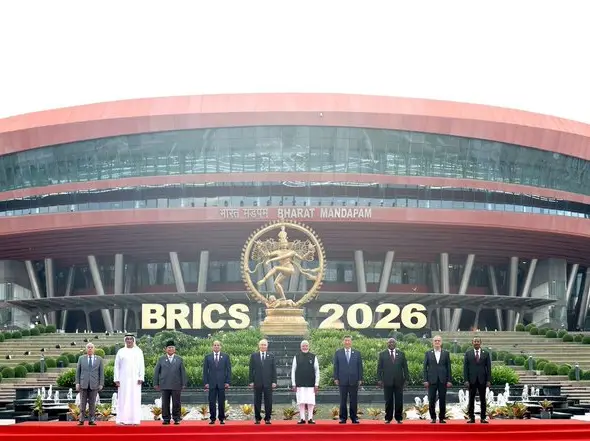
Leaders at BRICS Summit Photograph: (X/PM Modi)
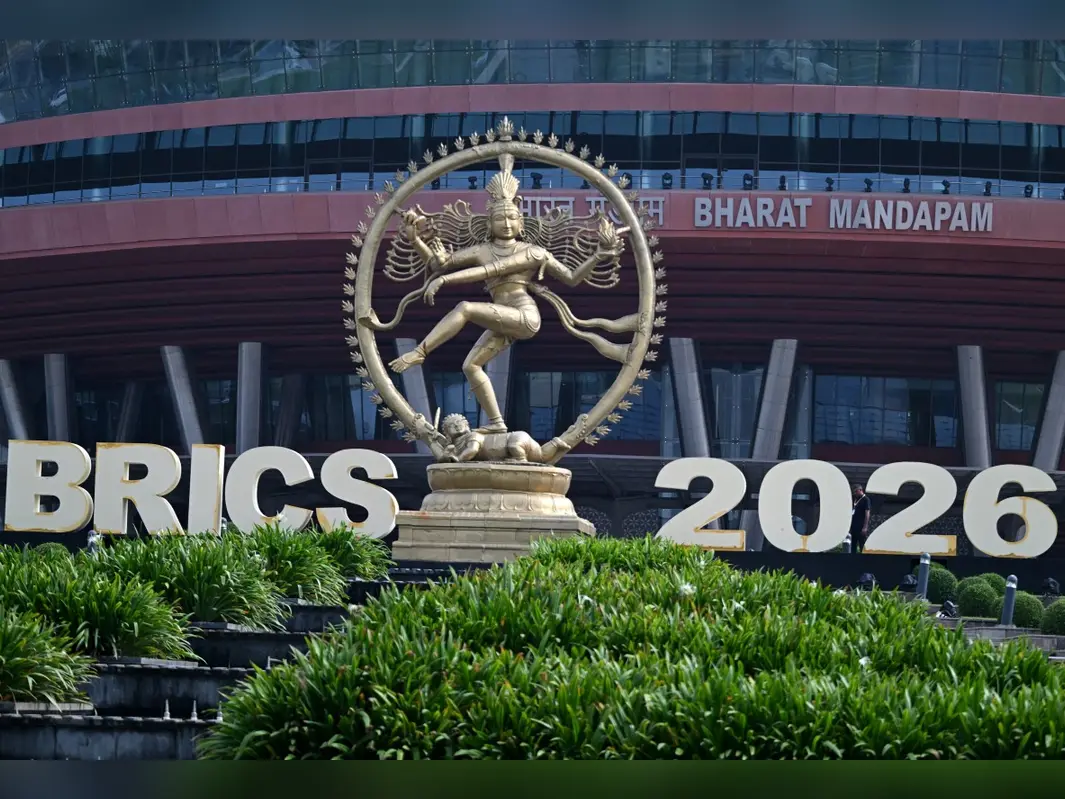
Celebrating twenty years, BRICS aims to transform the Global South from rule-takers into rule-shapers. Reaching consensus in New Delhi, members advocate for multilateral global architecture reform, trade fairness, and inclusive rulemaking.
Twenty years after the first BRIC foreign ministers met, the grouping has reached a moment that could define its next two decades. The message emerging from New Delhi is no longer simply that the Global South deserves to be heard. It is that developing and emerging powers want a greater role in deciding how the international system itself operates.
Prime Minister Narendra Modi captured that ambition at the BRICS Summit by arguing that the Global South must move from being “rule-takers” to “rule-shapers.” It is a powerful formulation because it strikes at the fundamental complaint underlying BRICS: much of today's international architecture was designed around a distribution of power that no longer reflects today's world.
The United Nations Security Council remains dominated by its five permanent members. Global financial institutions continue to face demands for greater developing-world representation. Meanwhile, new rules governing artificial intelligence, cyberspace, biotechnology, critical technologies and even outer space are being developed. BRICS wants the Global South involved in writing those rules rather than inheriting them.
Consensus amid contradiction
The unanimous adoption of the New Delhi Declaration is therefore significant. BRICS is hardly a collection of natural allies. India and China have their own strategic competition. Russia and China often envisage BRICS as a stronger geopolitical counterweight to Western power, while India and Brazil have traditionally resisted turning the grouping into an explicitly anti-Western alliance.
Then there are Iran and the United Arab Emirates, whose competing geopolitical interests made consensus particularly difficult amid escalating conflict in the Middle East. Yet New Delhi produced agreement.
Trending Stories
)
)
)
)
)
)
)
)
)
)
)
)
)
)
)
)
)
&im=FitAndFill=(700,400))
)
)
)
)
)
)
)
)
)
)
)
)
)
)
)
)
The declaration expressed deep concern over escalating Middle Eastern tensions, urged maximum restraint and reaffirmed peaceful settlement of international disputes through dialogue, consultation and diplomacy. BRICS members also raised concerns over unilateral tariff and non-tariff measures that distort international trade.
That does not suddenly transform BRICS into a unified geopolitical alliance. But the ability to put fundamentally different governments behind common language matters.
A rival to the United Nations?
Comparisons with the United Nations require caution. BRICS is not a universal organisation, does not possess the UN's treaty architecture and cannot replicate the Security Council or the UN's enormous network of international agencies. Nor does it necessarily need to. Its potential lies elsewhere.
In an increasingly fragmented international system, BRICS could evolve into another centre of multilateral coordination — particularly for countries that believe their influence has not kept pace with their economic and demographic weight.
Its members already account for more than 40 per cent of humanity and roughly a quarter of global economic output. The New Development Bank has meanwhile approved nearly $43 billion worth of projects, demonstrating that BRICS has already produced institutions beyond summit diplomacy. The bigger question is whether political declarations can now translate into sustained action.
The test of adulthood
At twenty, BRICS has reached what India describes as a “coming of age” moment. And adulthood brings responsibilities. It is easier to demand reform than to agree on what the replacement should look like. It is easier to criticise unequal global institutions than to reconcile the competing interests of ten very different BRICS members.
That will determine whether BRICS becomes an enduring pillar of twenty-first-century multilateralism or remains primarily an annual platform for declarations. The significance of New Delhi therefore lies less in whether BRICS can overthrow the existing international order. India's proposition is more subtle — and perhaps more consequential.
The world does not necessarily need another group of countries dictating the rules. It needs more countries participating in writing them. For decades, much of the Global South has lived within an international architecture largely designed elsewhere. At twenty, BRICS is signalling that it no longer intends merely to occupy a seat inside that architecture. It wants a hand in redesigning it.