Opinion: Patient can take action against doctor over grievances about telemedicine consultation

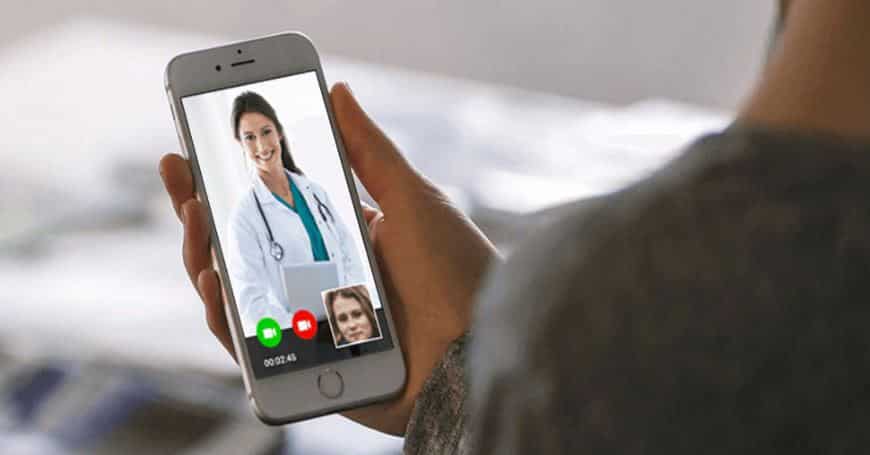
Telemedicine
The emerging consequences of COVID-19 particularly in the field of healthcare and medicine gave a new fillip to the online medical teleconsultation. In an effort to govern the medical teleconsultation the Ministry of Health and Family Welfare (“MoHFW”), Government of India issued the ‘Telemedicine Practise Guidelines’ for governing the practice of online medical consultation in India on 25 March 2020. The Telemedicine Practise Guidelines (“Guidelines”) were made by the Board of Governors under the Indian Medical Council Act, 1956, in consultation with the Niti Aayog.
In view of the prevailing COVID19 pandemic, it was felt that it is safer for other patients as well as the health workers to provide consultation and initial treatment through information and communication technologies. The Guidelines were promulgated to achieve quality healthcare in a cost-effective manner.
The practice of online medical consultation (through the internet or other communication technologies) has been prevalent across the world. Considering the nature of medical emergencies, effective and immediate guidance by a medical practitioner can be the difference between life and death. This practice is better known as ‘telemedicine’.

The World Health Organisation (“WHO”) defines ‘telemedicine’ as – “The delivery of health care services, where distance is a critical factor, by all health care professionals using information and communication technologies for the exchange of valid information for diagnosis, treatment and prevention of disease and injuries, research and evaluation, and for the continuing education of health care providers, all in the interests of advancing the health of individuals and their communities.”
WHO has further recognised four essential features which are intrinsic to the practice of ‘telemedicine’ – (i) Providing clinical support; (ii) Overcoming geographical barriers; (iii) Use of various types of information & communications technology; and (iv) Improvement of health outcomes.
Chapter 1 of the said Guidelines provide for the Scope and Application thereof. It provides that the Guidelines are meant for Registered Medical Practitioners (RMP) only, those who are enrolled in the State Medical Register or the Indian Medical Register. Further, RMPs can provide online consultation to and from any part of India adhering to the applicable rules and regulations. RMPs are free to use any information or communication technology such as telephones, messages, WhatsApp, Facebook messenger etc.
)
Three labourers killed as DU student loses control of his car, rams into them on Dwarka Expressway
)
Pentagon revives mandatory testosterone testing for male troops aged 30 and above
)
FACT CHECK: Why did PM Modi ask Xi ‘is it okay’ at BRICS Summit? New video reveals...
)
India seeks to build a full semiconductor supply chain
&im=FitAndFill=(700,400))
From Abhishek Sharma to Sahil Chauhan, 5 batters with fastest T20I hundreds
)
Pyongyang dismisses US, western pressure over nuclear programme
)
US And Denmark reach Greenland deal, Trump announces expanded military presence
)
Google’s Gemini AI hacks real systems by guessing passwords during security test
)
US hiding troop deaths in Iran war? Toll higher than Pentagon count, claims report
)
China may have gained access to US's classified F-35 jets; parts meant for repairs diverted to Hong Kong, sparking Pentagon inquiry
)
NASA research plane reaches 61,000 feet over Panama
)
Godfather of AI Geoffrey Hinton gives US lawmakers a one-year warning on AI
)
Shivakumar attends 79th Kalyana Karnataka Utsav in Kalaburagi
)
Trump signs Russia sanctions law: India faces fresh 100% tariff threat over Russian oil
)
Brigitte Bardot’s private collection set for Paris auction; key items and prices revealed
)
Why Ranveer Singh’s Dhurandhar missed India’s Oscar entry; FFI jury member reveals what happened
)
‘Will go to any extent’: Pakistan vows to defend Saudi Arabia amid Houthi attacks
)
The Verdict | When precision fails: US commits war crime in Minab school strike, UN finds
)
Trump signs Russia sanctions bill into law, targets Moscow’s energy sector
&im=FitAndFill=(700,400))
New Friday OTT releases (September 18, 2026): Lust Stories 3, You+Me, Best of the Best- 8 new titles coming on Netflix, Prime Video and more
)
Fast bowler Brydon Carse faces no charges over Derby nightclub incident
)
Pak: A series of counter terrorism operations in Khyber Pakhtunkhwa
)
Flying cars in UAE: Ras Al Khaimah signs deal with Chinese company to test new transport
)
Africa is splitting, and a lot sooner than estimated, giving way to a new ocean
)
'Gangsta' crab shoves knife blade at man and his dog in Florida - Watch
)
Trump bans CNN, MS NOW and Politico from White House over ‘FAKE NEWS’
)
Trump 2.0: Dark days ahead for America’s ‘imperial presidency’
)
Trump's Greenland dream comes true? POTUS announces 'Infinite Life' deal with Denmark, claims permanent US control
)
Who is Khalilur Rahman? All you need to know about 81st UN General Assembly President
)
Tirupati Laddu ghee adulterated with chemicals, says ED, supplier arrested
)
IIT Bombay student dies by suicide, was caught seeking AI help during exams
&im=FitAndFill=(700,400))
Meet top 5 bowlers in latest ICC T20I rankings
)
Indian Cinema bets big on mythology, brings ancient stories to modern audiences
)
Ukraine plans record $109 bn defence spending, nearly two thirds of budget amid Russia war
)
Russia holds first parliamentary elections since the beginning of the Ukraine war
&im=FitAndFill=(700,400))
Meet top 5 Indian batters with fastest T20I centuries
The RMPs may ask for any information (Such as complaints, symptoms etc.) from the patients, and the latter will be responsible for the accuracy of such information. The RMP has the responsibility to realise when the disease or condition is not adequately addressable through online consultation. Guideline 3.7.2, makes it incumbent on the RMPs to keep all records of the online consultation including reports, documents, prescriptions etc.
The Board of Governors, which superseded the Medical Council of India by virtue of Section 3A of the Indian Medical Council Act, 1956, has the authority to make regulations under Section 33 thereof. The Guidelines were brought about as an amendment to the Indian Medical Council (Professional Conduct, Etiquette and Ethics) Regulations, 2002.
The amendment added Regulation 3.8 to the aforesaid regulations, which stated that the Guidelines shall be included in the Appendix 5 of the aforesaid Regulations, thereby giving them statutory force.
The Draft Indian Medical Council (Professional Conduct, Etiquette and Ethics) (Amendment) Regulations, 2020 along with the Guidelines were placed for approval before the MoHFW on the 24 April 2020, and the approval was accorded to these amendments on 25 March 2020.
Thereafter, in view of the urgency, the Guidelines were published on the website of the Medical Council of India for use by the role players. The Guidelines were subsequently also published in the Gazette of India on 12 May 2020 and were made effective from 25 March 2020.
Interestingly, the framework of governance of the medical education and medical practice field was again revised by virtue of the National Medical Commission, Act 2019, which has come into effect from 25.09.2020. Therefore, the Indian Medical Council Act, 1956 stood repealed and the Board of Governors was replaced by the National Medical Commission.
There is no specific savings clause in the Indian Medical Council Act 1956, therefore the effect of its repeal would be governed by Section 60(2) of the National Medical Commission Act, 2019, derived from Section 6 of the General Clauses Act, 1897.
Since there is no specific mention of the effect of the new Act of 2019 on the Guidelines, they shall continue to govern the field of telemedicine under the erstwhile Act of 1956.
Additionally, the Act of 2019 also specifically provides for a transitory provision under Section 61 (2), the purport of which would mean that until the National Medical Commission amends or issues new Guidelines, the extant Guidelines, in effect from 25.03.2020, shall continue to have effect.
Since the Guidelines are included in Appendix 5 of the Indian Medical Council (Professional Conduct, Etiquette and Ethics) Regulations, 2002 and were brought about as an amendment to the said regulations, their existence is protected under the transitory provisions of the Act of 2019. Section 61 (2) of the Act of 2019 states that the rules and regulations framed under the Act of 1956 shall continue to be in force and operate, till new rules and regulations are issued by the National Medical Commission.
In view of the above, it is abundantly clear that the Guidelines have statutory force and are binding on the RMPs. Notably, since the Guidelines themselves provide for strict adherence of the Indian Medical Council (Professional Conduct, Etiquette and Ethics) Regulations, 2002 and any violation thereof, would constitute ‘Misconduct’ under the regulations.
This implies that if online consultation patients have a grievance against the conduct of an RMP, they can initiate disciplinary proceedings against them at the State Medical Council, and if found guilty of misconduct or negligence, they will be punished under the said regulations. Additionally, the protection of data needs to be given prime importance and as per the Information Technology Act (in view of the sensitive personal data involved).
(Disclaimer: The views of the writer do not represent the views of WION or ZMCL. Nor does WION or ZMCL endorse the views of the writer.)